
SR-71 Blackbird: Complete Guide to the World’s Fastest Jet
The SR-71 Blackbird remains the fastest jet aircraft ever flown by a human crew — hitting Mach 3.3, surviving 300°C skin temperatures, and outrunning every missile ever fired at it.
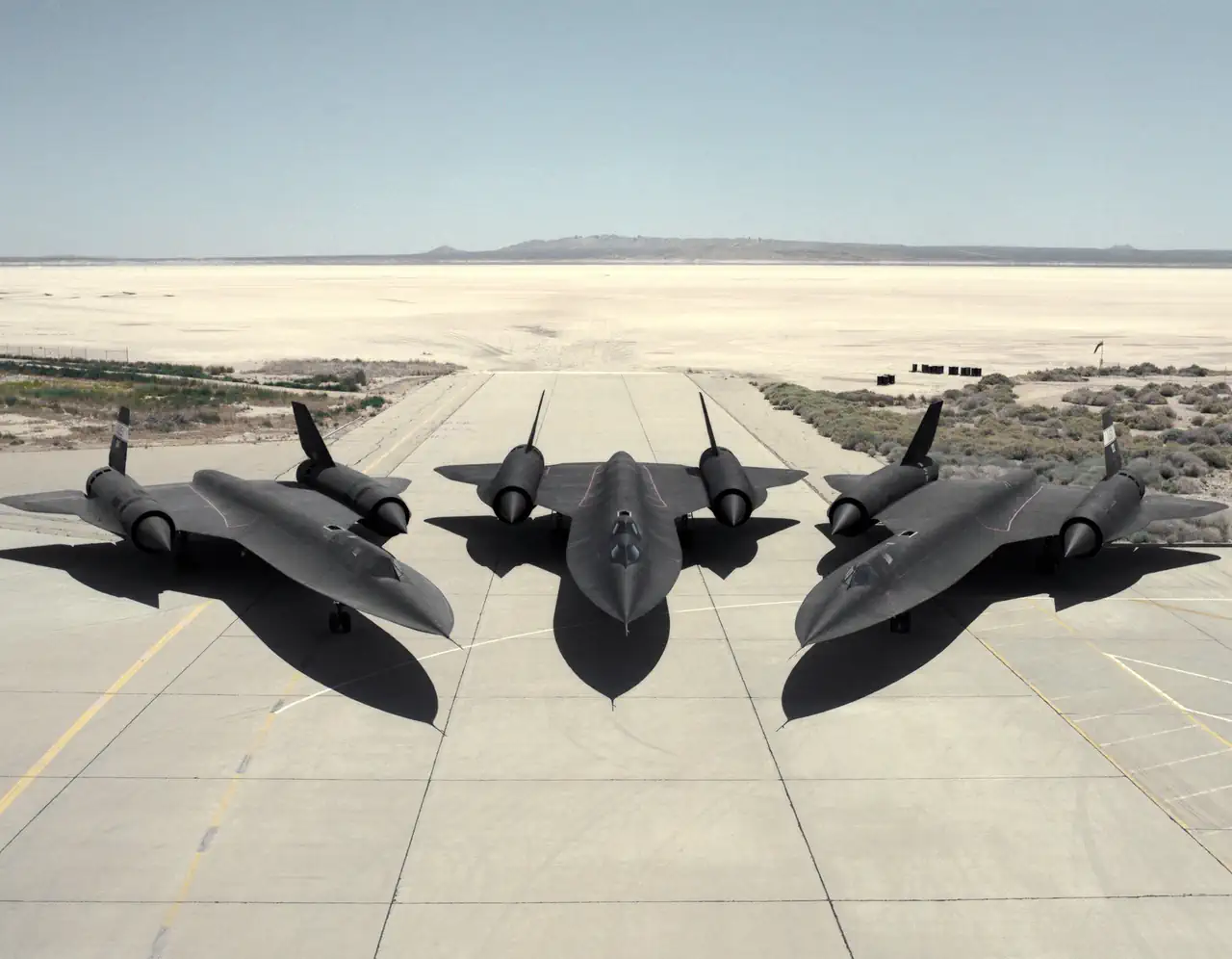
SR-71 Blackbird: The Spy Plane No Missile Could Ever Catch
The SR-71 Blackbird is the fastest jet aircraft ever flown by a human crew — a record it has held for nearly five decades with no serious challenger in sight. Built to peer deep into enemy territory from the stratosphere, it rendered ground-based air defenses almost completely irrelevant. Speed was its armor, and that armor was never pierced.
How the Blackbird Came to Be
By the late 1950s, the United States needed a reliable way to gather intelligence over Soviet territory without putting pilots at excessive risk. The Lockheed U-2 had been filling that role, but on May 1, 1960, one was shot down over the USSR by a Soviet surface-to-air missile — a humiliating event that triggered a diplomatic crisis and made clear that high altitude alone was no longer enough protection.
The response came from Lockheed’s classified research division, Skunk Works, under the direction of legendary aerospace engineer Kelly Johnson. The team first developed the A-12 for the CIA under the codename Project OXCART. The SR-71 was a refined, more capable evolution of that design, built specifically for the U.S. Air Force. It completed its maiden flight on December 22, 1964, entered operational service in 1966, and flew missions until its final retirement in 1998.
Why Is It Painted Black?
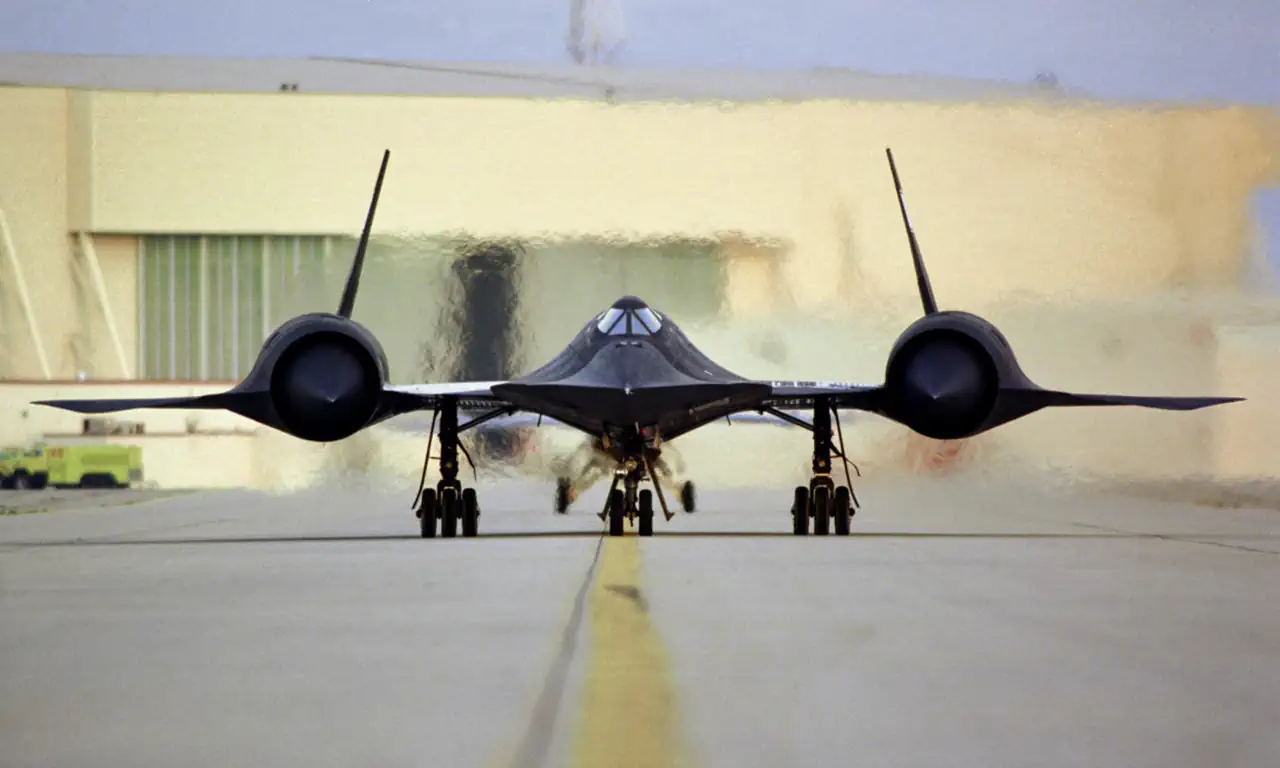
The aircraft’s signature matte black finish isn’t just for aesthetics — it’s an engineering solution. At speeds exceeding Mach 3, aerodynamic friction heats the outer skin to temperatures around 300°C (572°F). The black coating was specially formulated to radiate that heat away from the airframe before it caused structural damage. The color also offers modest radar-absorbing properties, though stealth was never the SR-71’s primary defense mechanism.
Engineering a Plane That Shouldn’t Exist
Building an aircraft capable of sustained Mach 3+ cruise required solutions that, in the early 1960s, simply didn’t exist yet — so Skunk Works invented them. Approximately 93% of the airframe was constructed from titanium alloy, chosen for its strength-to-weight ratio and ability to handle extreme thermal stress without warping. The remaining structure used advanced composites, including special radar-absorbing materials on the vertical tail fins.
One curious side effect of the titanium-heavy build: the SR-71 actually leaked fuel on the ground. The titanium panels were designed with gaps that would only seal properly once the airframe expanded from heat at high speed. Ground crews accepted this as routine.
The J58: An Engine Unlike Any Other
Powering the Blackbird were two Pratt & Whitney J58 engines — one of the most unusual propulsion systems ever put into production. At lower speeds, they functioned as conventional turbojets. As the aircraft accelerated past Mach 2.2, airflow was progressively bypassed around the turbine stages, transforming the engine’s behavior into something closer to a ramjet. This dual-mode operation allowed consistent, reliable thrust across an enormous speed range — something no conventional jet engine could achieve.
Eyes Without Weapons
The SR-71 carried no guns, bombs, or missiles of any kind. Its payload was entirely intelligence-gathering equipment: high-resolution optical cameras, side-looking radar, infrared sensors, and signals intelligence (SIGINT) receivers. Navigating with pinpoint accuracy was handled by an astro-inertial navigation system — a gyroscopically stabilized platform that tracked stars even in daylight to calculate position without relying on external signals that could be jammed or spoofed.
Technical Specifications at a Glance
| Specification | Detail |
|---|---|
| Length | 107.4 ft (32.74 m) |
| Wingspan | 55.6 ft (16.94 m) |
| Crew | 2 (pilot + reconnaissance systems officer) |
| Top speed | 2,193 mph / Mach 3.3 (3,529 km/h) |
| Service ceiling | 85,000 ft (25,900 m) |
| Range | ~3,350 miles (5,400 km) |
| Max takeoff weight | 172,000 lb (78,000 kg) |
| Engines | 2× Pratt & Whitney J58 (34,000 lbf each) |
Program Variants
The SR-71 program produced three distinct configurations:
SR-71A — the standard operational reconnaissance variant; 29 built
SR-71B — a dedicated two-seat trainer with a raised rear cockpit; 2 built
SR-71C — a hybrid trainer assembled from spare and prototype components; only 1 produced
Operations: Spying at the Edge of Space
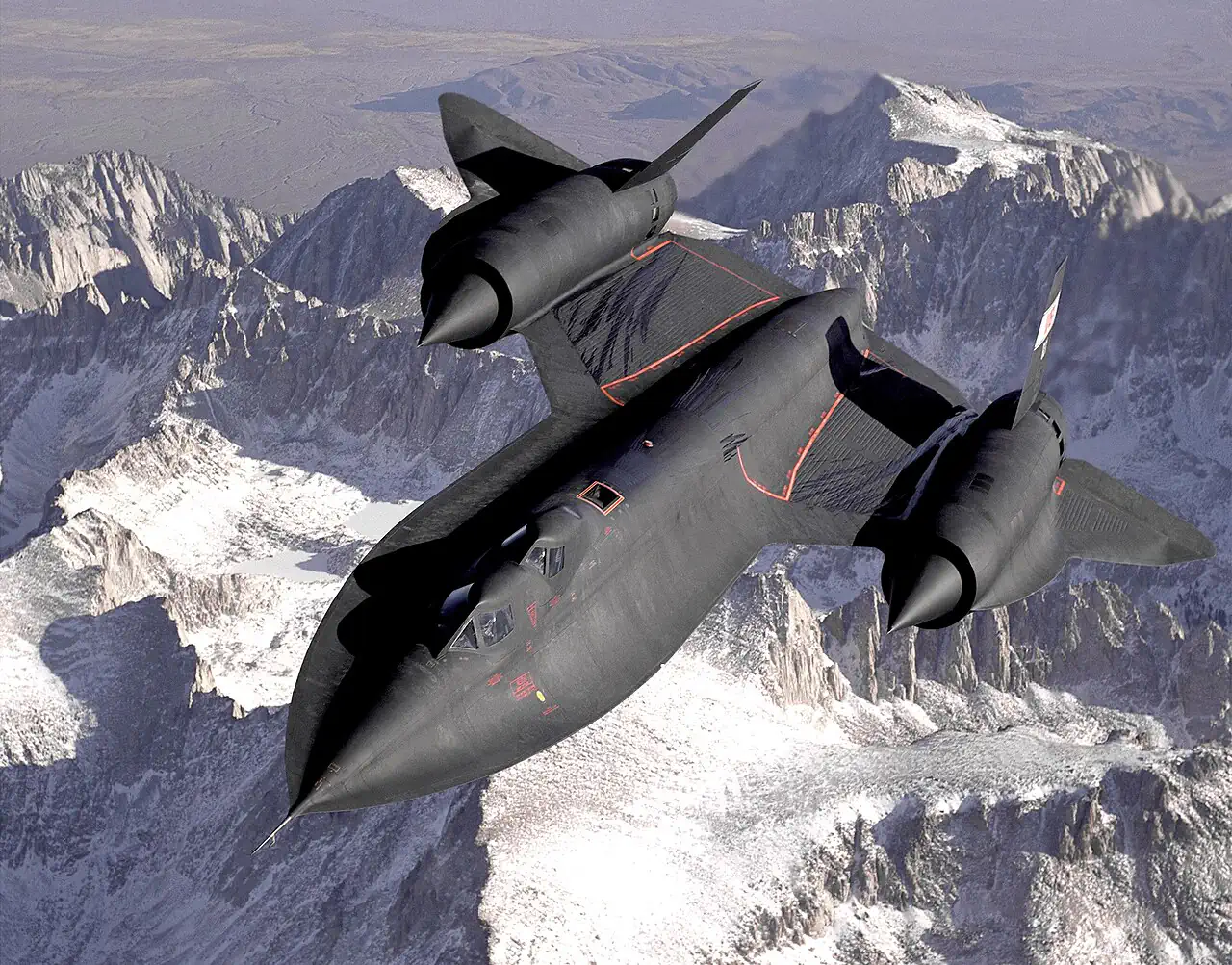
Throughout its operational life, the SR-71 flew some of the most sensitive reconnaissance missions of the Cold War era — over Cuba, North Korea, North Vietnam, the Middle East, and along the borders of the Soviet Union. It produced photographic and electronic intelligence that shaped major policy decisions at the highest levels of the U.S. government.
Enemy forces never stopped trying to bring it down. Over the course of its career, more than 4,000 missiles were fired at SR-71s. Not one connected. The response from crews was always the same: push the throttles forward. By the time a missile reached the intercept point, the aircraft was already miles ahead.
Why the Air Force Eventually Let It Go
For all its capabilities, the SR-71 was extraordinarily expensive to maintain. Operating costs ran into the hundreds of millions of dollars per year for the entire fleet. With the Cold War winding down and reconnaissance satellites growing increasingly sophisticated, Congress concluded the program could no longer justify its price tag. The Air Force flew its last operational SR-71 mission in 1990, the aircraft was briefly reactivated between 1995 and 1997 due to gaps in satellite coverage, and was permanently retired in 1998. NASA retained a small number of airframes for high-speed aeronautical research until the late 1990s.
SR-71 Blackbird vs. Lockheed U-2
| SR-71 Blackbird | Lockheed U-2 | |
|---|---|---|
| Top speed | Mach 3.3 | Subsonic |
| Ceiling | 85,000 ft | ~70,000 ft |
| Primary defense | Raw speed | Altitude + low radar cross-section |
| Operating cost | Very high | Moderate |
| Still flying? | No | Yes (still active) |
Records That Still Stand
On July 28, 1976, an SR-71 set two absolute world records that remain uncontested to this day:
Absolute speed record: 2,193.17 mph (3,529.56 km/h)
Absolute altitude record (sustained horizontal flight): 85,068.997 ft (25,929 m)
The aircraft also set an unofficial transatlantic benchmark — flying from Los Angeles to Washington D.C. in 64 minutes and from New York to London in 1 hour, 54 minutes, and 56 seconds — a route that takes commercial aircraft roughly seven hours.
10 Frequently Asked Questions
1. What is the top speed of the SR-71 Blackbird?
The official record is 2,193 mph (Mach 3.3), set in 1976. That record has never been broken by a crewed aircraft.
2. Was the SR-71 ever shot down?
No. Despite more than 4,000 missiles fired at SR-71s over the course of the program, not a single aircraft was ever hit by enemy fire.
3. How many SR-71s were built?
A total of 32 aircraft were produced across all three variants (A, B, and C).
4. Why is the SR-71 black?
The matte black coating dissipates heat generated by aerodynamic friction at Mach 3+ speeds and provides minor radar-absorbing properties.
5. Did the SR-71 carry weapons?
No. The SR-71 was a pure reconnaissance platform with no offensive armament whatsoever.
6. What was the SR-71 made of?
Roughly 93% titanium alloy, chosen for its ability to withstand skin temperatures exceeding 300°C during sustained high-speed flight.
7. How high could the SR-71 fly?
Its operational ceiling was approximately 85,000 feet — high enough for the crew to observe the curvature of the Earth.
8. What engines did the SR-71 use?
Two Pratt & Whitney J58 engines, each capable of generating around 34,000 pounds of thrust, operating as hybrid turbojet-ramjets.
9. Why was the SR-71 retired?
Primarily due to extremely high operating costs and the rise of reconnaissance satellites, which could perform similar missions at a fraction of the price.
10. Did NASA ever fly the SR-71?
Yes. After Air Force retirement, NASA operated several SR-71s as high-speed research platforms for aeronautical and atmospheric studies through the late 1990s.
The SR-71 Blackbird was a strategic reconnaissance aircraft developed by Lockheed’s Skunk Works and operated by the U.S. Air Force from 1966 to 1998. Powered by two Pratt & Whitney J58 hybrid engines and built primarily from titanium, it cruised at Mach 3.3 and operated at altitudes above 85,000 feet. It carried no weapons — only cameras and sensors — and was never shot down despite thousands of missile attempts. Its speed and altitude records for crewed aircraft remain unbroken. When it was retired, it wasn’t because anything had surpassed it, but because satellites had made its missions cheaper to perform from orbit

Joseli Lourenço
06/22/2026