T-80 and M1 Abrams: The Only Tanks Running Turbine Engines
The T-80 is the only mass-produced tank ever built with a jet-style turbine engine, burning 642 liters per 100 km — nearly double a T-72’s rate.
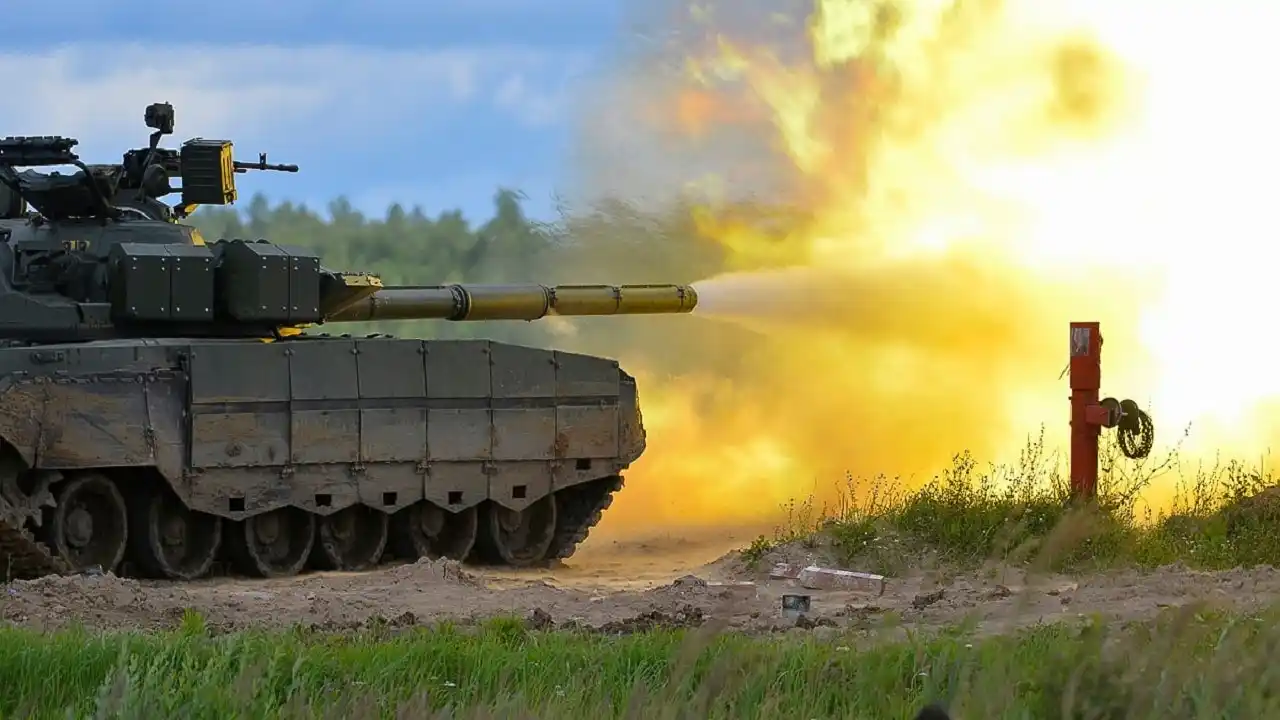
The T-80: Russia’s Jet-Engine Tank Runs Fast and Drinks Fuel Fast
The T-80 is the only mass-produced main battle tank ever built to run exclusively on a gas turbine engine. It entered Soviet service in 1976, built for speed and raw power in Warsaw Pact armored divisions.
The concept dates back to the 1950s, when Soviet engineers tested turbine prototypes on heavy tank chassis. The design took real shape in the 1960s and ’70s under lead engineer Nikolay Popov at the Leningrad Kirov Plant.
Soviet troops nicknamed it the “flying tank” because the turbine’s raw acceleration let it clear obstacles at speed, sometimes literally leaving the ground.
What Are the T-80’s Core Specs?
The T-80 weighs between 42.5 and 46 metric tons depending on the variant, running roughly 23 feet long without the gun.
It carries a three-person crew instead of the usual four, since an autoloader replaces the human loader position entirely.
| Spec | Detail |
|---|---|
| Engine | GTD-1250 turbine, 1,250 hp |
| Main gun | 125mm, up to 5,000m with guided missile |
| Top speed | 43.5 mph (70 km/h) |
What’s the T-80’s Effective Firing Range?
The Refleks missile system, fitted to the U and BVM variants, hits targets out to 5,000 meters by firing through the main gun tube.
That range includes the ability to engage low-flying helicopters, a rare capability for a tank of its era.
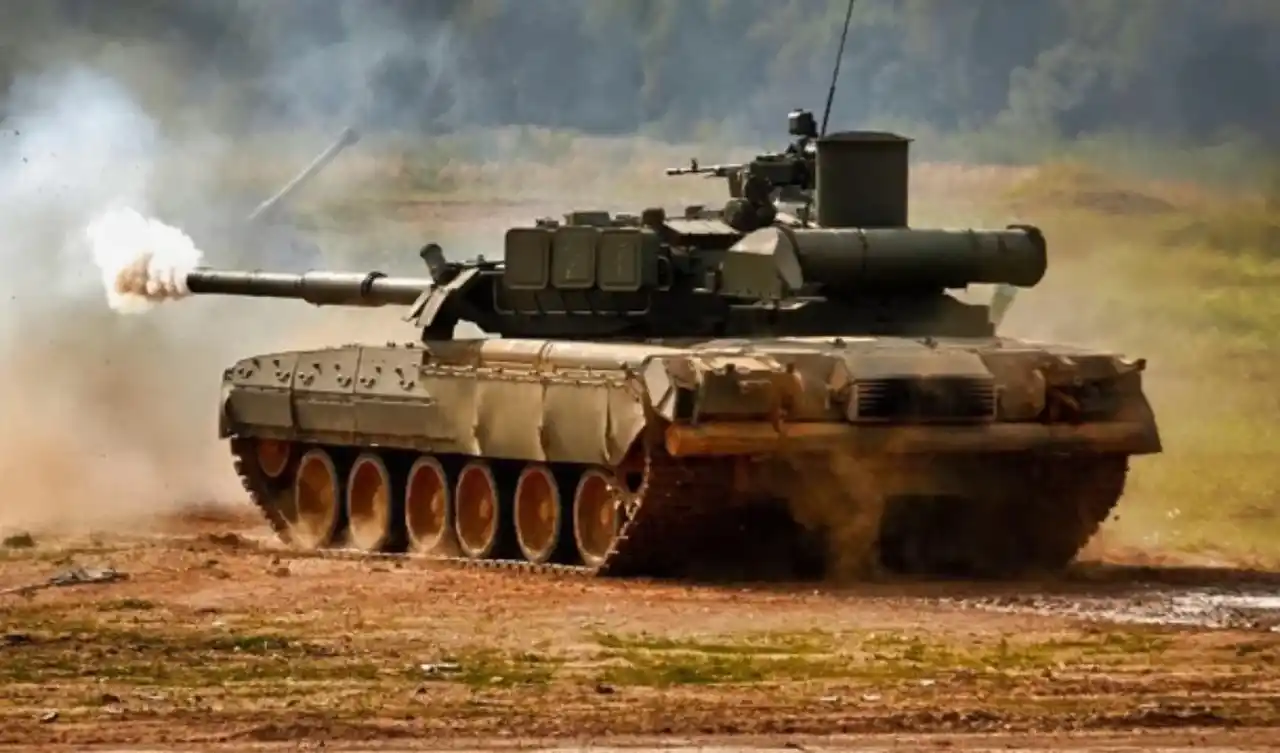
Why Does the T-80 Burn So Much Fuel?
Because gas turbine engines are notoriously inefficient at idle, a weakness Soviet engineers flagged in testing decades ago.
Official trials clocked the T-80’s average consumption at 642 liters per 100 km. By comparison, the diesel-powered T-72 used 357 liters and the T-64 used 404 liters over the same distance.
Refueling a single T-80 took 18 minutes. A full company needed three fuel trucks running for up to 44 minutes just to get moving again.
The tradeoff: the turbine starts reliably in temperatures as low as -40°F, a real advantage for Arctic operations.
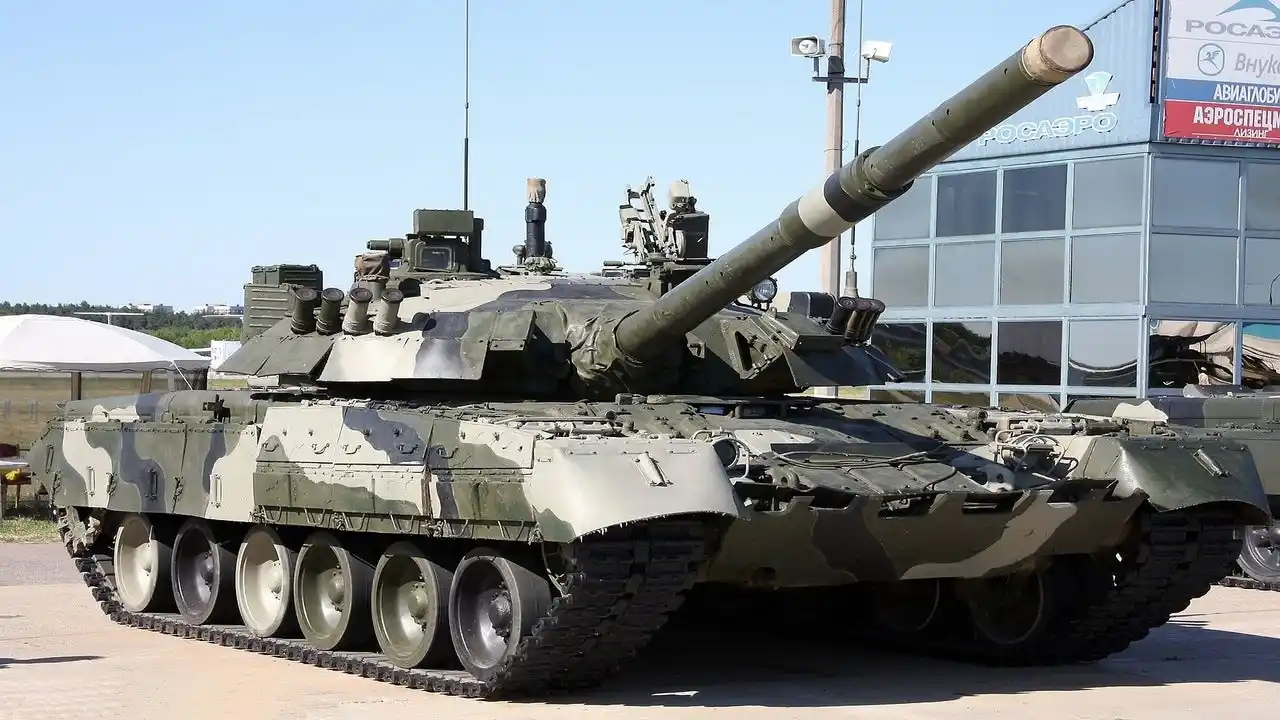
Is the T-80 a Good Tank? Strengths and Weaknesses
The turbine’s acceleration gives crews shoot-and-scoot capability that diesel-powered tanks simply can’t match on flat, open terrain.
But that same engine leaves the tank dependent on constant fuel resupply — cut the supply line, and the T-80 effectively stops fighting.
Its carousel-style autoloader is another structural liability: a penetrating hit near the turret ring can trigger a chain detonation of stored ammunition.
What Happened to the T-80 at the Battle of Grozny?
It suffered catastrophic losses during the First Chechen War in 1994, driven mostly by Russian tactical failures rather than mechanical flaws.
The main gun’s limited elevation (+14 degrees) made it nearly impossible to target fighters positioned in upper-floor windows across Grozny’s cityscape.
In just 60 hours of fighting, one Russian brigade lost nearly 800 men and 20 of its 26 tanks.
How Has the T-80 Performed in the Ukraine War?
Open-source tracking group Oryx has visually confirmed over 1,200 Russian T-80 losses since the 2022 invasion began, counting destroyed, captured, and abandoned vehicles.
Most confirmed losses are older T-80BV models, reserve stock Russia was forced to reactivate to sustain frontline numbers.
To counter FPV drone attacks, Russian factories now fit tanks with welded roof cages, nicknamed “cope cages,” as standard equipment.
T-80 vs T-90: Which Tank Wins?
The T-90 runs a conventional diesel engine, solving the T-80’s fuel problem but giving up some of its acceleration edge.
| Feature | T-80BVM / T-90M |
|---|---|
| Engine | 1,250 hp turbine / 1,130 hp diesel |
| Range | 310 mi / 342 mi |
| Power-to-weight | 27.2 hp/ton / 23.5 hp/ton |
The T-90M trades peak power for better range and simpler logistics, which is why it’s now Russia’s priority for new production.
T-80 Frequently Asked Questions
Is the T-80 still in production today?
No new units are built; Russia is refurbishing stored hulls to the T-80BVM standard.
Why did the T-80 never fight in Afghanistan?
Soviet command banned its deployment to keep the turbine technology out of Western intelligence hands.
Does the T-80 have missile defense systems?
Command variants carry the Shtora-1 system, which jams laser rangefinders and guided anti-tank missiles.
How many crew members does a T-80 need?
Just three — commander, gunner, and driver — thanks to the autoloader.
Bottom Line: Raw Power With a Steep Logistics Bill
The T-80 delivers real speed and firepower, but it comes at a fuel cost few modern armored forces can sustain without strain.
Its record tells two different stories — the tactical embarrassment at Grozny and the forced resilience shown in Ukraine. The turbine remains both its sharpest edge and its biggest liability.

Joseli Lourenço
08/11/2026