
Su-35 Flanker-E: Russia’s Most Advanced 4th-Generation Fighter Explained
The Su-35 Flanker-E is Russia’s most capable 4th-generation fighter — feared for its thrust-vectoring engines, Irbis-E radar, and devastating weapons load. Here’s everything you need to know.
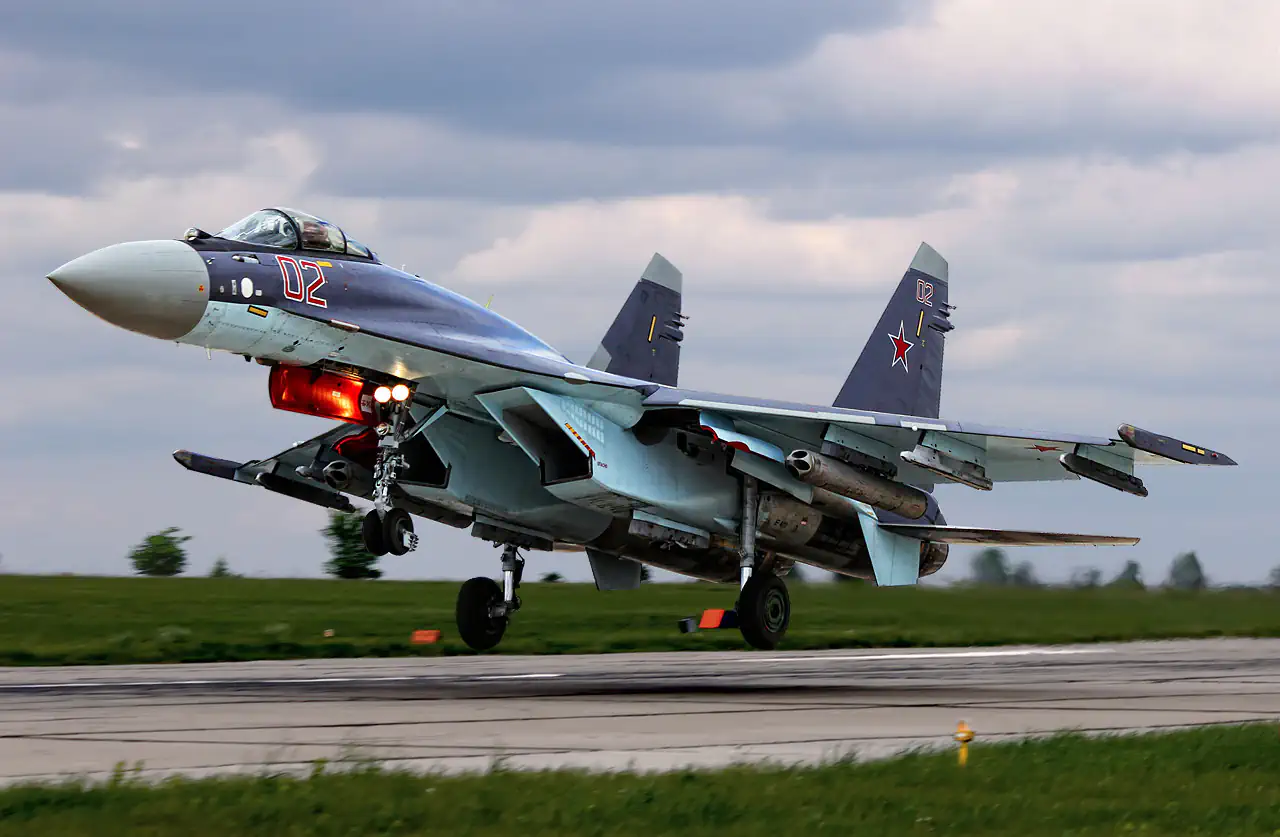
Su-35 Flanker-E: Russia’s Most Feared Fighter Jet Explained
The Su-35 Flanker-E stands as one of the most capable and closely watched combat aircraft flying today. Built by Sukhoi, the Russian aerospace company behind some of the Cold War’s most iconic warplanes, the Su-35 pushes the original Su-27 design to its absolute limits. Equipped with thrust-vectoring engines, a long-range passive radar, and a weapons payload that covers nearly every combat scenario, this aircraft sits at the peak of what’s known as generation 4++ — a tier above conventional 4th-generation jets but short of true 5th-generation stealth fighters. For defense analysts and military enthusiasts alike, understanding the Su-35 is essential to understanding modern air power.
From Cold War Blueprint to Modern Warplane
The Su-27 Legacy: Where It All Began
To understand the Su-35, you have to go back to the late 1970s. The Soviet Union needed a heavy air superiority fighter capable of matching the newly introduced American F-15 Eagle. The answer was the Su-27 Flanker — a large, agile, long-range fighter that became one of the most successful Soviet aircraft ever built. It was fast, maneuverable, and packed serious range. But as technology moved forward, Sukhoi engineers knew the platform could go much further.
Work on a significantly upgraded version began in the late 1980s, under the internal designation Su-27M. The project evolved substantially over the following two decades, with multiple demonstrators and redesigns before the program reached maturity. By the early 2000s, the aircraft had been largely rebuilt from the inside out.
The Su-35S: From Prototype to Front-Line Fighter
The definitive production variant, designated Su-35S, was officially accepted into Russian Air Force service in 2014. The “S” stands for Stroyevoy — Russian for “combat-ready” or “operational.” Earlier demonstrators like the Su-35BM were never mass-produced; they existed primarily to test systems and technologies that eventually found their way into the Su-35S. Total production estimates range between 130 and 151 airframes, depending on the source, with the Russian Air Force holding the vast majority.
Avionics, Sensors, and Electronic Architecture
Irbis-E Radar: Built to Find You First
The Su-35’s primary sensor is the Irbis-E, a passive electronically scanned array (PESA) radar developed by Russia’s Tikhomirov NIIP institute. It can track up to 24 targets simultaneously at ranges exceeding 100 kilometers over complex terrain. By any measure, it is a highly capable radar — though Western analysts consistently note that it lags behind modern active electronically scanned array (AESA) systems like those found in the F-15EX and F-22. The distinction matters: AESA radars are harder to jam, faster to reposition, and generally more resistant to electronic countermeasures.
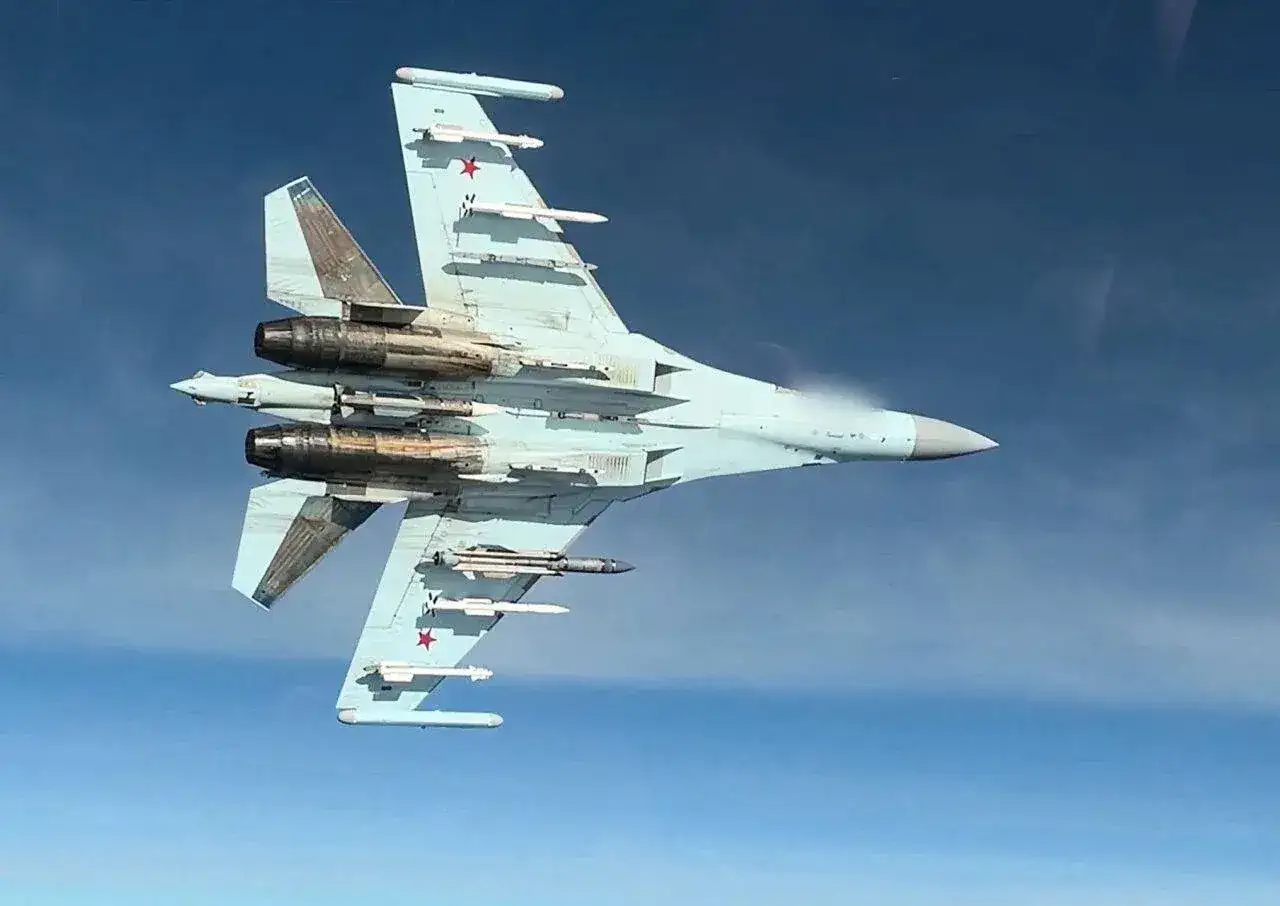
In addition to the nose-mounted radar, the Su-35 retains a rear-facing radar unit housed in its distinctive tail “sting” — a design inherited from the Su-27 — giving pilots a level of rear-sector situational awareness that most Western fighters simply don’t have.
OLS-35: Hunting Without Emitting
One of the Su-35’s most tactically valuable tools is the OLS-35 infrared search and track (IRST) system. It detects heat signatures from other aircraft — engine exhaust, aerodynamic heating, even solar reflection off airframes — without emitting any radar signal. That means the Su-35 can build a targeting picture on an adversary while remaining electronically silent, giving away nothing to radar-warning receivers. Western air forces have taken note, and several nations have responded by developing their own IRST pods for 4th-generation platforms.
Khibiny Electronic Warfare Suite
The Khibiny electronic warfare system is rarely the headline feature in discussions about the Su-35, but it may be one of its most strategically significant assets. Designed to disrupt the guidance systems of incoming missiles, Khibiny can degrade the effectiveness of radar-guided weapons — including, according to some analyses, the AIM-120 AMRAAM, the standard beyond-visual-range missile used across NATO air forces. The system has been widely discussed in Western defense circles, particularly following Russian operations in Syria.
Thrust-Vectoring Engines: Rewriting the Rules of Agility
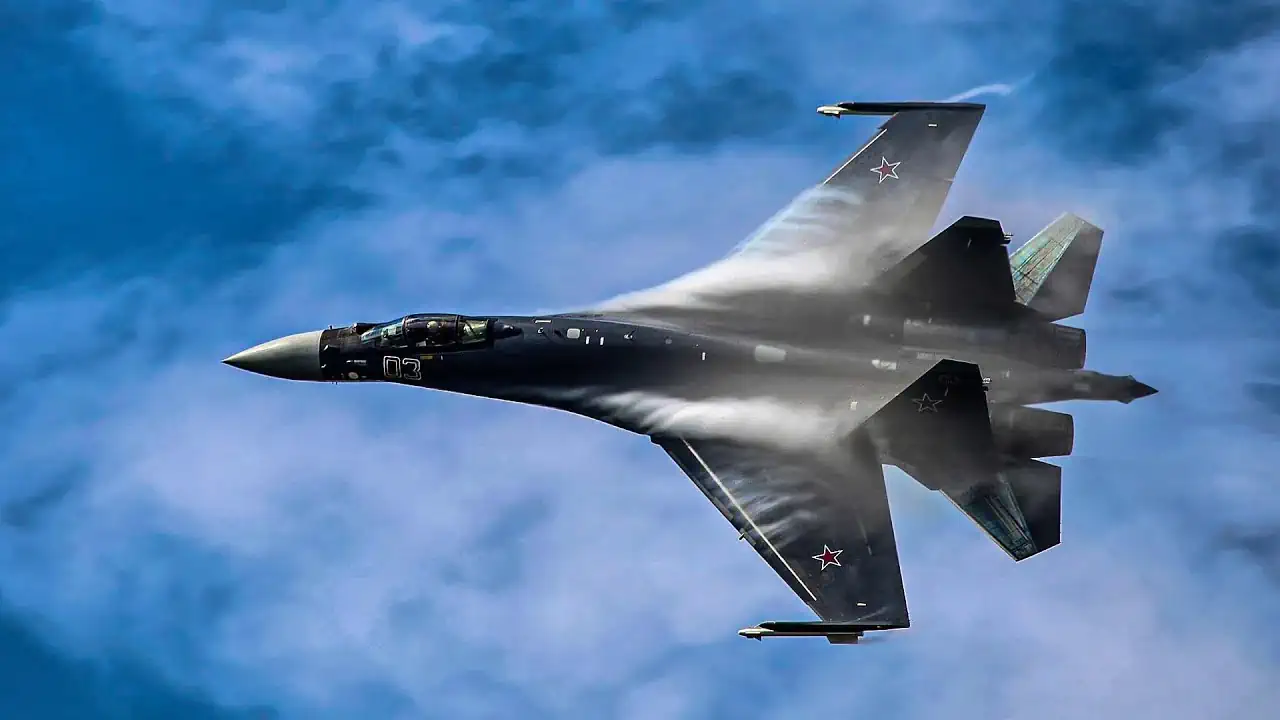
Powered by two Saturn AL-41F1S turbofan engines, each producing around 32,000 lbf of thrust in full afterburner, the Su-35 has a thrust-to-weight ratio that exceeds 1.0 — meaning it can accelerate vertically from a standstill. But what truly sets it apart is three-dimensional thrust vectoring: the exhaust nozzles can swivel in any direction, allowing the aircraft to redirect its thrust independently of its flight path.
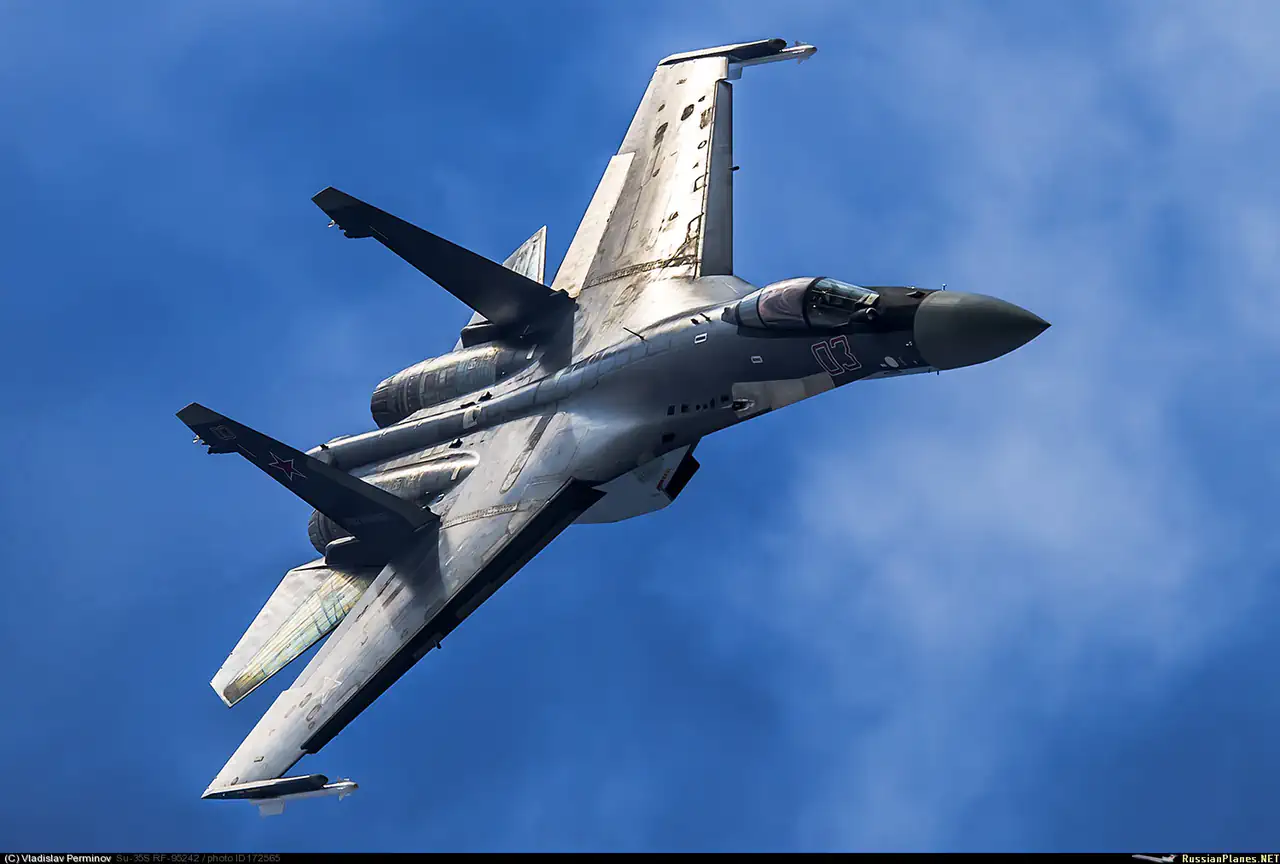
The result is an aircraft capable of post-stall maneuvers that defy conventional aerodynamics — tight nose-pointing at near-zero airspeed, rapid direction reversals, and sustained high-angle-of-attack flight. These capabilities are particularly dangerous in short-range dogfights, where pointing the nose at a target before the enemy can react is often decisive.
The cockpit reflects the aircraft’s modern pedigree. Multi-function color displays, a wide-angle HUD, and a quadruple-redundant fly-by-wire flight control system give pilots both the information and the control authority they need at any point in the flight envelope.
Weapons: From Dogfights to Deep Strikes
The Su-35 carries an internal GSh-30-1 30mm cannon with 150 rounds for close-in engagements, and features 14 external hardpoints capable of carrying up to 8,000 kg of ordnance. That combination makes it one of the most heavily armed fighters in current service.
Air-to-air missiles:
R-73 — short-range, highly agile, designed for within-visual-range combat
R-77 — medium-range active radar-guided missile, Russia’s answer to the AIM-120
R-27 — long-range semi-active radar-guided missile in multiple variants
R-37M — very long-range missile developed to target high-value support aircraft like AWACS, tankers, and command platforms
Air-to-ground and anti-ship weapons:
Kh-29, Kh-31, Kh-35, and Kh-59 missiles for ground and maritime targets
Laser and GPS-guided bombs for precision strike missions
This weapons flexibility allows the Su-35 to operate effectively across the full spectrum of air combat — from close-in knife fights to long-range precision strikes deep inside enemy territory.
Technical Specifications at a Glance
| Specification | Data |
|---|---|
| Length | 21.9 m (71.8 ft) |
| Wingspan | 15.3 m (50.2 ft) |
| Max Takeoff Weight | 34,500 kg (76,060 lb) |
| Top Speed | Mach 2.25 (~1,490 mph) |
| Combat Range | Up to 4,500 km (2,800 mi) |
| Service Ceiling | 18,000 m (59,000 ft) |
| Crew | 1 pilot |
| Hardpoints | 14 external |
Proven in Combat
Syria: The First Real Test
Following the shootdown of a Russian Su-24 by Turkish F-16s in late 2015, Russia deployed Su-35S fighters to Syria in early 2016. Their primary role was air superiority patrol — ensuring Russian aircraft operated without threat of interception. Beyond the tactical mission, Syria gave Russia a high-visibility stage to demonstrate the Su-35’s capabilities to potential buyers and to signal its air power posture to Western nations observing the conflict.
Ukraine: The Hardest Fight
Since Russia’s full-scale invasion of Ukraine in February 2022, the Su-35S has been one of the most frequently deployed Russian combat aircraft. It has conducted air superiority, escort, and ground-attack missions throughout the conflict. The operational record, however, has not been without cost. The first confirmed Su-35S loss occurred near Izyum in April 2022, with additional losses confirmed through 2023, 2024, and 2025. Most documented losses are attributed to Ukrainian surface-to-air missile systems supplied by Western nations, though at least one loss has been linked to possible friendly fire. The exact total remains difficult to verify through open sources.
Su-35 vs F-15EX: Head-to-Head
| Category | Su-35 Flanker-E | F-15EX Eagle II |
|---|---|---|
| Radar Type | Irbis-E (PESA) | APG-82 (AESA) |
| Maneuverability | Superior (thrust vectoring) | High, but lower |
| Max Air-to-Air Missiles | Up to 12 | Up to 22 AIM-120s |
The F-15EX holds a clear edge in radar technology and sheer missile load — it can carry nearly twice as many air-to-air missiles as the Su-35 in some configurations. The Su-35 responds with superior close-range agility and a more advanced electronic warfare suite. Most independent analysts consider them broadly comparable in overall combat effectiveness, which is a remarkable statement given that the F-15 platform dates back to the early 1970s.
Variants Worth Knowing
Su-35S — the definitive production version; the aircraft in active Russian Air Force service
Su-35BM — a technology demonstrator that validated systems later used in the Su-35S; never entered mass production
Su-35UB — a proposed two-seat trainer variant that remained at the prototype stage
Su-35K — the export-configured version, with customizable avionics packages for foreign buyers
Who Operates the Su-35
Russia is by far the largest operator. China became the first export customer, taking delivery of 24 aircraft between 2016 and 2018 — a significant sale that gave the People’s Liberation Army Air Force access to Russian thrust-vectoring engine technology. Indonesia, Egypt, and Iran all explored procurement at various points, but none of those deals reached completion. Western diplomatic pressure, U.S. sanctions under CAATSA legislation, and the reputational impact of combat losses in Ukraine have all contributed to limiting the Su-35’s export prospects.
Strengths and Weaknesses
Where the Su-35 excels:
Unmatched close-range maneuverability among 4th-generation fighters
World-class electronic warfare with Khibiny
Passive IRST detection via OLS-35 for emissions-free targeting
Exceptional combat range of up to 4,500 km
Versatile weapons suite covering air, ground, and maritime targets
Where it falls short:
PESA radar is a step behind modern Western AESA systems
No meaningful radar cross-section reduction — not a stealth aircraft
Export market severely constrained by international sanctions and geopolitical pressure
Five Facts Worth Knowing
Under light loadout conditions, the Su-35 can sustain supersonic flight without using its afterburners — an unusual capability that extends range and reduces heat signature
The famous Pugachev’s Cobra maneuver, first demonstrated by the Su-27, reaches new extremes on the Su-35 thanks to its vectored thrust system
The aircraft made its international debut at the 2013 Paris Air Show, where it drew wide attention from Western pilots and defense officials who watched its flight demonstration
Russia had significant hopes for Su-35 sales to Brazil, India, Indonesia, and Egypt — none of those programs resulted in confirmed deliveries
The Su-35’s tail-mounted rear radar — a distinctive feature of the Flanker family — gives it rear-hemisphere awareness that most 4th-generation Western fighters lack entirely
Frequently Asked Questions
Is the Su-35 a 5th-generation fighter?
No. It is classified as generation 4++, meaning it incorporates advanced avionics and maneuverability beyond standard 4th-gen fighters, but it lacks the low-observable stealth design that defines true 5th-generation aircraft like the F-22 or F-35.
Can the Su-35 track enemies without activating its radar?
Yes. The OLS-35 infrared search and track system allows the Su-35 to detect and track aircraft passively using heat signatures, without emitting any radar energy that an adversary’s warning system could pick up.
How many Su-35s has Russia lost in Ukraine?
Open-source records confirm at least six Su-35S losses between 2022 and 2025. The majority are attributed to Western-supplied Ukrainian air defense systems. Some figures may be higher depending on unconfirmed reports.
Can the Su-35 conduct ground-attack missions?
Yes. While its primary design role is air superiority, the Su-35 is fully capable of precision ground attacks using laser-guided bombs and a variety of air-to-surface missiles, making it a true multirole platform.
What is the Su-35’s closest Western rival?
The F-15EX Eagle II is its most direct equivalent — both are heavy, twin-engine, 4th-generation-plus multirole fighters optimized for air superiority with secondary strike capability.
Bottom Line
The Su-35 Flanker-E is a genuinely impressive machine — one of the most maneuverable production fighters ever built, with an electronic warfare suite and sensor package that demands serious respect. Its PESA radar remains its most notable technological gap compared to top Western competitors. But in any scenario where agility, range, and electronic countermeasures matter, the Su-35 remains a formidable threat and a defining aircraft of its generation.

Joseli Lourenço
06/29/2026