Panzer IV vs T-34: Armor and Firepower Compared
The Panzer IV was the only German tank built without interruption from 1937 to 1945 — roughly 8,553 units, more than any other German armored vehicle of the war.
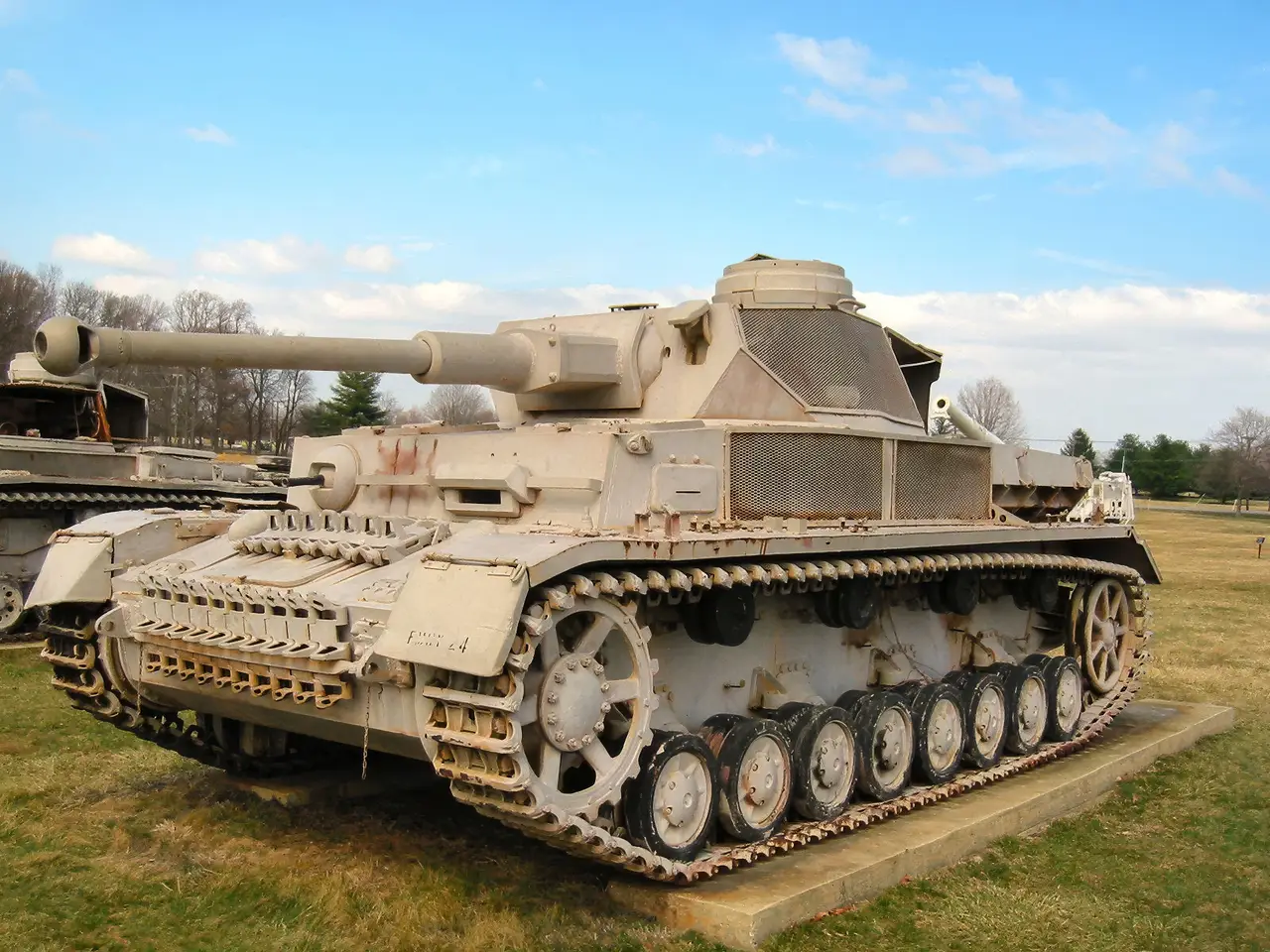
What Was the Panzer IV?
The Panzer IV was Germany’s most-produced medium tank of World War II. It started out in the 1930s under the codename “Begleitwagen,” or escort vehicle, built to back up infantry with explosive fire support.
Unlike the Panzer III, which was designed to fight other tanks, the Panzer IV was meant to knock out fortified positions and anti-tank guns.
Krupp handled the initial design work. Production kicked off in November 1937 and never really stopped until the war in Europe ended in 1945.
Why Did Its Role Change Mid-War?
The Soviet T-34 showed up in late 1941 and exposed the weakness of the tank’s short-barreled gun. Germany’s fix was a longer, harder-hitting gun, first fitted on the Ausf. F2 variant.
From that point on, the Panzer IV stopped being just infantry support. It became a core part of Germany’s armored divisions.
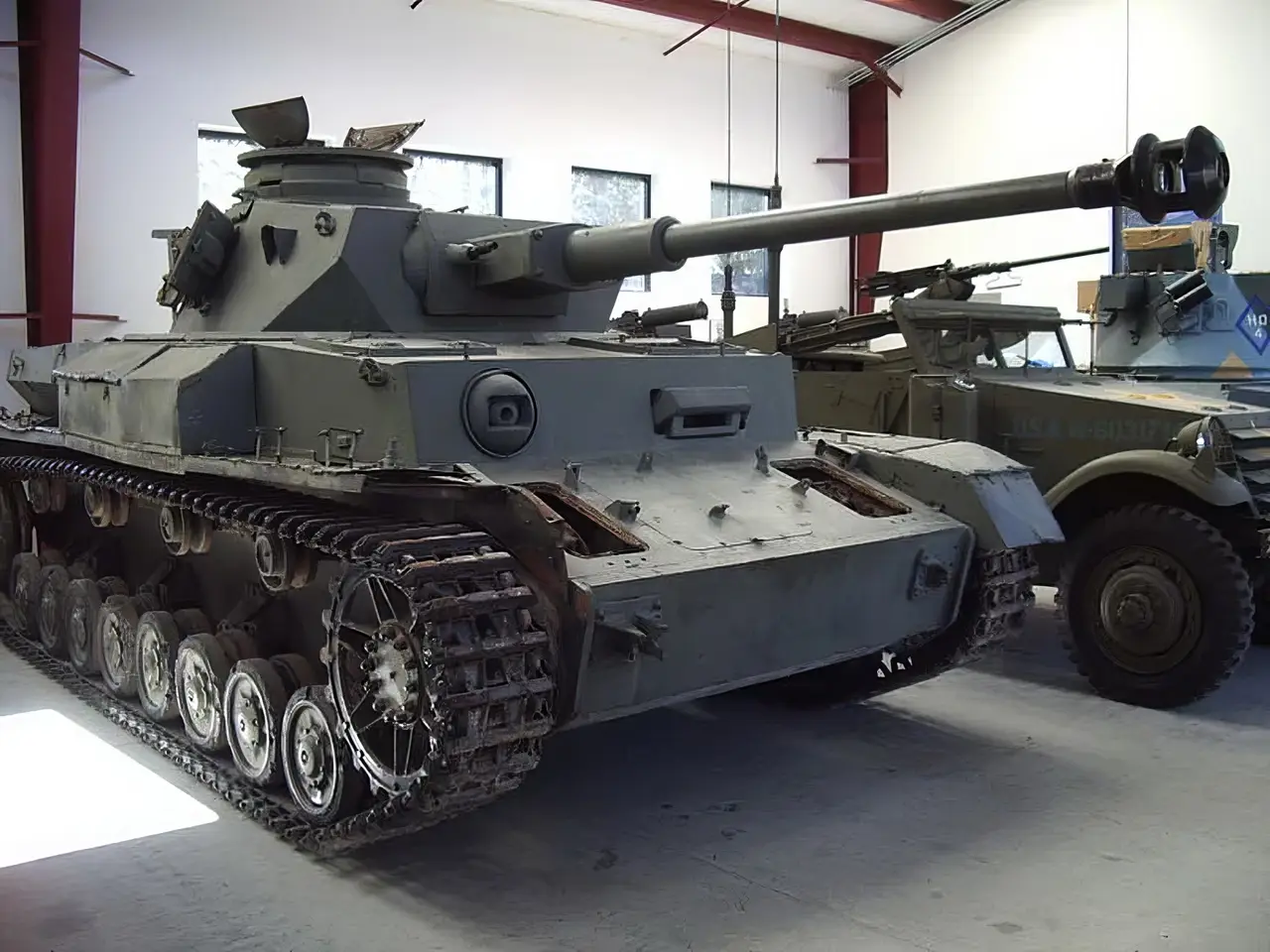
What Were the Panzer IV Ausf. H’s Specs?
The Ausf. H, one of the most-produced variants, weighed 25 tons and topped out at 38 km/h (24 mph) on roads. It carried a 7.5cm KwK 40 L/48 gun with 87 rounds of main ammunition.
Power came from a Maybach HL 120 TR(M) gasoline V12, rated around 300 PS. Road range sat between 200 and 210 km (roughly 124 to 130 miles).
| Spec | Value |
|---|---|
| Front armor (turret/hull) | 80 mm |
| Hull side armor | 20-30 mm |
Was the Secondary Armament Enough?
Yes, by the standards of the time. The Ausf. H mounted two 7.92mm MG 34 machine guns — one coaxial, one hull-mounted — backed by roughly 3,150 rounds.
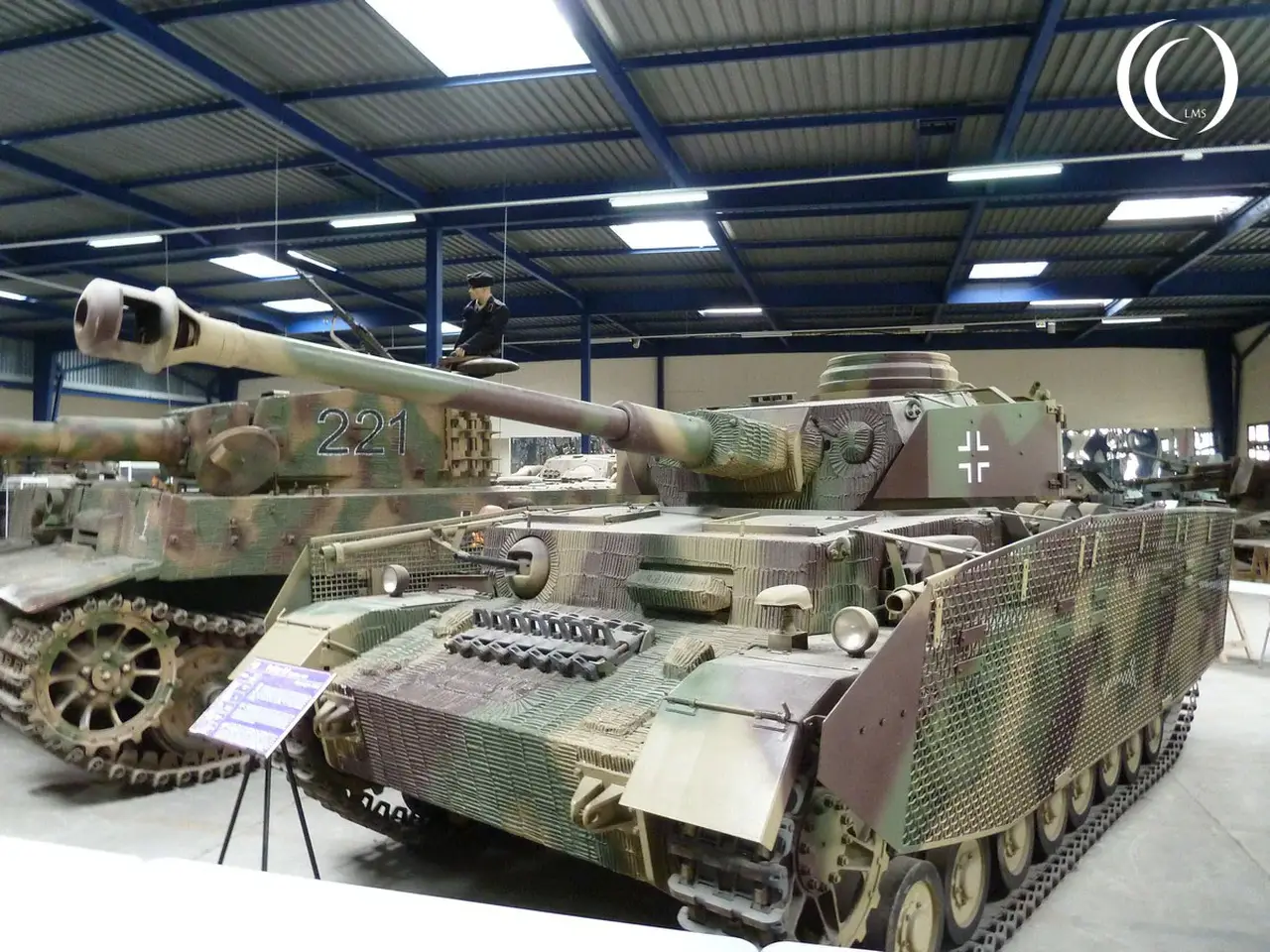
Did the Panzer IV Perform Well in Combat?
Yes, largely thanks to sheer numbers and availability. Production kept climbing through the war, peaking in 1944 with 3,125 new units delivered that year, according to specialist tank records.
It wasn’t all smooth, though. In June 1944, the Eastern Front expected 1,502 Panzer IVs on hand — only 605 were actually operational, due to production delays and combat losses.
Allied bombing raids didn’t help. In October 1944, an air raid hit the Nibelungenwerke plant in Sankt Valentin and shut down production until November 4.
What Were the Panzer IV’s Strengths and Weaknesses?
Its biggest strength was versatility. The same chassis served as the base for other vehicles, including the Jagdpanzer IV tank destroyer and the StuG IV assault gun, stretching the design’s value well beyond its original role.
Strengths:
- Uninterrupted production throughout the entire war
- Progressively upgraded gun, from the L/24 to the L/48
- Chassis reused for multiple derivative vehicles
Weaknesses:
- Thin side armor (20-30 mm)
- Aging base design with limited room to grow
- Gasoline engine, more vulnerable to fire
Did the Added Weight Hurt Mobility?
To some extent, yes. Growing from 20 to 25 tons across variants dropped the Ausf. H’s top speed to 38 km/h, slower than earlier, lighter versions.
Panzer IV or T-34: Which Had the Edge?
It depends on the war phase and the specific variants being compared. The T-34 used sloped armor, which deflected incoming rounds more effectively, while the Panzer IV relied on thicker but flat frontal plating.
With the KwK 40 L/48 gun, the Ausf. H matched up well on firepower. But its thinner side armor remained a real disadvantage against more modern Soviet tanks.
FAQ
How many Panzer IV tanks were built?
The most commonly cited figure is 8,553 units, though specialist estimates range from 8,515 to as high as 9,021 depending on counting methods.
Was the Panzer IV used after World War II?
Yes. Records show Syrian use between 1954 and 1973, including combat during the Six-Day War.
What gun did the Panzer IV use?
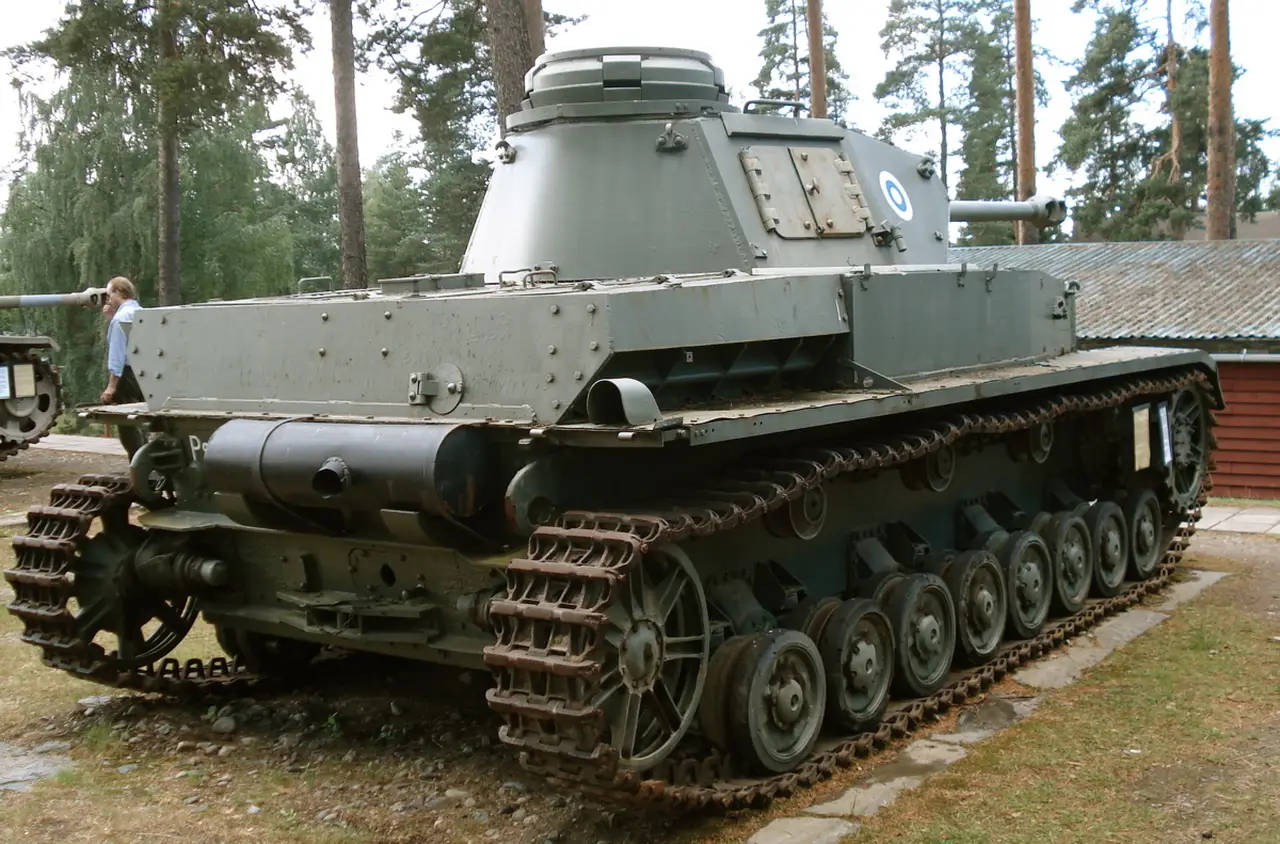
Early models carried the short-barreled KwK 37 L/24. Later versions switched to the longer, more powerful KwK 40, in L/43 and L/48 configurations.
What was the last production variant?
The Ausf. J, built from February 1944 to March 1945, with about 3,655 units produced.
Final Verdict: Why the Panzer IV Still Matters
The Panzer IV wasn’t Germany’s strongest tank, but it was its most dependable in terms of numbers and adaptability. Its unbroken production run from 1937 to 1945 speaks to a design that evolved without ever needing a full redo.
Alongside the Panther, it formed the real backbone of Germany’s armored divisions through the end of the war.

Joseli Lourenço
08/18/2026