
MiG-29 Fulcrum: The Soviet Jet That Challenged NATO
The MiG-29 Fulcrum is a Cold War-era fighter known for agility and close-range combat power. Explore its design, weapons, operational history, and why it remains active decades later.
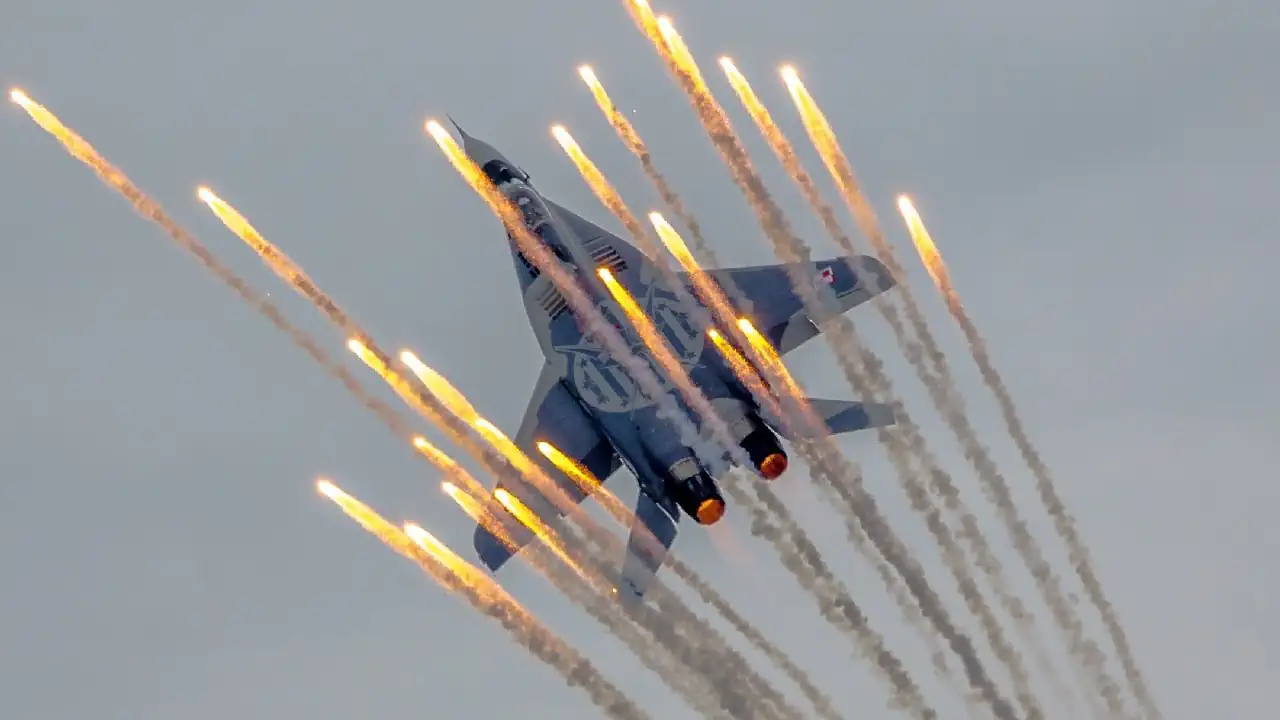
What Is the MiG-29 Fulcrum?
The MiG-29 Fulcrum is a twin-engine air superiority fighter developed by the Soviet Union to counter advanced Western jets. It was built with a strong focus on agility, rapid response, and effectiveness in close-range aerial combat.
Designed by the Mikoyan bureau, the aircraft first flew in 1977 and officially entered service in 1983. Its development reflects the intense technological rivalry of the Cold War, particularly against platforms like the F-15 and F-16.
From the outset, the MiG-29 was intended to operate in demanding environments, including rough or minimally prepared airfields. This operational flexibility became one of its defining traits.
Design, Technology, and Firepower
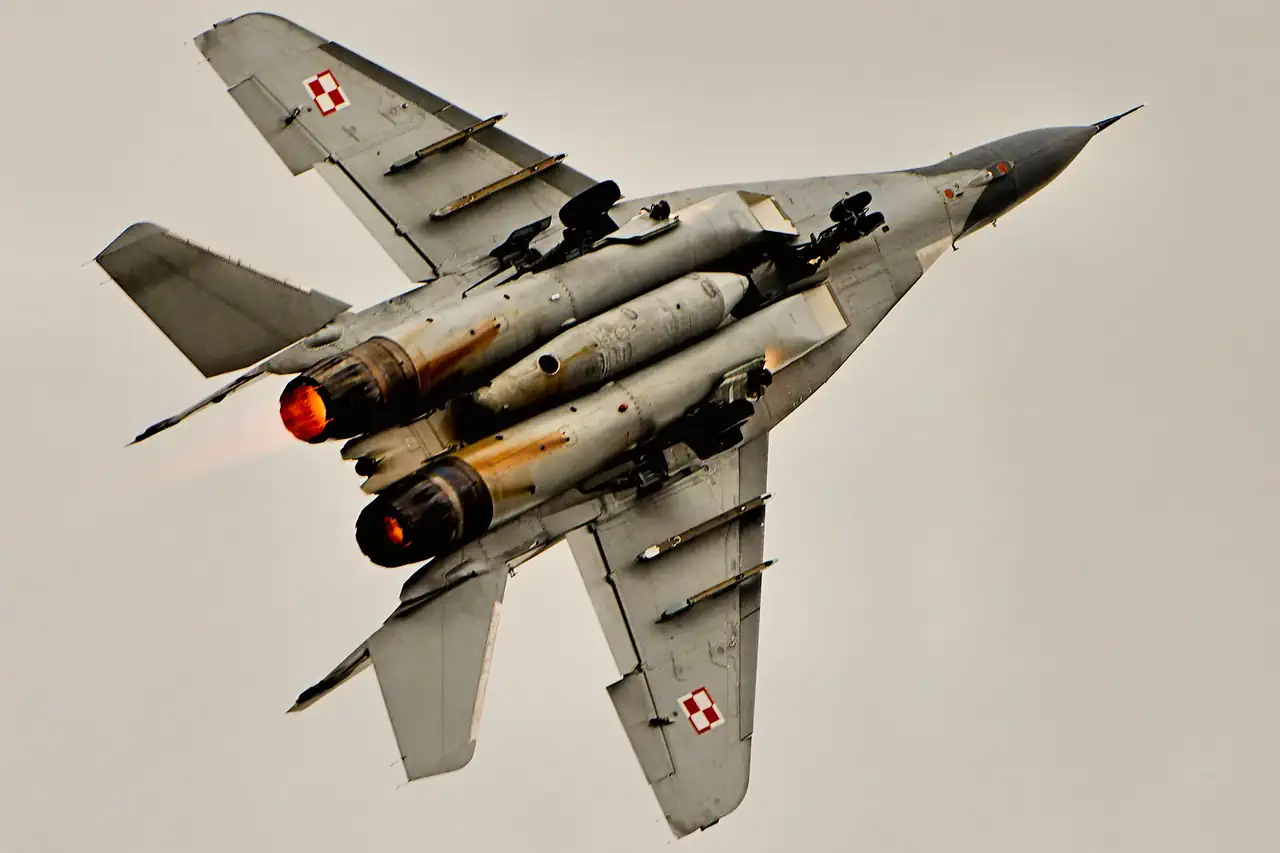
The MiG-29 features a rugged airframe with blended wing-body aerodynamics that enhance lift and maneuverability. Its twin Klimov RD-33 engines provide strong thrust and redundancy, improving survivability in combat situations.
One standout feature is its helmet-mounted sight (HMS), allowing pilots to lock targets simply by looking at them. This system, paired with highly maneuverable missiles, significantly improves effectiveness in dogfights.
In its original configuration, the aircraft uses the N019 radar, capable of tracking airborne targets. However, early versions had limitations compared to Western counterparts. Modernized variants include upgraded radar systems, digital avionics, and improved electronic warfare capabilities.
Weapons Systems
The MiG-29 is equipped for air-to-air combat with:
GSh-30-1 30 mm internal cannon
R-73 short-range missiles (high off-boresight capability)
R-27 medium-range missiles
Later upgrades expanded its role to include air-to-ground missions, adding precision-guided munitions in some variants.
Performance
Maximum speed: approximately 2,400 km/h2{,}400 \, \text{km/h}2,400km/h
Range: around 1,500 km without refueling
Service ceiling: about 18,000 m
Its real strength lies in high agility and strong performance at low and medium altitudes, especially in visual-range engagements.
Combat Use, Comparison, and Final Assessment
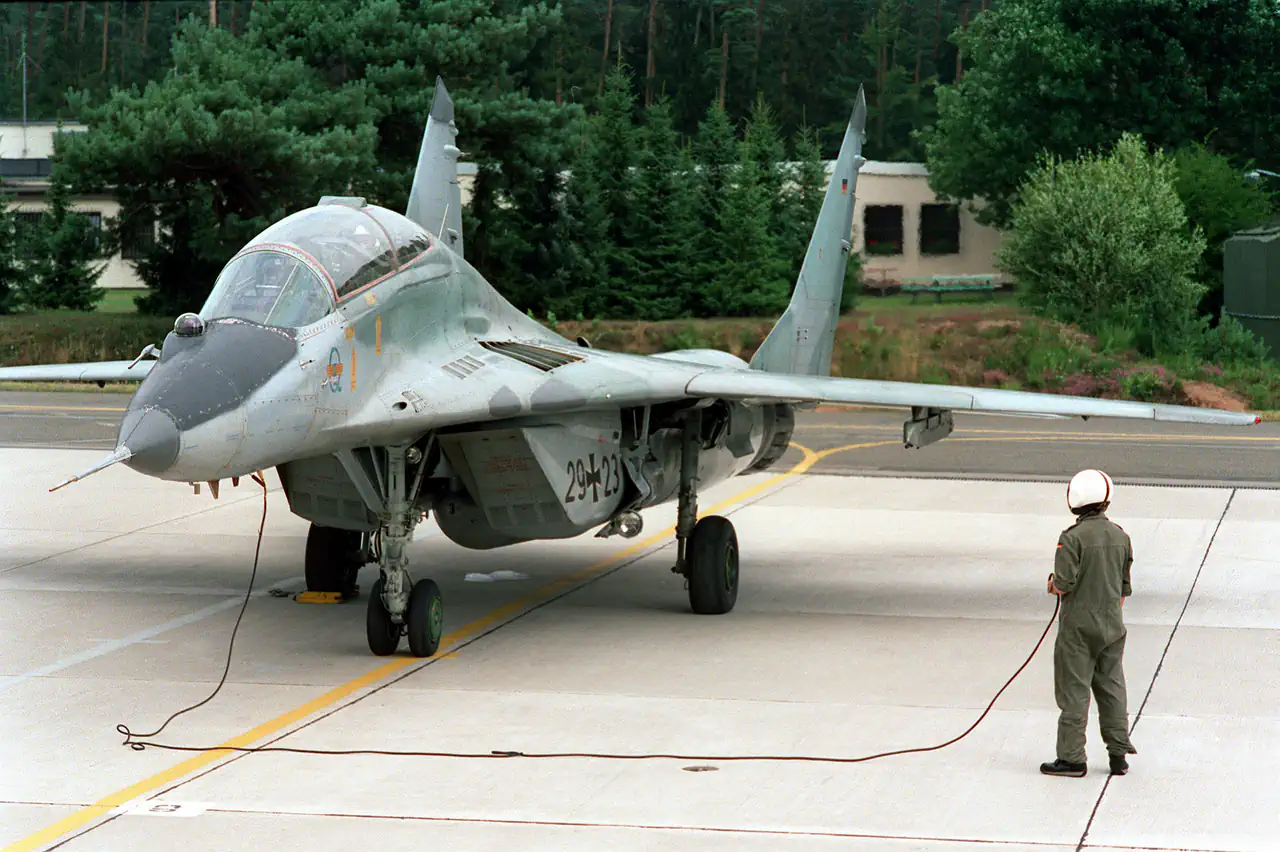
The MiG-29 has seen operational use in multiple conflicts, including the Gulf War, Balkan conflicts, and ongoing combat in Ukraine. Its effectiveness has varied depending on pilot training, support systems, and opposing technology.
Strengths and Weaknesses
Strengths:
Exceptional maneuverability
Strong close-range combat capability
Twin-engine safety and resilience
Weaknesses:
Limited operational range
Less capable radar in early models
Maintenance can be resource-intensive
MiG-29 vs F-16
MiG-29 Fulcrum | F-16 Fighting Falcon
Superior in close-range agility | Better range and fuel efficiency
Twin-engine configuration | Lower operating cost
Originally less advanced avionics | More advanced electronics overall
The MiG-29 excels in dogfights, while the F-16 benefits from superior avionics and multirole flexibility.
Variants and Upgrades
Key versions include:
MiG-29S: improved weapons integration
MiG-29SMT: extended range and upgraded avionics
MiG-29K: carrier-based naval version
MiG-35: significantly enhanced evolution (often considered a next step rather than a direct variant)
These upgrades address many of the aircraft’s original limitations.
Quick FAQ
Is the MiG-29 still in service?
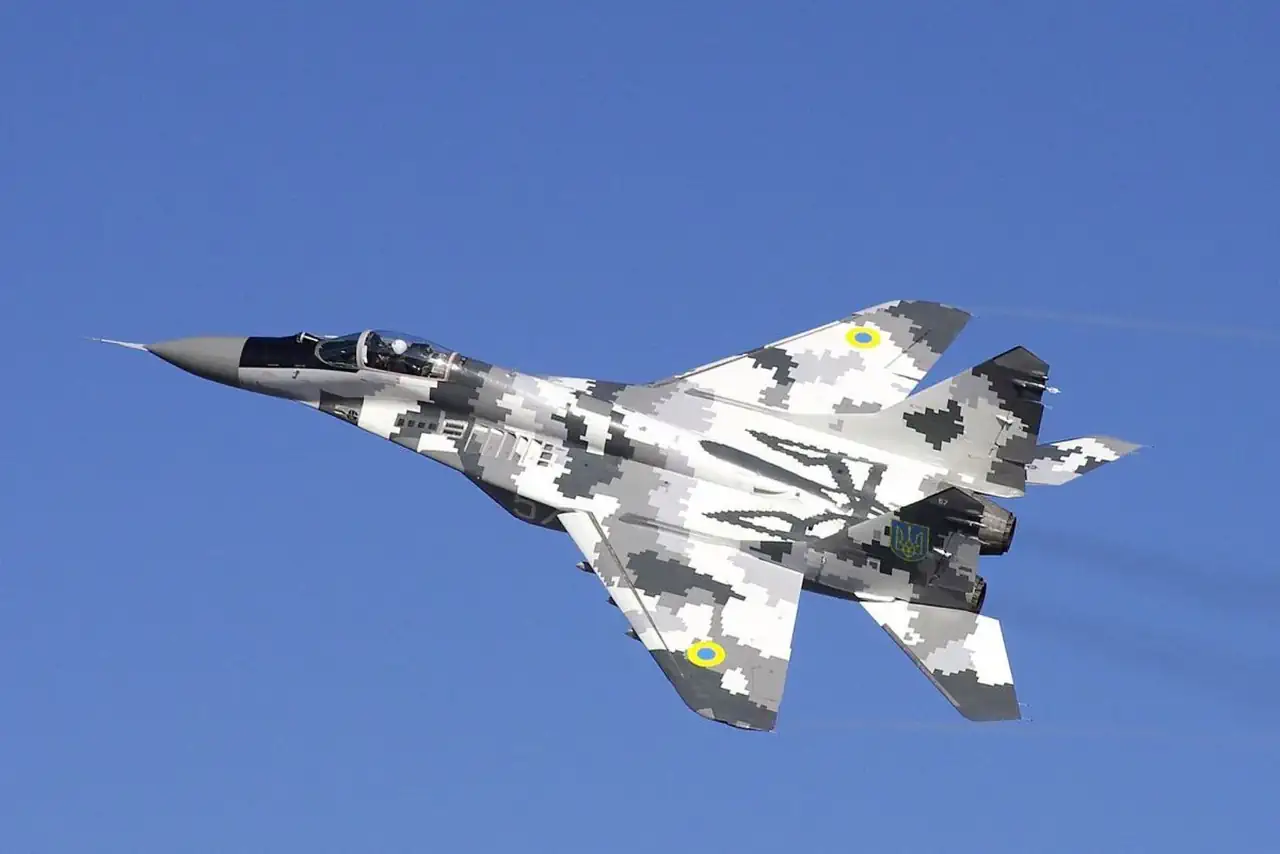
Yes, several countries operate upgraded versions.
What is its main rival?
The F-16 Fighting Falcon.
Is it better than the F-16?
It depends on the scenario; it excels in close combat.
Can it perform ground attacks?
Yes, especially in modernized configurations.
What makes it unique?
Its agility and helmet-mounted targeting system.
Final Summary
The MiG-29 Fulcrum remains a relevant fighter due to upgrades that extend its operational life. While no longer cutting-edge, it is still highly effective in close combat and continues to serve in multiple air forces worldwide.

Joseli Lourenço
07/02/2026