
Meet the M1 Abrams: The West’s Most Battle-Tested Tank
The M1 Abrams has been the US Army’s main battle tank since 1980. Here’s a look at its history, armor, firepower, key specs, and the upcoming M1E3 upgrade.
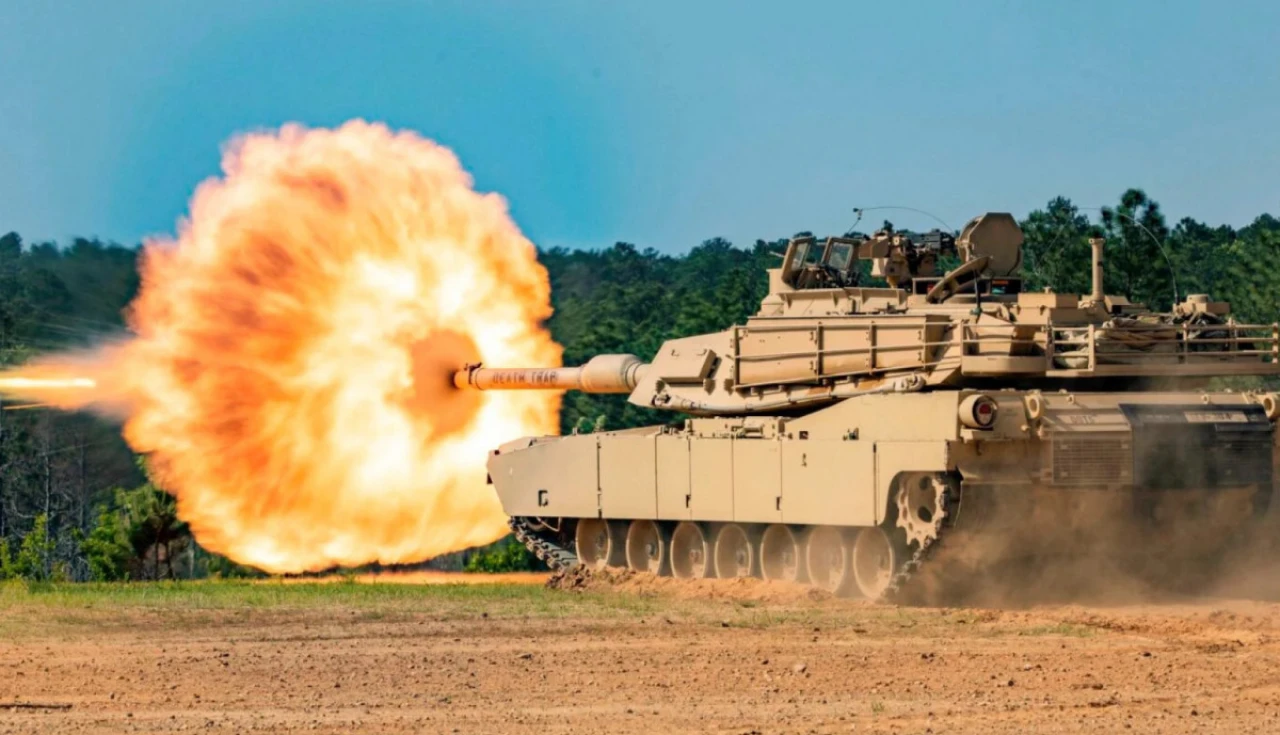
M1 Abrams: The Tank That Has Anchored US Armored Warfare Since 1980
When the US Army needed a replacement for its aging M60 tanks in the 1970s, the answer came after an earlier joint program with West Germany, the MBT-70, fell apart. Out of that setback came the M1 Abrams, a main battle tank that entered service in 1980 and has remained the backbone of American armored forces ever since.
Built by General Dynamics Land Systems and named after General Creighton Abrams, the tank started out with a 105mm rifled cannon based on the British L7 design. That changed with the M1A1, which introduced the 120mm smoothbore M256 cannon — a shift driven by the need for greater firepower against increasingly capable enemy armor.
The next major leap came with the M1A2, which added more advanced fire-control electronics and target acquisition systems, making the tank both more accurate and easier for crews to operate under pressure. Starting around 1992, the Army began fielding a configuration with a panoramic commander’s sight, digital fire control, and second-generation depleted uranium armor.
From there, the tank evolved through the System Enhancement Package (SEP) family, each iteration adding better sensors, communications, and power management. The current production standard is the M1A2 SEPv3, and it represents the most electronically advanced Abrams variant fielded so far.
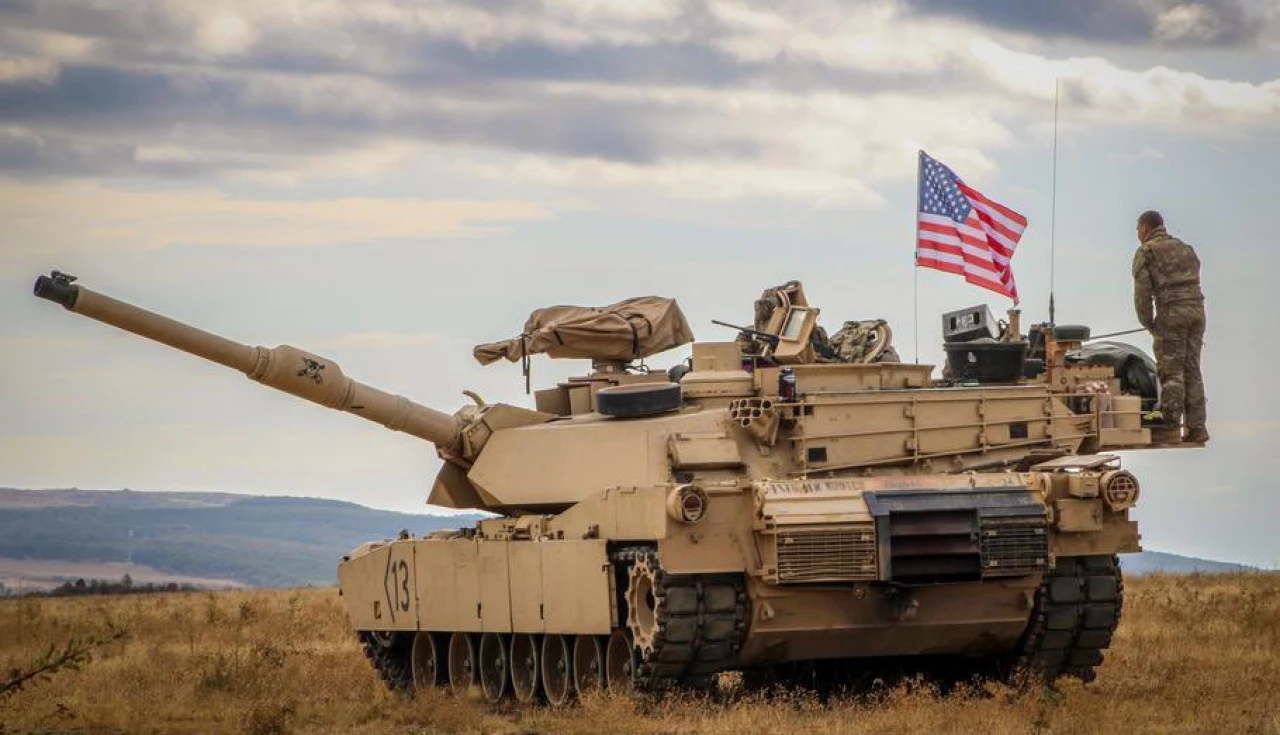
Armor, Sensors and Firepower: What Sets the Abrams Apart
One of the Abrams’ most distinctive features is its engine. Rather than a diesel powerplant, it runs on the Honeywell AGT1500, a multifuel gas turbine producing roughly 1,500 horsepower (about 1,100 kW). That gives the tank strong acceleration, but it also comes with a tradeoff: higher fuel consumption and a more demanding logistics footprint compared to diesel-powered rivals.
Protection comes from composite armor — Chobham-type in earlier models — with depleted uranium layers added in later US variants. The exact composition remains classified and hasn’t been officially disclosed. A key survivability feature is the isolated ammunition compartment, fitted with blow-out panels designed to vent an accidental explosion away from the crew rather than into the fighting compartment.
The SEPv3 upgrade brought improved thermal sights (IFLIR), a new tactical communications suite, more efficient power management, and integration with the Trophy active protection system, which can detect and intercept incoming threats like anti-tank missiles before impact. The tank also carries the CREW Duke system for electronic countermeasures against remotely detonated explosives.
For firepower, the Abrams relies on the 120mm M256 smoothbore cannon, carrying up to 40 rounds in current variants. Secondary armament includes a .50-caliber M2HB heavy machine gun and two 7.62mm M240 machine guns — one coaxial, one mounted at the loader’s station.
M1A1 Specifications
| Specification | Value |
|---|---|
| Weight | 61.3 tons |
| Engine | AGT1500 turbine, 1,500 hp |
| Top speed | 41.5 mph (66.8 km/h) |
| Range | 273–298 miles |
| Crew | 4 |
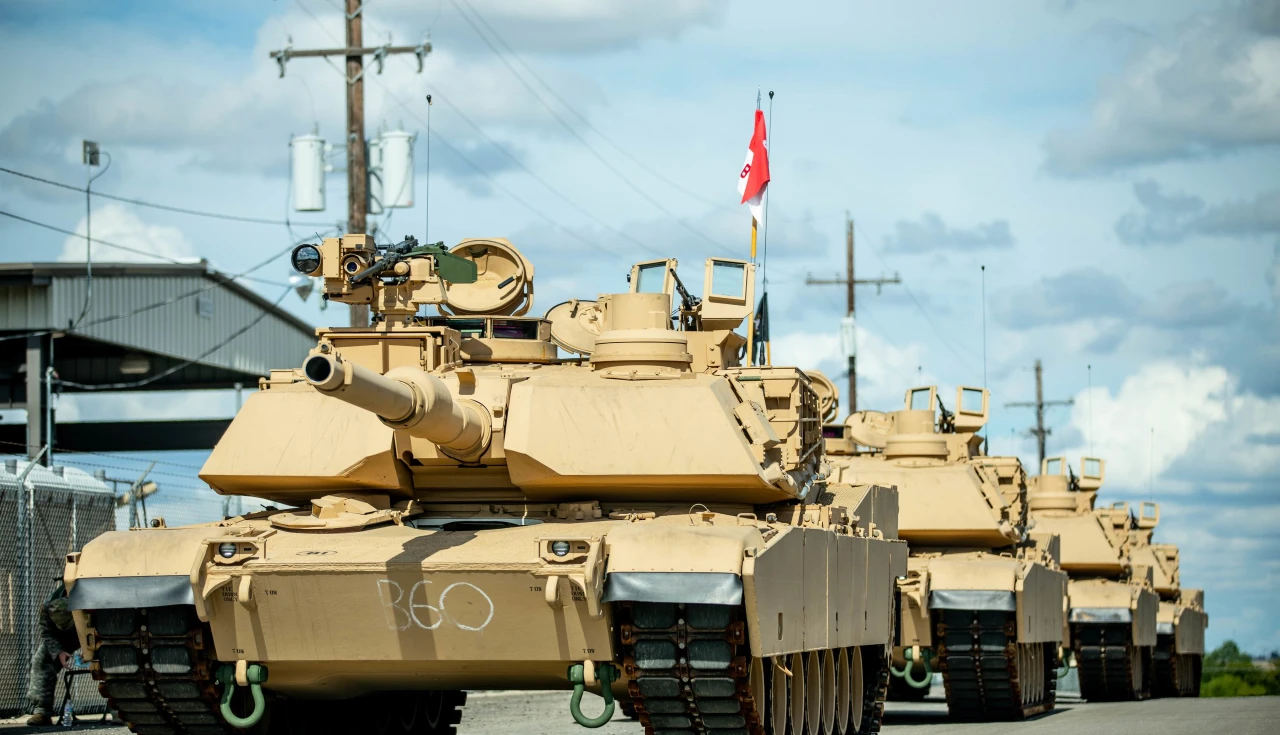
Combat Record and How It Stacks Up Against the Leopard 2
The Abrams has seen combat in the 1991 Gulf War, the Iraq War, and Afghanistan, where it built a reputation for strong frontal protection and firepower. Detailed figures on losses or survivability rates by conflict aren’t widely confirmed in reliable public sources, so they shouldn’t be treated as settled numbers.
Its most frequently cited rival is Germany’s Leopard 2, another 120mm-armed main battle tank. The two take different approaches to mobility: the Abrams’ gas turbine favors raw power and acceleration, while the Leopard 2’s diesel engine is generally associated with lower fuel consumption and simpler logistics. Both use advanced composite armor, but the precise protection levels of each remain classified by their respective governments.
Strengths
- Advanced composite armor built around crew survivability
- Powerful 120mm main gun
- Isolated ammunition storage with blow-out panels
- Modern electronics suite in the SEPv3 configuration
- M1E3 program in development for faster future upgrades
Weaknesses
- High fuel consumption from the turbine engine
- More demanding maintenance than diesel-powered tanks
- Steady weight increase with each modernization cycle
- Limited public transparency on operating costs
- Added weight affects strategic mobility and deployability
In September 2023, the Army officially ended the SEPv4 program and launched the M1E3 initiative — a lighter, next-generation configuration built around a modular open systems architecture (MOSA) meant to speed up future upgrades. Initial operational capability is targeted for the early 2030s.
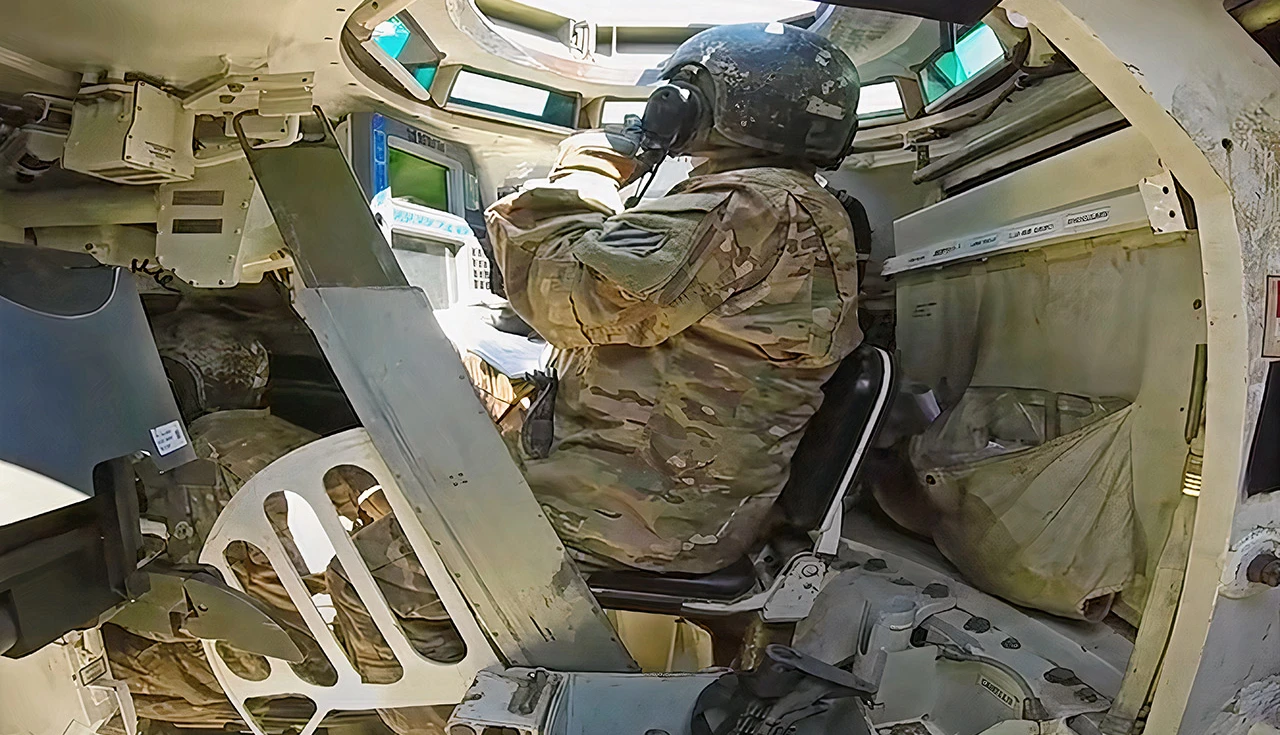
Frequently Asked Questions
When did the M1 Abrams enter service?
In 1980, replacing the US Army’s M60 tanks.
What is the Abrams’ main gun?
The 120mm M256 smoothbore cannon, standard since the M1A1.
Why does the Abrams use a turbine instead of a diesel engine?
The AGT1500 turbine delivers stronger acceleration, though it burns more fuel.
What is the Abrams’ closest competitor?
Germany’s Leopard 2, which also carries a 120mm gun but runs on diesel.
What will eventually replace the Abrams?
The M1E3, currently in development, with fielding expected in the early 2030s.
Bottom Line
The M1 Abrams remains one of the most combat-tested main battle tanks in the world, built around a rare combination of firepower, crew protection, and evolving electronics. Its gas turbine engine sets it apart from diesel-powered rivals like the Leopard 2. With the M1E3 now in development, the US Army is positioning the Abrams lineage to stay relevant well into the 2030s.

Joseli Lourenço
07/31/2026