
F-14 Tomcat: Inside the Power of a Cold War Legend
The F-14 Tomcat was one of the most advanced fighter jets of the Cold War, combining long-range radar, supersonic speed, and powerful missile systems to defend U.S. Navy fleets.
What is the F-14 Tomcat and why it matters
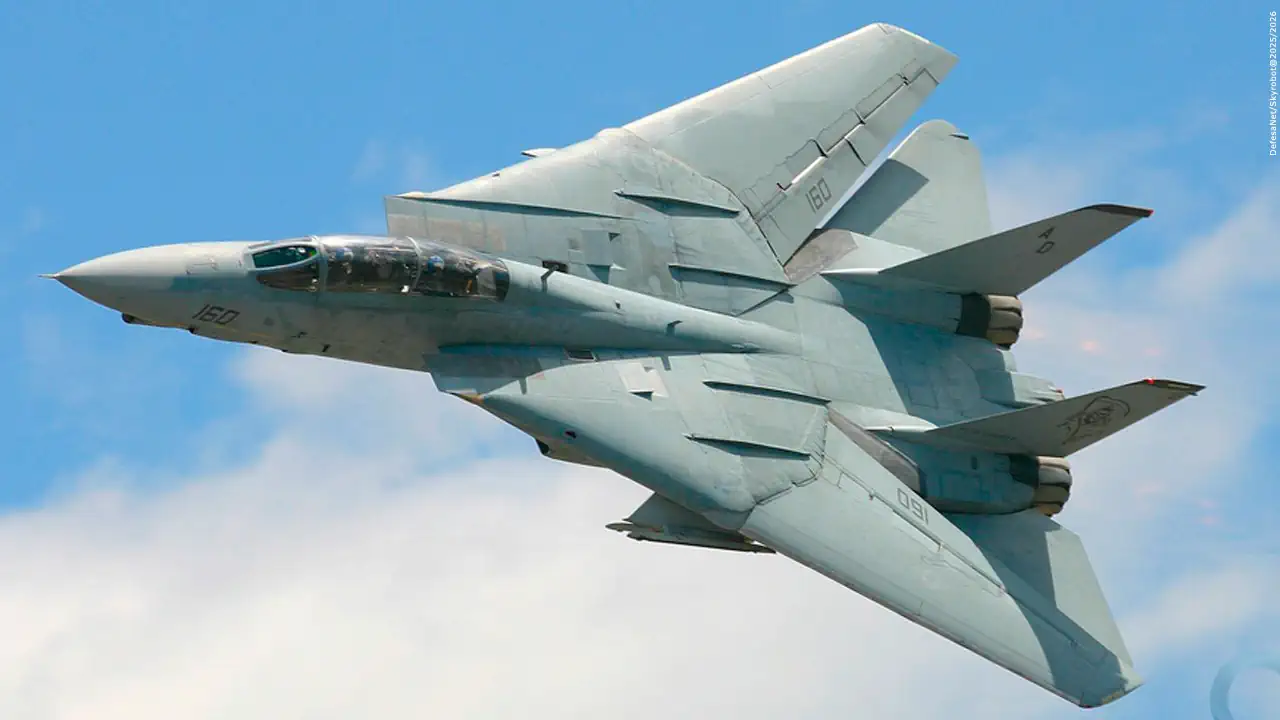
The F-14 Tomcat was a carrier-based, supersonic fighter designed to protect U.S. Navy fleets from long-range threats. Its core mission was air superiority, particularly intercepting enemy aircraft before they could reach naval forces.
What set it apart was its ability to detect and engage multiple targets at long distances, a capability that was highly advanced when it entered service.
Origins, development, and service entry
Cold War background
During the late 1960s, the U.S. faced growing concerns about Soviet long-range bombers armed with anti-ship missiles. The Navy needed a powerful interceptor capable of stopping these threats far from carrier groups.
Manufacturer and design approach
Grumman developed the F-14 after earlier programs failed to meet Navy requirements. The company focused on range, radar power, and adaptability for carrier operations.
Entry into service
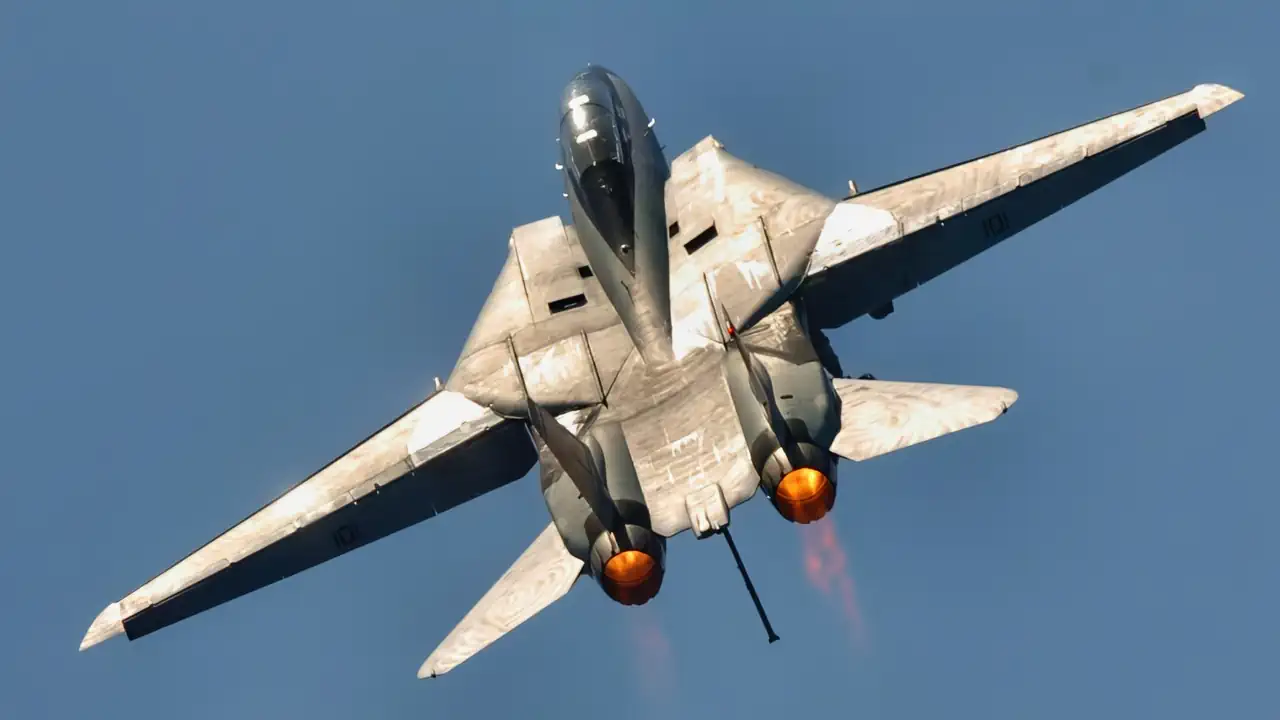
The F-14 officially entered service in 1974. It quickly became the backbone of U.S. Navy fleet defense and remained in service until 2006.
Design and technology explained
Variable-sweep wings
One of the aircraft’s defining features was its swing-wing design. The wings automatically adjusted position depending on speed:
Extended for low-speed control (takeoff and landing)
Swept back for high-speed flight
This allowed the aircraft to perform well across a wide range of conditions.
Radar and sensors
The AWG-9 radar was a major technological leap. It could track up to 24 targets simultaneously and engage several at once, giving the F-14 a significant advantage in beyond-visual-range combat.
Two-person crew
The aircraft required:
A pilot to fly
A Radar Intercept Officer (RIO) to manage radar and weapons systems
This division improved combat effectiveness but added complexity.
Weapons and offensive capability
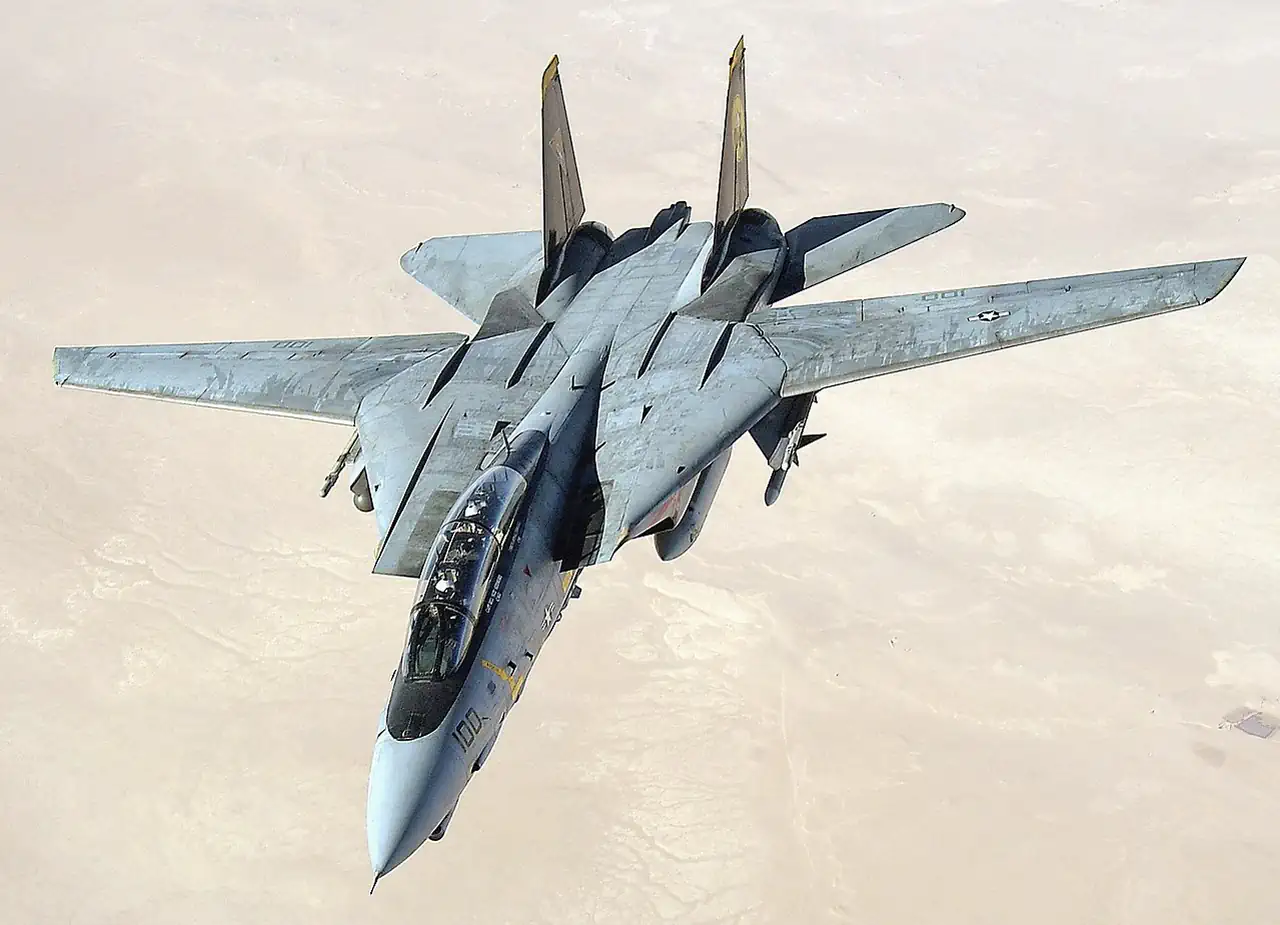
The F-14 was built for long-range engagement, often before visual contact.
Key weapons included:
AIM-54 Phoenix: long-range missile (commonly cited range over 150 km, though exact operational range varies by conditions)
AIM-7 Sparrow: medium-range missile
AIM-9 Sidewinder: short-range missile
M61 Vulcan 20 mm cannon
The Phoenix missile, in particular, enabled the F-14 to engage multiple targets simultaneously, a rare capability at the time.
Performance and operational efficiency
Top speed: about Mach 2.34
Range: roughly 3,000 km with external fuel
Service ceiling: around 15,000 meters
Its combination of speed, endurance, and firepower made it highly effective in fleet defense missions.
Combat use and real-world operations
The F-14 saw action in several operations, including:
Gulf War (1991)
Operations over Iraq and Afghanistan
Although originally designed as an interceptor, later upgrades enabled precision ground attack missions.
Notably, Iran remains the only country still operating the F-14, using aircraft acquired before 1979.
Strengths and limitations
Strengths
Exceptional long-range radar capability
Ability to engage multiple targets
Strong endurance for naval missions
Versatility in later upgrades
Limitations
High maintenance and operating costs
Complex systems requiring skilled crews
Aging platform by the early 2000s
Comparison with its main rival
The F-14’s closest counterpart was the F-15 Eagle.
F-14 Tomcat | F-15 Eagle
Carrier-based operations | Land-based operations
Long-range interception focus | Multi-role air superiority
Phoenix missile capability | Superior agility in dogfights
The F-15 proved more cost-effective and adaptable, contributing to the F-14’s retirement.
Variants and upgrades
Main versions included:
F-14A: initial production model
F-14B: improved engines
F-14D: upgraded avionics and systems
The F-14D offered the most advanced capabilities but was also the most expensive to operate.
Notable facts
Gained global fame through the film Top Gun (1986)
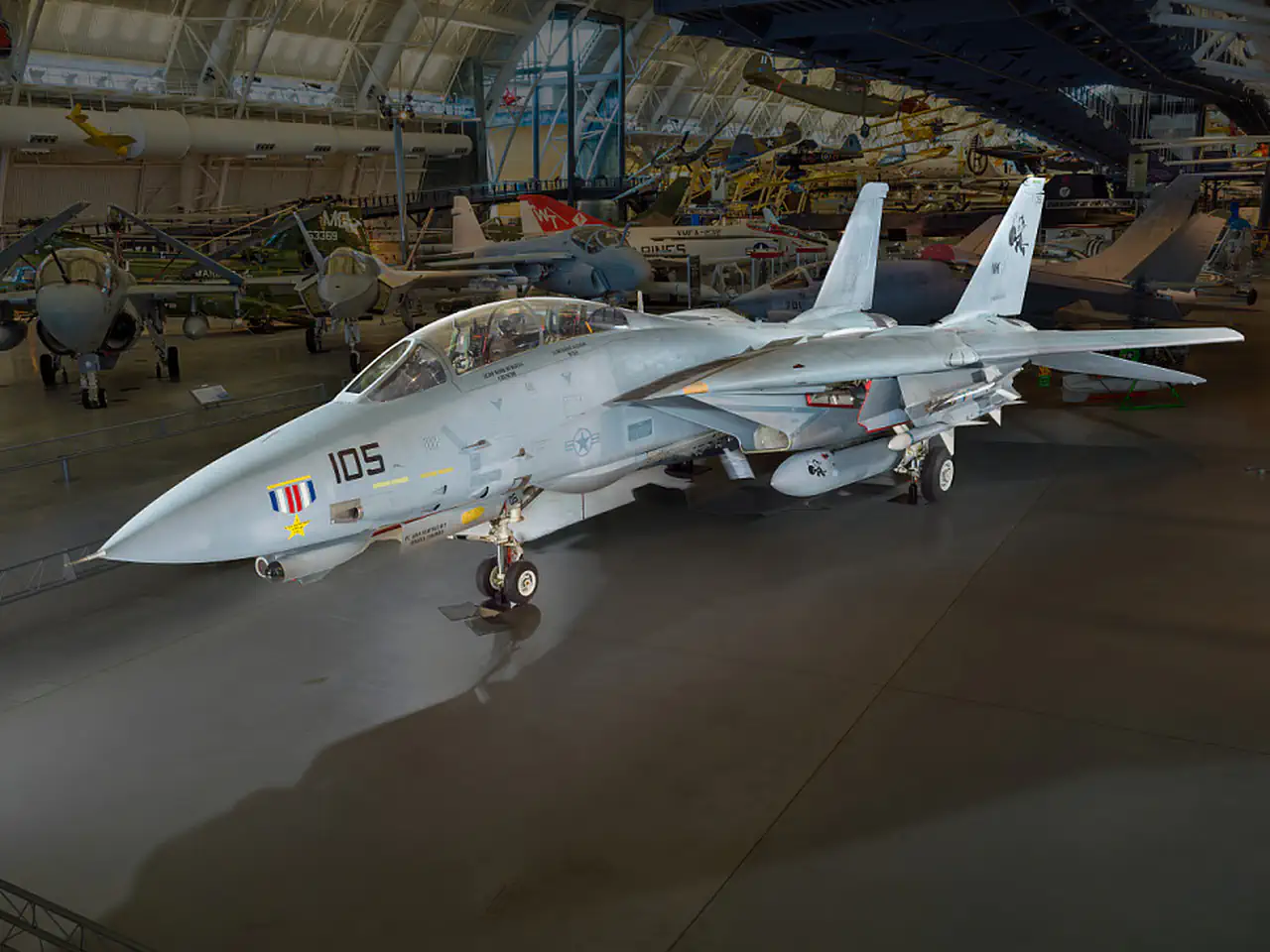
Known for its distinctive twin-tail design
One of the few fighters capable of true multi-target engagement in its era
Required extensive maintenance compared to newer aircraft
Military and technological impact
The F-14 helped redefine naval air defense by combining long-range detection with powerful missile systems. Its influence can still be seen in modern fighter design and doctrine.
Frequently asked questions
Is the F-14 still in service?
Yes, but only in Iran. The U.S. retired it in 2006.
What made the F-14 unique?
Its combination of long-range radar and the Phoenix missile system.
Was the F-14 better than the F-15?
Each excelled in different roles. The F-14 focused on fleet defense, while the F-15 was more versatile.
Why was the F-14 retired?
Primarily due to high maintenance costs and the introduction of newer aircraft like the F/A-18.
Could the F-14 perform ground attacks?
Yes, especially after later upgrades added precision strike capabilities.
Final overview
The F-14 Tomcat remains one of the most iconic fighter jets ever built, blending advanced technology, long-range firepower, and naval adaptability. Despite its cost and complexity, it played a crucial role in Cold War defense and left a lasting legacy in military aviation.

Joseli Lourenço
06/23/2026