
What Makes the Eurofighter Typhoon So Deadly in Air-to-Air Combat?
The Eurofighter Typhoon is one of the world’s most agile multirole fighters. Born from a joint European effort, it combines supersonic speed, elite sensors, and lethal firepower to dominate modern skies.
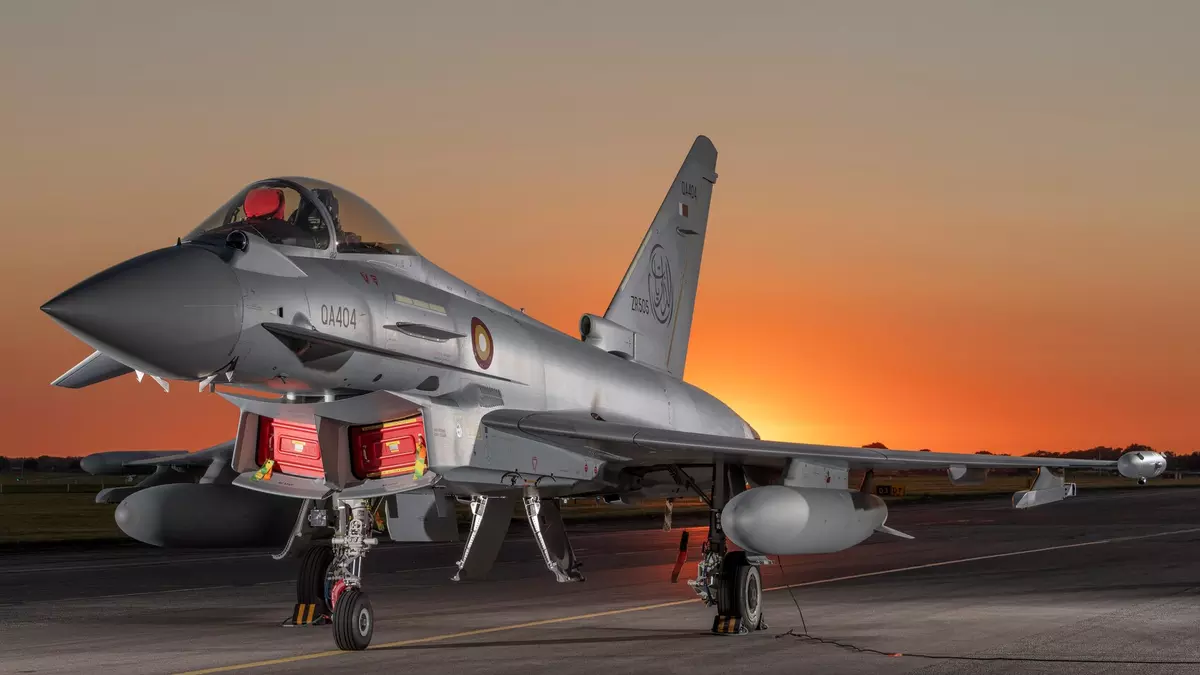
Understanding the Eurofighter Typhoon
Picture a combat aircraft that can accelerate vertically into the stratosphere almost as fast as it flies in a straight line. That is the Eurofighter Typhoon, a premier 4.5-generation jet fighter originally built to achieve absolute air superiority—clearing hostile skies and hunting down enemy aircraft with ruthless efficiency.
While it began life as a pure high-altitude interceptor, the Typhoon has undergone a massive evolution. Today, it stands as a true multirole platform. This means a pilot can engage in high-G dogfights and precision ground-attack missions on the exact same sortie, without ever needing to return to base to swap loadouts.
Born from the Cold War: History and the European Consortium
During the late 1970s, defense planners across Western Europe faced a pressing problem. The Soviet Union was developing highly capable, maneuverable jets like the Su-27 and MiG-29. Relying solely on American aircraft like the F-15 or F-16 wasn’t always the ideal path for European nations looking to preserve their own defense industries and technological independence.
To meet this challenge, four major industrial powers formed a historic alliance, now known as Eurofighter GmbH. The coalition pooled the resources of:
The United Kingdom (via BAE Systems)
Germany and Spain (via Airbus Defence and Space)
Italy (via Leonardo)
France was originally part of early discussions but eventually split from the group to develop the Dassault Rafale, driven by disagreements over design requirements and the need for a carrier-capable naval variant.
Getting the Typhoon off the ground was neither quick nor simple. The collapse of the Soviet Union in 1991 shifted global defense priorities, triggering severe budget cuts that almost killed the program. Yet, the consortium held together. The prototype made its maiden flight in 1994, and the fighter officially entered operational service with the four partner nations in the early 2000s.
The Aerodynamic Edge: Delta-Canard Configuration
When you look at a Typhoon, its unique shape is instantly recognizable. It features a large delta (triangle-shaped) wing combined with two small forewings known as canards, located just below the cockpit.
In traditional aerospace design, airplanes are built to be inherently stable. The Typhoon is the exact opposite: it was deliberately designed to be aerodynamically unstable. If a human pilot tried to fly it using traditional mechanical controls, the aircraft would tumble out of control within milliseconds.
To make this instability a weapon, the jet relies on a sophisticated digital fly-by-wire flight control system. Onboard computers read the pilot’s stick inputs and adjust the flight control surfaces thousands of times per second. The result of this controlled instability is jaw-dropping agility, giving the jet the ability to execute aggressive turns and high-angle-of-attack maneuvers that leave heavier rivals struggling to keep up.
Advanced Avionics: Sensors and Electronic Warfare
Modern air combat is rarely decided by speed alone; the fighter that detects, tracks, and fires first usually survives. In the realm of avionics, the Typhoon is an electronic powerhouse.
Its sensor suite is highlighted by the PIRATE system, a passive Infrared Search and Track (IRST) sensor mounted in front of the windshield. This allows the pilot to detect the thermal emissions of enemy jet engines from tens of miles away without emitting any radar signals—effectively acting as a silent sniper in the sky.
For self-defense, the aircraft is wrapped in the Praetorian DASS (Defensive Aids Sub-System). This integrated suite monitors the airspace in 360 degrees, detects incoming radar-guided or heat-seeking missiles, and automatically deploys countermeasures. These include chaff, flares, and powerful towed radar decoys, alongside advanced electronic jamming to blind hostile tracking systems.
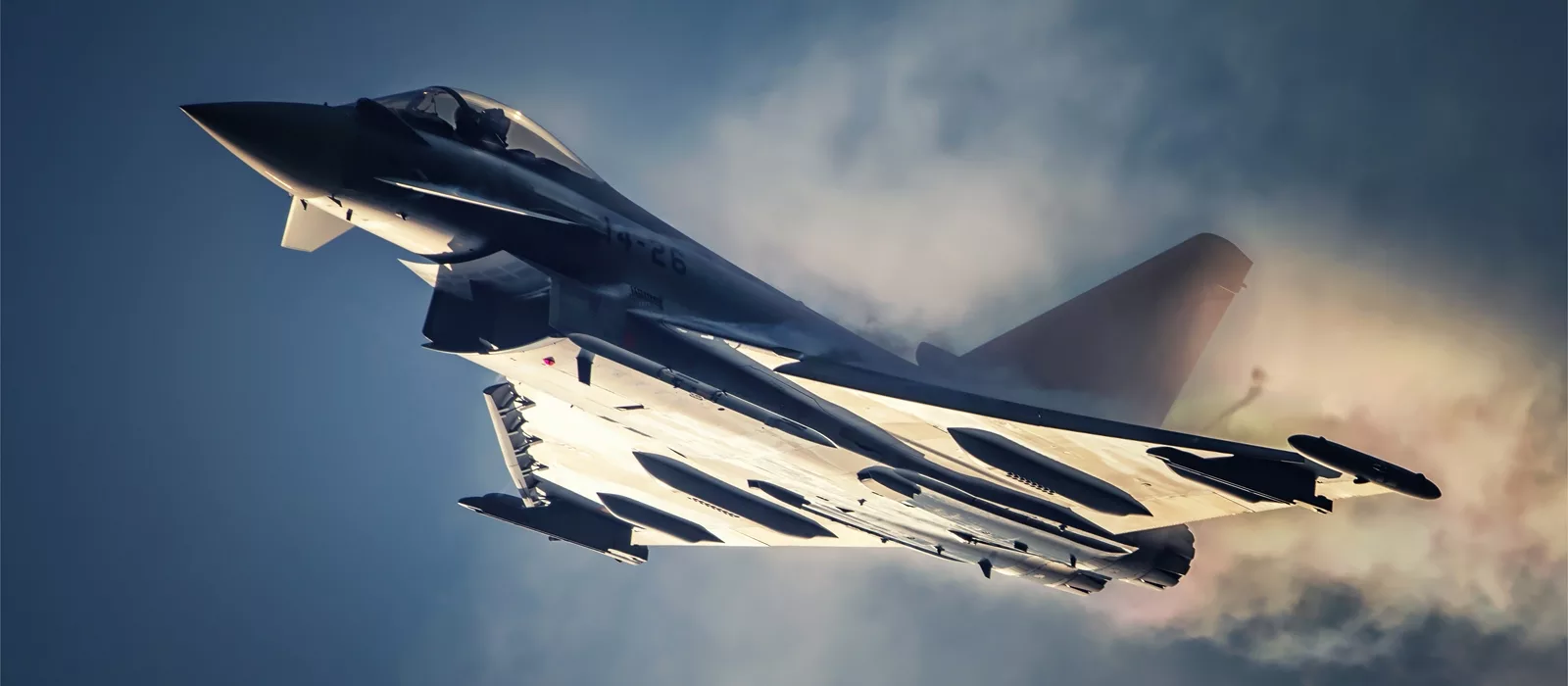
echnical Specifications and Flight Performance
To appreciate what this machine brings to the battlefield, you have to look at its numbers. The Typhoon was engineered to be lightweight, blistering fast, and capable of operating at extreme altitudes.
| Technical Feature | Specification |
| Maximum Speed | Mach 2.0 (approx. 1,550 mph at high altitude) |
| Service Ceiling | 65,000 feet (approx. 19,812 meters) |
| Max Takeoff Weight | 51,800 lbs (approx. 23,500 kg) |
| Powerplant | 2x Eurojet EJ200 afterburning turbofans |
| Combat Radius | Approx. 860 miles (in an air defense role) |
Eurojet EJ200 Engines and Supercruise Capability
At the heart of the Typhoon’s performance are its twin Eurojet EJ200 turbofan engines. Beyond delivering a massive thrust-to-weight ratio, these engines grant the fighter a rare tactical advantage known as supercruise.
Supercruise allows the Typhoon to maintain supersonic flight speeds without using its afterburners—the fuel-dumping thrust augmentation system used by most jets to break the sound barrier. Flying in supercruise dramatically extends the aircraft’s operational range and keeps its thermal signature significantly smaller, making it much harder for enemy infrared sensors to lock on.
Lethal Arsenal: Weapons and Payload Capacity
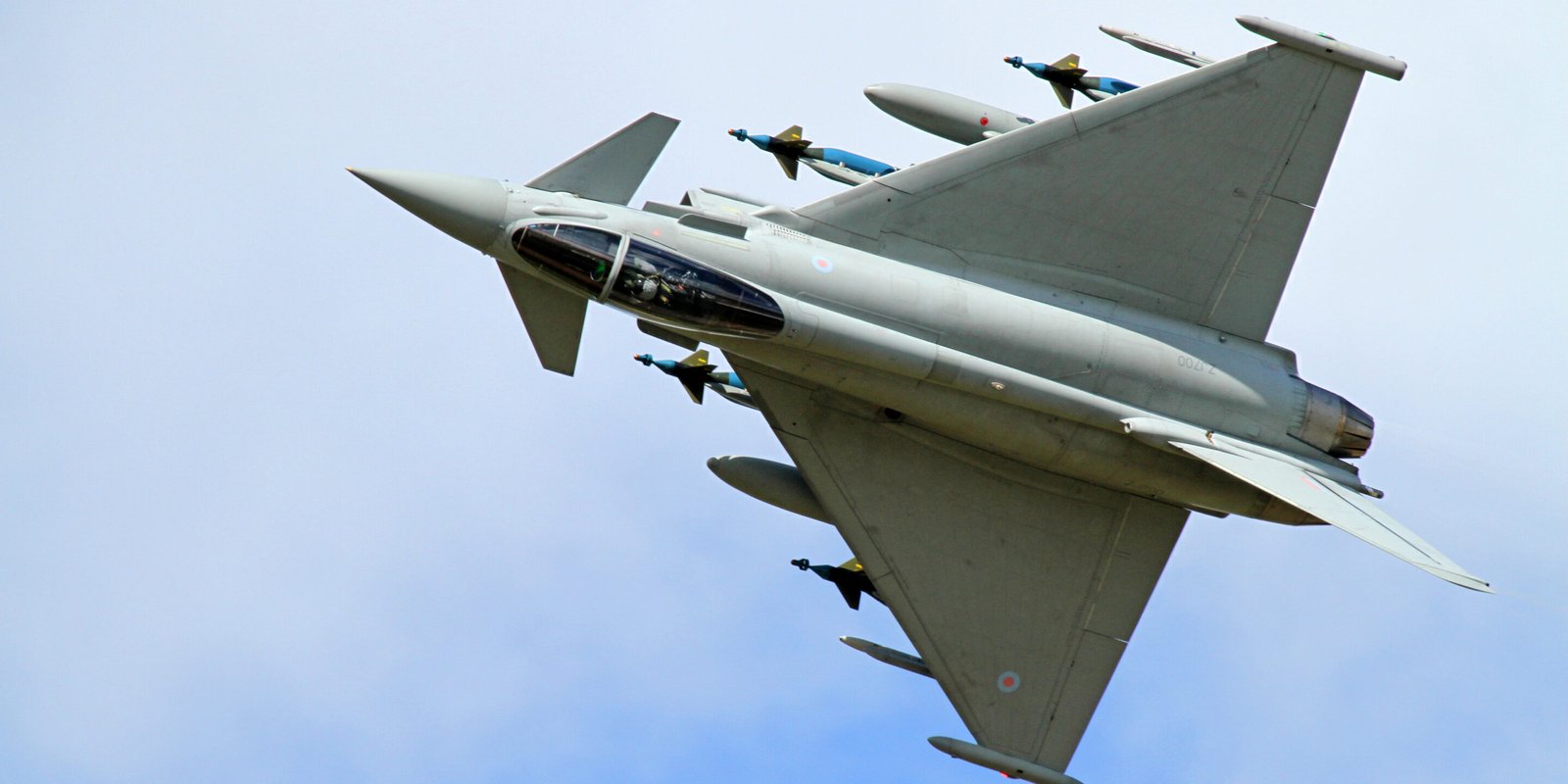
The Typhoon is fitted with 13 external hardpoints under its wings and fuselage, allowing it to carry up to 19,800 pounds of weapons and drop tanks.
Air-to-Air Combat: This is the Typhoon’s natural domain. It carries short-range heat-seeking missiles like the IRIS-T and ASRAAM, but its true teeth come from the Meteor missile. The Meteor is widely considered one of the world’s premier Beyond-Visual-Range (BVR) weapons. Powered by a throttleable ramjet engine, it can chase down fast-moving targets over 60 miles away, offering an exceptionally small no-escape zone for enemy pilots.
Air-to-Ground Strike: For surface targets, the fighter can drop laser- and GPS-guided Paveway bombs, unleash precision Brimstone missiles against moving armor, or launch long-range standoff cruise missiles like the Storm Shadow and Taurus.
Internal Cannon: For close-quarters dogfights and strafing runs, the jet features an internal 27mm Mauser BK-27 revolver cannon known for its high rate of fire and reliability.
Combat Operations: The Typhoon in Action
Though conceived during the Cold War, the Typhoon has seen plenty of modern real-world combat. Its operational debut occurred in 2011 during the Libyan intervention (Operation Ellamy/Unified Protector). Royal Air Force and Italian Air Force Typhoons enforced no-fly zones and conducted precision strike missions against hostile ground fortifications.
In the years following, Typhoons were deployed extensively over Iraq and Syria to conduct reconnaissance and precision airstrikes against ISIS targets. Outside of active war zones, the fighter serves as the primary workhorse for NATO’s Baltic and Black Sea Air Policing missions, routinely intercepting Russian military aircraft probing international airspace borders.
The Tranche System: Continuous Evolution
Rather than building a single static airframe, the consortium produces and upgrades the Typhoon in distinct production blocks known as Tranches:
Tranche 1: The earliest operational models, built primarily for air-superiority and interception duties.
Tranche 2: Added upgraded mission computers and integrated a comprehensive air-to-ground strike capability.
Tranche 3 and 4: The most formidable versions flying today. These feature reinforced airframes, provisions for aerodynamic conformal fuel tanks, and—most importantly—the integration of advanced AESA (Active Electronically Scanned Array) radars like the CAPTOR-E. Unlike older mechanically steered dishes, AESA radars steer electronic beams instantly, allowing pilots to track dozens of targets simultaneously while resisting sophisticated electronic warfare attacks.
Strategic Advantages and Operational Drawbacks
Like any piece of military hardware, the Typhoon has clear operational strengths along with a few trade-offs inherent to its design philosophy.
Key Advantages:
High-Altitude Superiority: Its climb rate, acceleration, and maneuverability in the upper atmosphere are unmatched by almost any other 4.5-generation fighter.
BVR Lethality: Pairing the AESA radar with the Meteor missile creates a massive tactical bubble, making it hazardous for hostile aircraft to enter contested airspace.
High Reliability: The EJ200 engines and modular avionics have proven exceptionally durable, yielding high mission-capable rates across NATO air forces.
Key Limitations:
Lack of True Stealth: While it incorporates radar-absorbent materials and a reduced radar cross-section, it is not a true 5th-generation stealth platform like the F-35 Lightning II or F-22 Raptor.
High Procurement and Flight Costs: Both the initial purchase price and the cost per flight hour are relatively high, which has occasionally hurt its chances in international export competitions against cheaper alternatives.
The European Rivalry: Eurofighter Typhoon vs. Dassault Rafale
When France separated from the original European consortium, it sparked one of aviation’s most intense industrial rivalries. Today, the French Dassault Rafale remains the Typhoon’s most direct competitor on the global market.
| Feature | Eurofighter Typhoon | Dassault Rafale |
| Primary Design Focus | High-altitude air superiority | Omnirole versatility and heavy strike |
| Carrier Capability | Land-based operations only | Carrier-capable variant available (Rafale M) |
| Flight Profile Strength | Superior supersonic acceleration | Superior low-altitude payload handling |
While the Typhoon holds the edge in raw speed, high-altitude interception, and BVR air combat, the Rafale is often favored for its ability to carry heavier strike payloads at low altitudes and its flexibility to operate from aircraft carriers.
Fascinating Engineering Facts
Direct Voice Input: The Typhoon features a voice-command system in the cockpit. Pilots can switch radar modes, change displays, and manage communications using verbal commands, keeping their eyes on the fight and hands on the throttle and stick (HOTAS).
Liquid-Filled G-Suits: To survive extreme maneuvers pulling up to 9Gs—where the pilot’s blood weighs nine times more than normal—pilots wear a specialized hydrostatic garment called the Libelle suit. It uses liquid channels to counter G-forces instantly, preventing blood from pooling in the legs and avoiding G-induced loss of consciousness (G-LOC).
Industrial and Strategic Impact
The Eurofighter Typhoon is more than just a combat aircraft; it served as the catalyst for modernizing Western Europe’s aerospace manufacturing sector. The program sustains tens of thousands of high-tech engineering jobs across the UK, Germany, Italy, and Spain, ensuring these nations retain vital military aviation design capabilities.
For NATO, the Typhoon is the undisputed backbone of European air defense. It provides a rapid-reaction shield capable of launching in minutes to confront, intercept, and deter airborne threats across the continent.
Frequently Asked Questions About the Typhoon
1. Is the Eurofighter Typhoon a 5th-generation fighter? No. It is categorized as a 4.5-generation fighter. While it features 5th-generation avionics, sensors, and weapon systems, its airframe does not possess all-aspect stealth shaping like the F-35.
2. What is the top speed of the Eurofighter Typhoon? The Typhoon can reach speeds of Mach 2.0 at altitude, which translates to roughly 1,550 mph (2,495 km/h)—twice the speed of sound.
3. Which countries operate the Eurofighter Typhoon today? Alongside the four founding nations (UK, Germany, Italy, and Spain), the fighter has been exported to Austria, Saudi Arabia, Oman, Kuwait, and Qatar.
4. Can the Eurofighter Typhoon land on an aircraft carrier? No. The Typhoon was engineered strictly for land-based runways. Its landing gear and airframe were not built to absorb the violent impacts of carrier landings, nor does it have a tailhook for arresting cables.
5. How much does a Eurofighter Typhoon cost? While exact export prices depend on training packages, weapon bundles, and maintenance contracts, a modern Tranche 4 jet typically costs between $100 million and $130 million per unit.
The Verdict: A Masterpiece of European Airpower
The Eurofighter Typhoon stands as a pinnacle of 4.5-generation aerospace engineering. While it lacks the all-aspect stealth of F-35s, its exceptional high-altitude climb rates, supersonic agility, and lethal Meteor missile integration keep it at the very top of the air-superiority food chain. It is an expensive machine, but continuous AESA radar and avionics upgrades guarantee that this European delta-wing predator will remain the ultimate backbone of NATO’s frontline defense for decades to come.

Joseli Lourenço
07/14/2026