Dassault Rafale Origins: How France Built Its Own Fighter
The Dassault Rafale is France’s versatile omnirole fighter, blending agility, advanced tech, and nuclear capability. Here’s its story, weapons, and combat record.
Dassault Rafale: France’s Fighter Jet That Became a Global Success Story
What the Dassault Rafale Actually Is
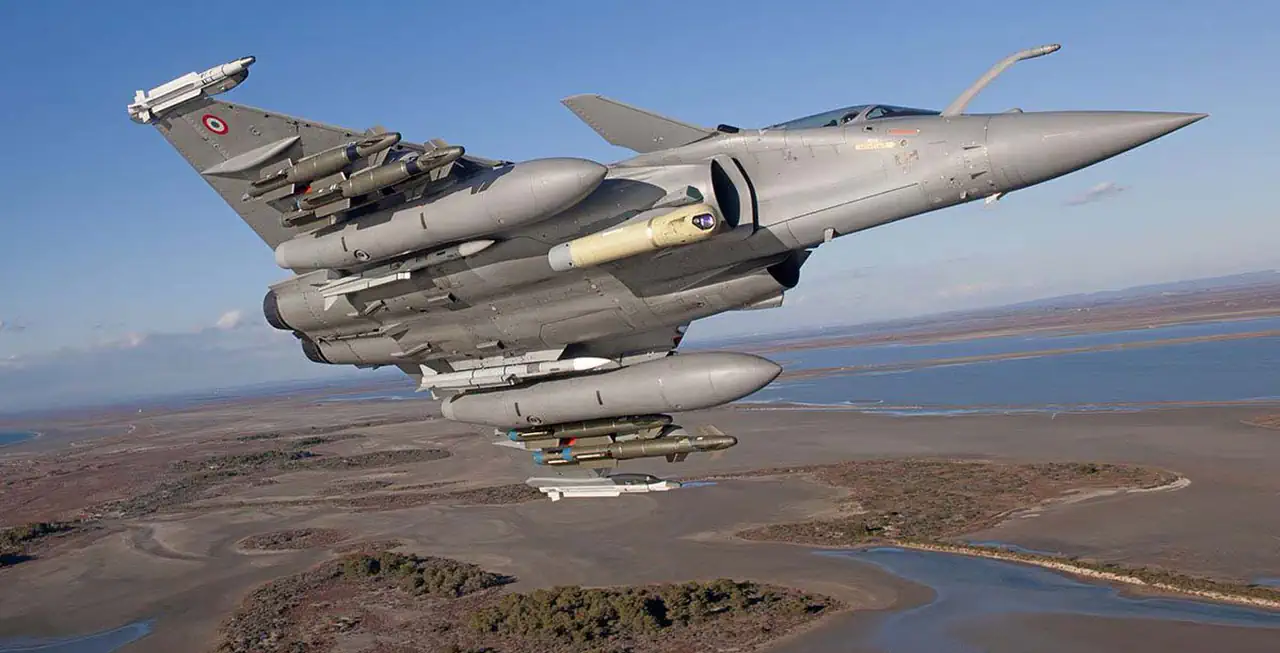
The Dassault Rafale is a French-built multirole combat aircraft manufactured by Dassault Aviation, designed to handle nearly every type of aerial mission a modern air force might need. Rather than specializing in one role, it was engineered to switch seamlessly between air-to-air combat, precision ground strikes, and even nuclear deterrence missions.
This flexibility is why Dassault markets the Rafale as an “omnirole” fighter rather than simply “multirole,” a distinction that matters more than marketing language might suggest. In practical terms, a single Rafale can take off configured for intercepting enemy aircraft and then, within the same sortie, shift to striking a ground target with a completely different weapons profile.
How France Ended Up Building Its Own Fighter
The Rafale’s backstory involves a partnership that fell apart. France was originally part of a joint European effort to develop a next-generation fighter alongside the United Kingdom, Germany, Italy, and Spain. But French requirements diverged sharply from the group’s direction—Paris wanted a smaller, lighter aircraft with a domestically produced engine, and critically, one that could operate from aircraft carriers, a feature the joint program wasn’t prioritizing.
Those disagreements led France to withdraw from the collaborative project in 1985 and pursue an independent design. That decision produced the Rafale, which completed its first flight on July 4, 1986. The abandoned joint program, meanwhile, evolved into what is now the Eurofighter Typhoon—making it the Rafale’s most direct and enduring competitor to this day.
From First Flight to Frontline Service
The Rafale didn’t enter operational service until 2001, meaning roughly 15 years passed between its maiden flight and its arrival in frontline squadrons. That gap reflects the complexity of developing an aircraft meant to excel across so many mission types simultaneously.
For much of its early commercial life, the Rafale struggled badly in the export market despite its technical capabilities. Between 2000 and 2015, it lost bid after bid to competitors like the F-16, the Eurofighter Typhoon, and the F/A-18, earning an unflattering reputation in aviation circles as the jet nobody wanted to buy.
That narrative flipped dramatically after 2015. Egypt, India, Qatar, Greece, and several other nations signed export contracts in quick succession, turning the Rafale into one of the most commercially successful fighter jets on the international market within a decade.
Design, Sensors, and Survivability
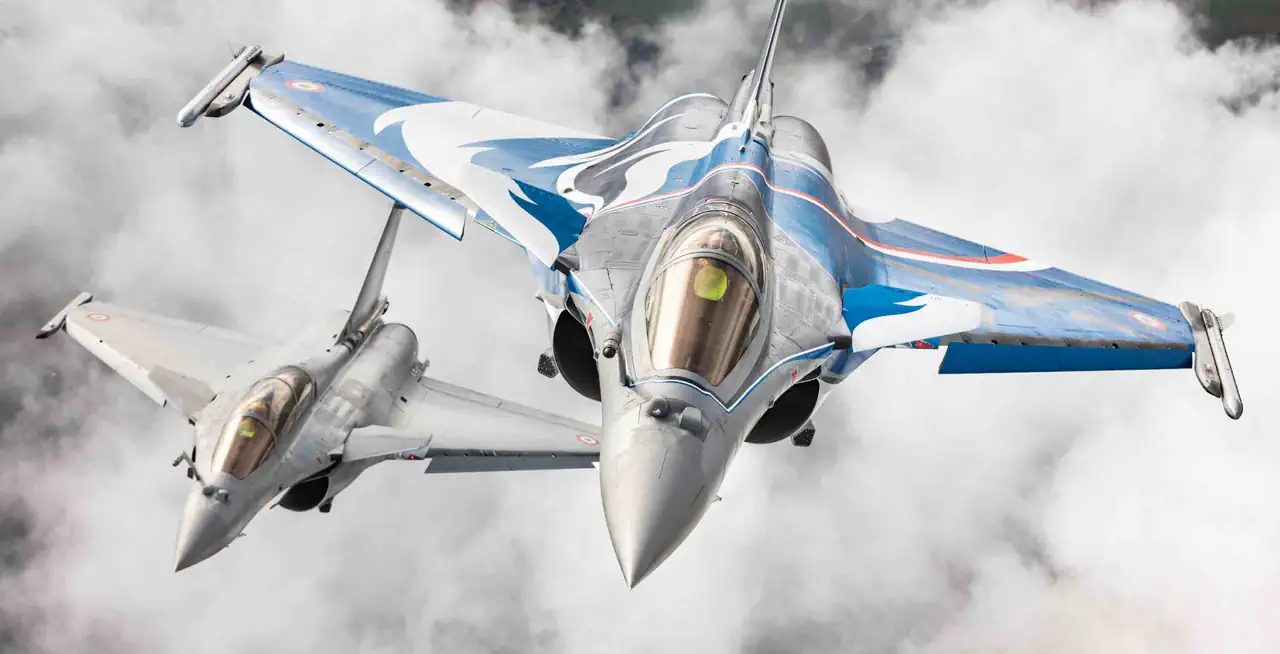
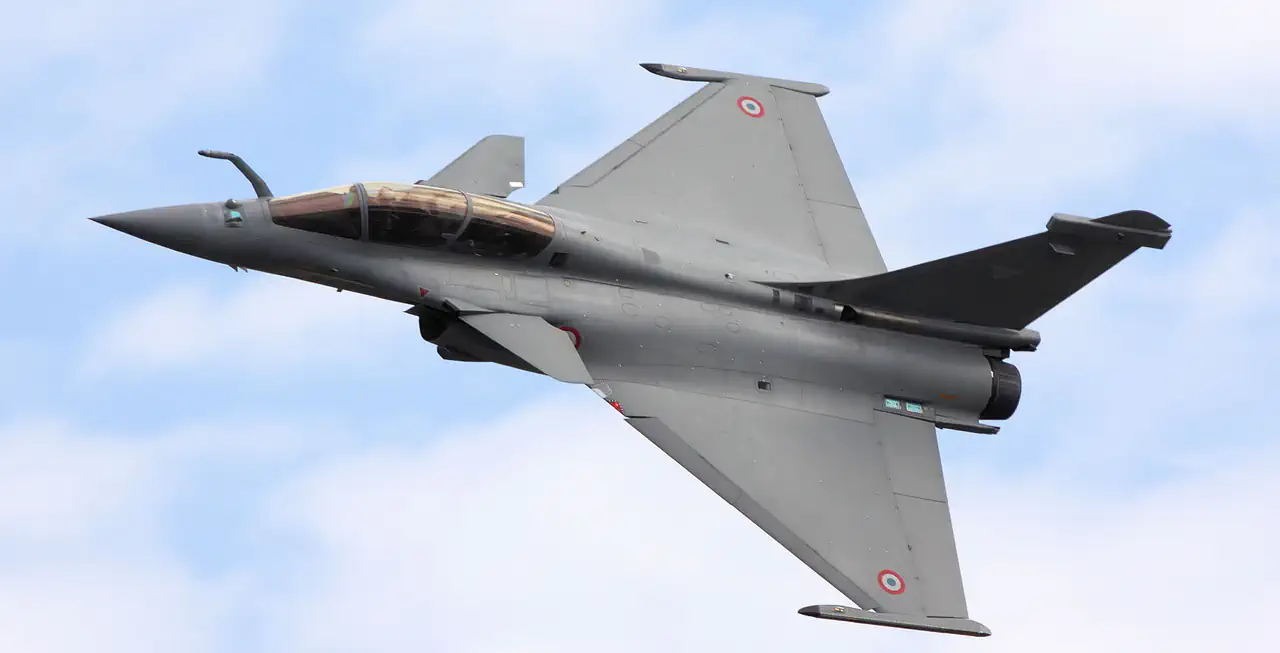
The Rafale’s airframe uses a canard-delta configuration—small stabilizing surfaces near the nose combined with a delta-shaped main wing—which gives the aircraft exceptional agility during aggressive maneuvers. This layout is one of the design choices that sets it apart visually and aerodynamically from competitors like the Typhoon.
Roughly 70% of the aircraft’s surface is built from composite materials, cutting weight significantly without sacrificing structural strength. Its Thales RBE2 radar, in its AESA configuration (an electronically steered radar system with no moving parts), was the first of its kind fielded on a European fighter jet.
For self-protection, the Rafale relies on the SPECTRA electronic warfare suite, widely regarded as one of the most comprehensive self-defense systems in service today. In plain terms, SPECTRA detects threats like enemy radar locks or incoming missiles and reacts automatically—jamming signals, deploying countermeasures, or alerting the pilot to take evasive action.
Weapons and Strike Capability
The Rafale carries a 30mm cannon with 125 rounds and features 14 hardpoints capable of supporting up to 9.5 tons of external payload. Its weapons lineup includes:
MICA air-to-air missiles (infrared and radar-guided) and the long-range Meteor missile
SCALP-EG cruise missiles for deep strikes against ground targets
Exocet AM39 anti-ship missiles
AASM Hammer precision-guided bombs, using GPS or laser guidance
The ASMP-A nuclear-capable missile, tied to France’s nuclear deterrence strategy
This weapons diversity is what makes the omnirole concept functional in practice—the same aircraft can shift from air defense to precision ground attack simply by changing its loadout before a mission.
Performance and Technical Specifications
The Rafale reaches a top speed of Mach 1.8, roughly 1,912 km/h at altitude. With external fuel tanks, its range extends to about 3,700 km, and its service ceiling sits near 15,235 meters (about 50,000 feet).
| Specification | Value |
|---|---|
| Engines | 2x Snecma M88-2 |
| Length | 15.27 m |
| Max takeoff weight | 24,500 kg |
| Range with tanks | 3,700 km |
| Crew | 1 or 2 |
Unit pricing varies considerably depending on the contract and buyer nation, with figures ranging roughly between $74 million and $115 million across different export deals—so treat any single quoted price with some caution.
Combat Record in Real Conflicts
The Rafale has seen genuine combat testing, which helps explain its strong reputation among current operators. It has flown missions in Afghanistan, Libya, Mali, Iraq, and Syria.
These deployments ranged from close air support to precision strikes against specific targets, giving the aircraft a real-world track record that backs up its omnirole marketing rather than just theoretical capability.
Strengths and Weaknesses
The Rafale’s biggest advantages include its exceptional supersonic maneuverability, the SPECTRA self-defense suite, and genuine mission flexibility. On the downside, it falls short of some rivals in top speed and service ceiling, and its acquisition cost remains relatively high compared to certain competitors.
Rafale vs. Eurofighter Typhoon
The Rafale’s most frequently cited rival is the Eurofighter Typhoon—fittingly, the direct descendant of the joint program France walked away from in 1985. The two aircraft are compared constantly because they compete for similar roles across European air forces and export markets.
| Metric | Rafale | Typhoon |
|---|---|---|
| Top speed | Mach 1.8 | Mach 2.0 |
| Service ceiling | ~15,235 m | ~19,812 m |
Despite trailing in raw speed and altitude, the Rafale is generally seen as the more versatile option across mission types, while the Typhoon tends to excel specifically in air-to-air interception roles.
Variants and Notable Facts
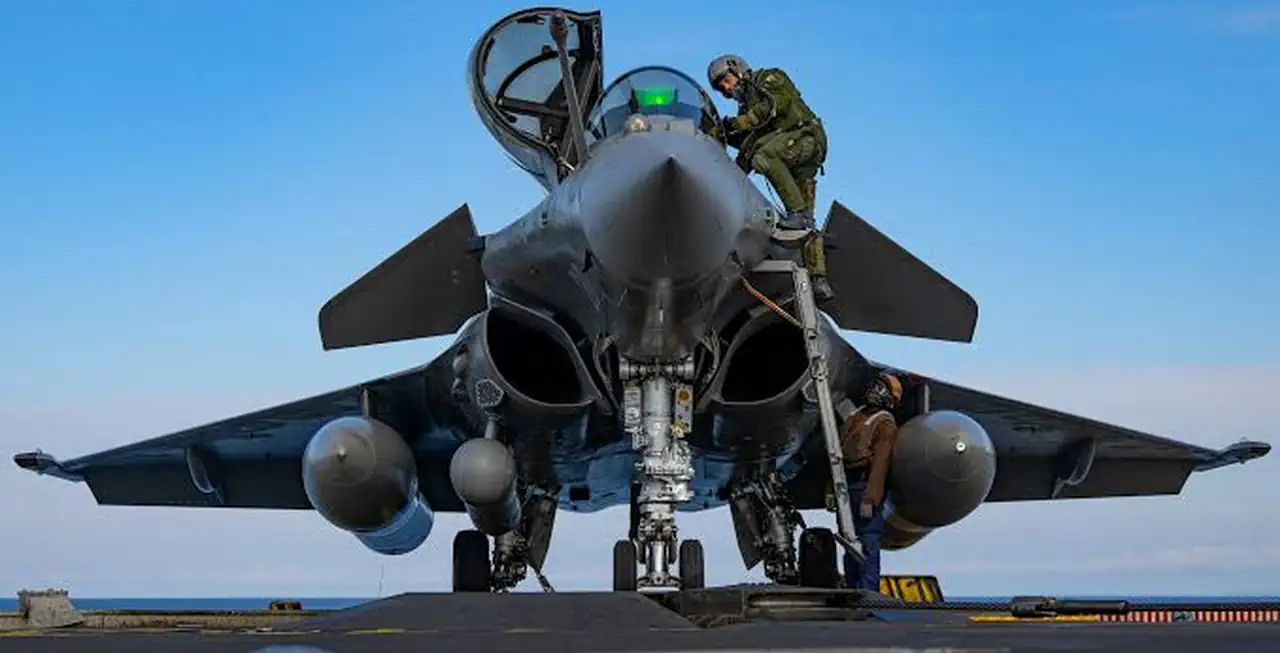
Three main Rafale variants exist: the Rafale C (single-seat, Air Force), the Rafale B (two-seat, Air Force), and the Rafale M (a carrier-capable naval variant). One notable fact worth highlighting is that despite its current export success, the aircraft went nearly 15 years without landing a single international contract—a stretch some defense analysts referred to as the Rafale’s “sales curse.”
Frequently Asked Questions
Can the Rafale carry nuclear weapons?
Yes, it can carry the ASMP-A missile, which is part of France’s nuclear deterrence capability.
What is the Rafale’s top speed?
Around Mach 1.8, or roughly 1,912 km/h at altitude.
Can the Rafale operate from aircraft carriers?
Yes, the Rafale M variant was specifically designed for naval carrier operations.
Which countries fly the Rafale besides France?
Egypt, India, Qatar, and Greece are among its major international operators.
Is the Rafale better than the Eurofighter Typhoon?
It depends on the mission—the Typhoon is faster and flies higher, while the Rafale offers greater overall versatility.
Final Takeaway
The Dassault Rafale stands out as a fighter jet that combined cutting-edge technology, genuine mission flexibility, and a proven combat record into one platform. After overcoming a rocky start in export markets, it has become a benchmark aircraft in its generation, now flown by multiple air forces worldwide and valued especially for its adaptability and electronic self-defense capabilities.

Joseli Lourenço
07/07/2026