What Makes the Challenger 2’s Armor So Hard to Penetrate
Dorchester armor, a rifled gun and onboard tea: the Challenger 2 went 25 years without a combat loss until Ukraine, in 2023.
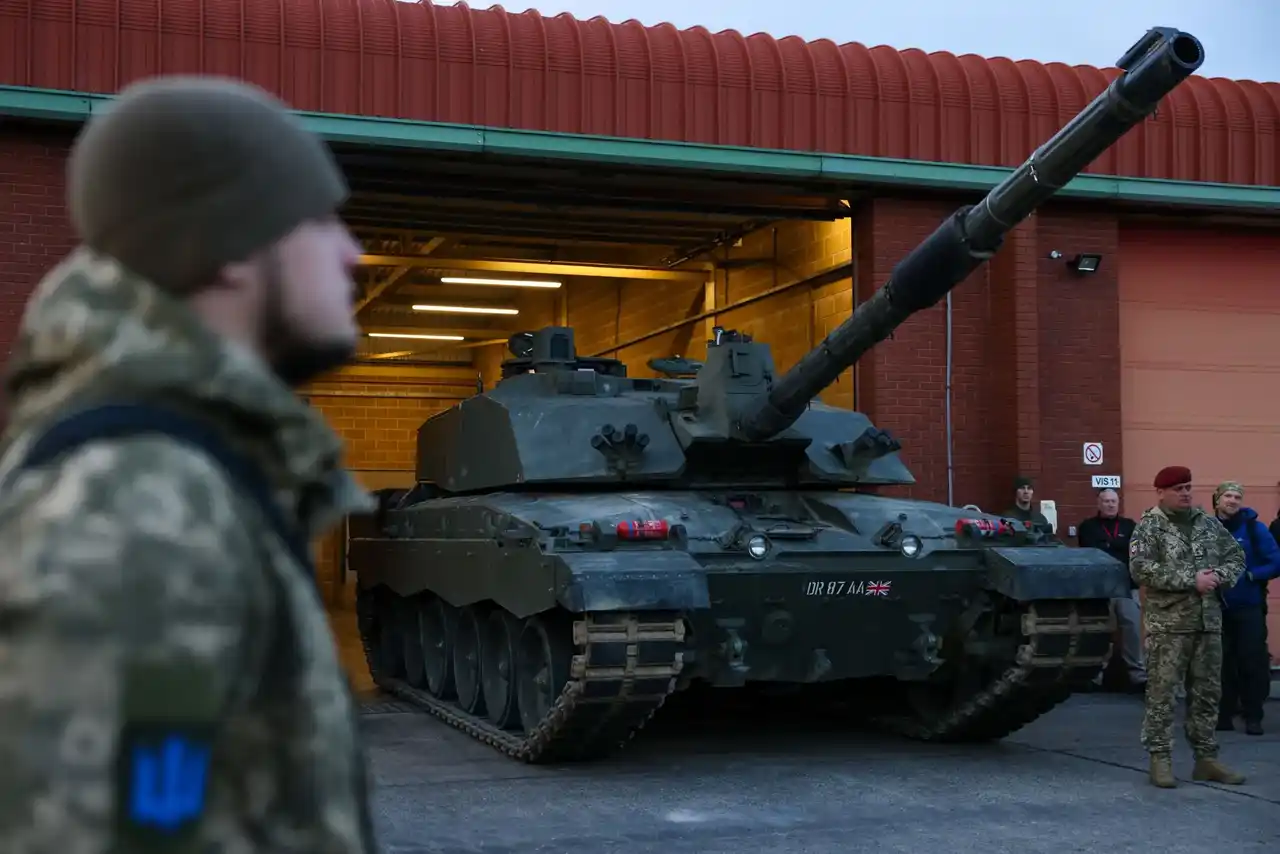
Challenger 2: The British Tank That Went 25 Years Without a Combat Loss
The Challenger 2 has been the United Kingdom’s main battle tank since 1998, built around Dorchester composite armor and a feature almost no other Western tank still has: a rifled main gun.
Originally built by Vickers Defence Systems, now part of BAE Systems, the tank carries the official designation FV4034. It also serves with Oman’s army and, since 2023, Ukraine’s.
What Is the Challenger 2 and Where Did It Come From?
The Challenger 2 was designed to fix the chronic problems of the Challenger 1, particularly its unreliable fire control system.
Vickers began developing it privately between 1986 and 1989. The UK Ministry of Defence didn’t formally order the tank until 1991, choosing it over foreign options like the M1 Abrams and Leopard 2.
Full-scale production started in 1993, and the tank entered active service in 1998.
How Did It Perform in Its First Real Combat?
In the 2003 Iraq War, the Challenger 2 delivered protection levels that surprised even its own crews.
One widely cited incident involved a tank that survived multiple RPG and MILAN missile hits near Basra without the armor being penetrated.
The only loss during that phase came from a friendly-fire incident, when another Challenger 2 struck the commander’s hatch with a HESH round.
What Are the Challenger 2’s Core Specs?
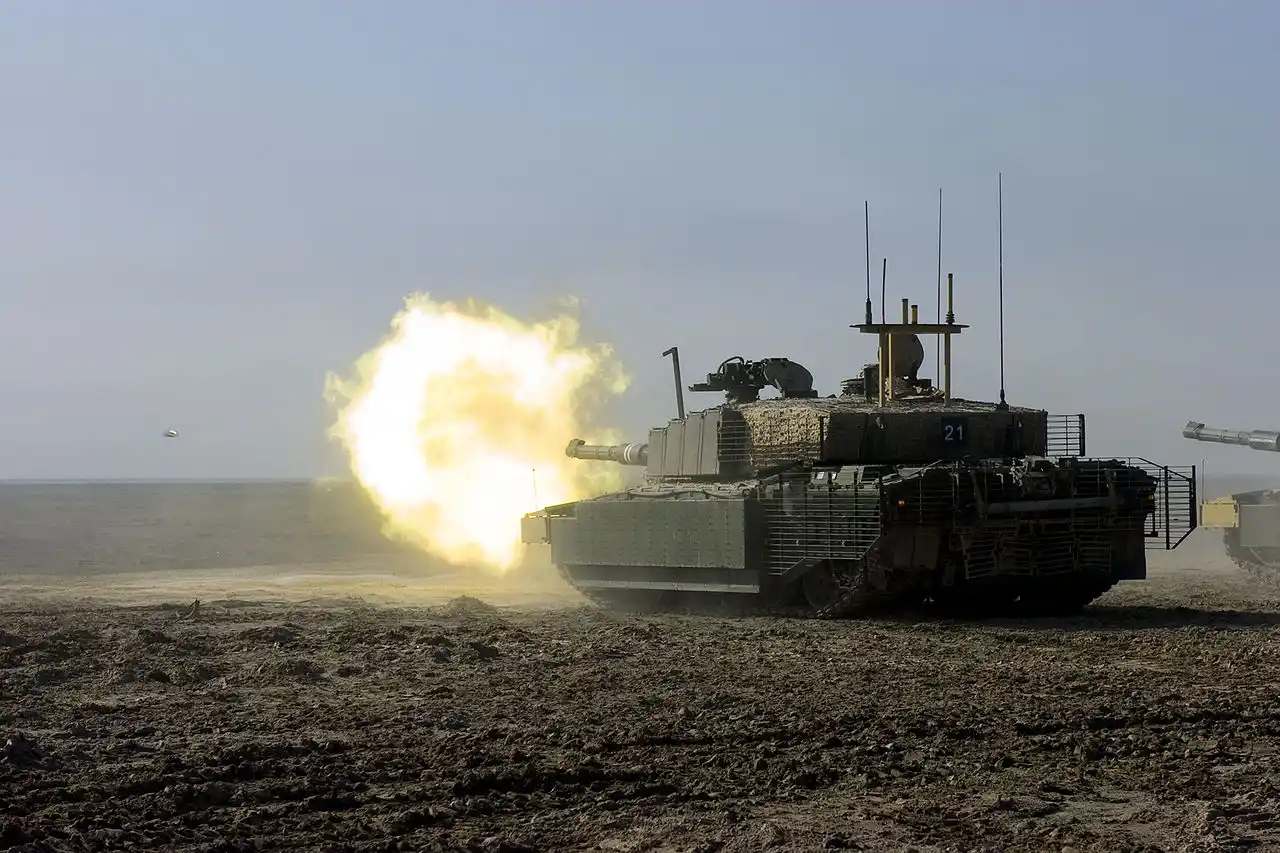
The tank weighs 62.5 metric tons in standard configuration, climbing past 75 tons with the Theatre Entry Standard (TES) armor package.
Power comes from a Perkins CV12-6A diesel engine producing 1,200 horsepower, with a top road speed of 59 km/h (37 mph) and an operational range of roughly 550 km (340 miles).
Main armament is the 120mm L30A1 rifled gun, hand-loaded, with a 49-round capacity.
Why Does It Still Use a Rifled Gun?
Because rifling is what lets it fire HESH ammunition effectively.
HESH (High-Explosive Squash Head) rounds are highly effective against fortifications and older armored vehicles, an advantage smoothbore guns on the Abrams and Leopard 2 don’t replicate in the same way.
That choice comes at a cost, though: the Challenger 2 can’t fire standard NATO APFSDS rounds shared by its allies.
What Are the Challenger 2’s Strengths and Weaknesses?
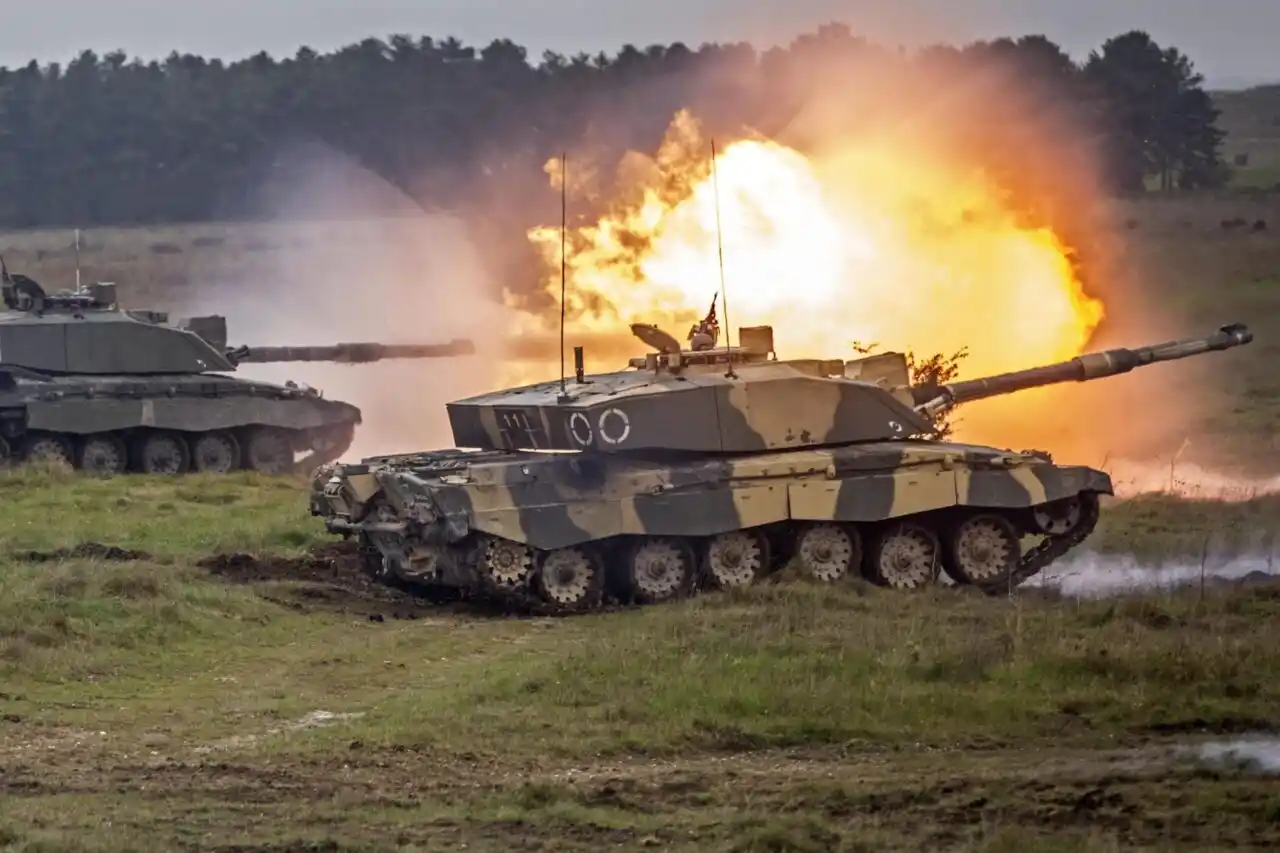
Its Dorchester armor is the tank’s biggest asset, with a combat record that backs up the reputation.
Other strengths include a hunter-killer targeting system, letting the commander spot targets independently of the gunner, and segregated ammunition storage that lowers the risk of a catastrophic internal explosion.
The weaknesses show up in mobility. The 1,200 hp powertrain trails rival engines rated at 1,500 hp, and the tank’s extreme weight struggles on soft ground, exactly what played out in Ukraine.
Challenger 2 vs Abrams: Which One Wins?
It depends on the metric: the Challenger 2 leads on passive armor, while the Abrams leads on mobility.
| Spec | Challenger 2 | M1A2 Abrams |
|---|---|---|
| Engine | Diesel, 1,200 hp | Gas turbine, 1,500 hp |
| Top speed | 59 km/h | 68 km/h |
| Main gun | 120mm rifled | 120mm smoothbore |
The Abrams shares standard NATO ammunition with the Leopard 2, something the Challenger 2 can’t do because of its rifled barrel.
How Has the Challenger 2 Performed in Ukraine?
Strong on crew survivability, but demanding on terrain.
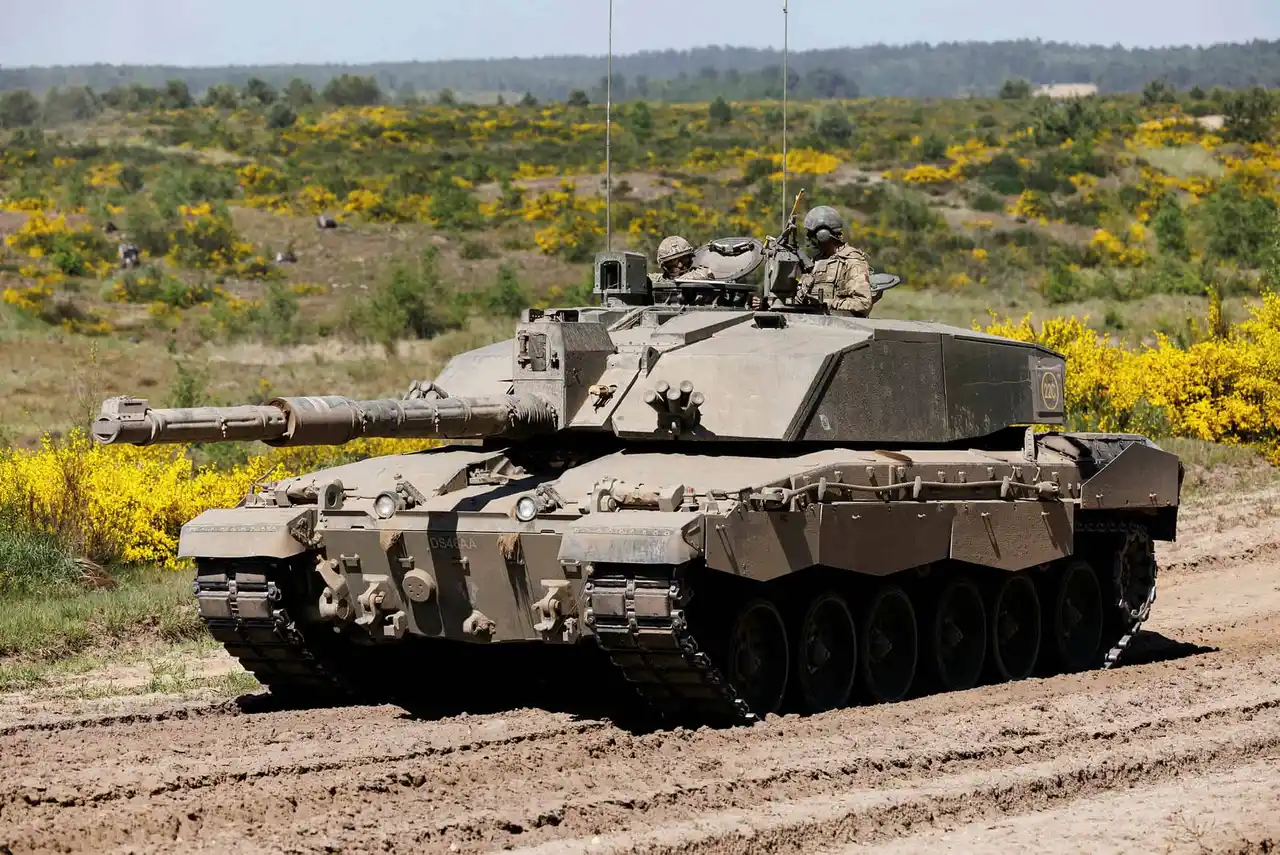
The UK sent 14 Challenger 2 tanks to Ukraine in 2023. Crews praised the optics and armor, but the tank’s weight created real problems on the soft, muddy ground of the rasputitsa season.
In September 2023, near Robotyne, a Challenger 2 was disabled and later destroyed, marking the first confirmed combat loss to enemy fire. The crew survived.
Frequently Asked Questions About the Challenger 2
Has the Challenger 2 ever been destroyed in combat?
Yes, once, in Ukraine, near Robotyne in September 2023.
Why does the Challenger 2 have a built-in kettle?
Its Boiling Vessel lets crews brew tea and heat rations without leaving the vehicle, which helps morale during long operations.
Is the Challenger 2 getting replaced?
Not entirely. The Challenger 3 program will upgrade about 148 units with a new turret and a Rheinmetall smoothbore gun.
What’s the Challenger 2’s biggest weakness?
Its weight, which limits mobility on soft terrain and makes crossing older bridges difficult.
Bottom Line: Elite Protection, Aging Mobility
The Challenger 2 offers some of the most battle-tested armor protection in the Western world, backed by more than two decades of real combat data.
Its drawbacks are mobility and NATO ammo incompatibility. The Challenger 3 program addresses both directly by swapping in a modern smoothbore gun.

Joseli Lourenço
08/12/2026