
Inside the J-20: China’s Fifth-Generation Stealth Fighter Explained
The J-20 Mighty Dragon is China’s fifth-generation stealth fighter. Here’s how it was built, what it carries, and how it truly compares to the F-22 and F-35.
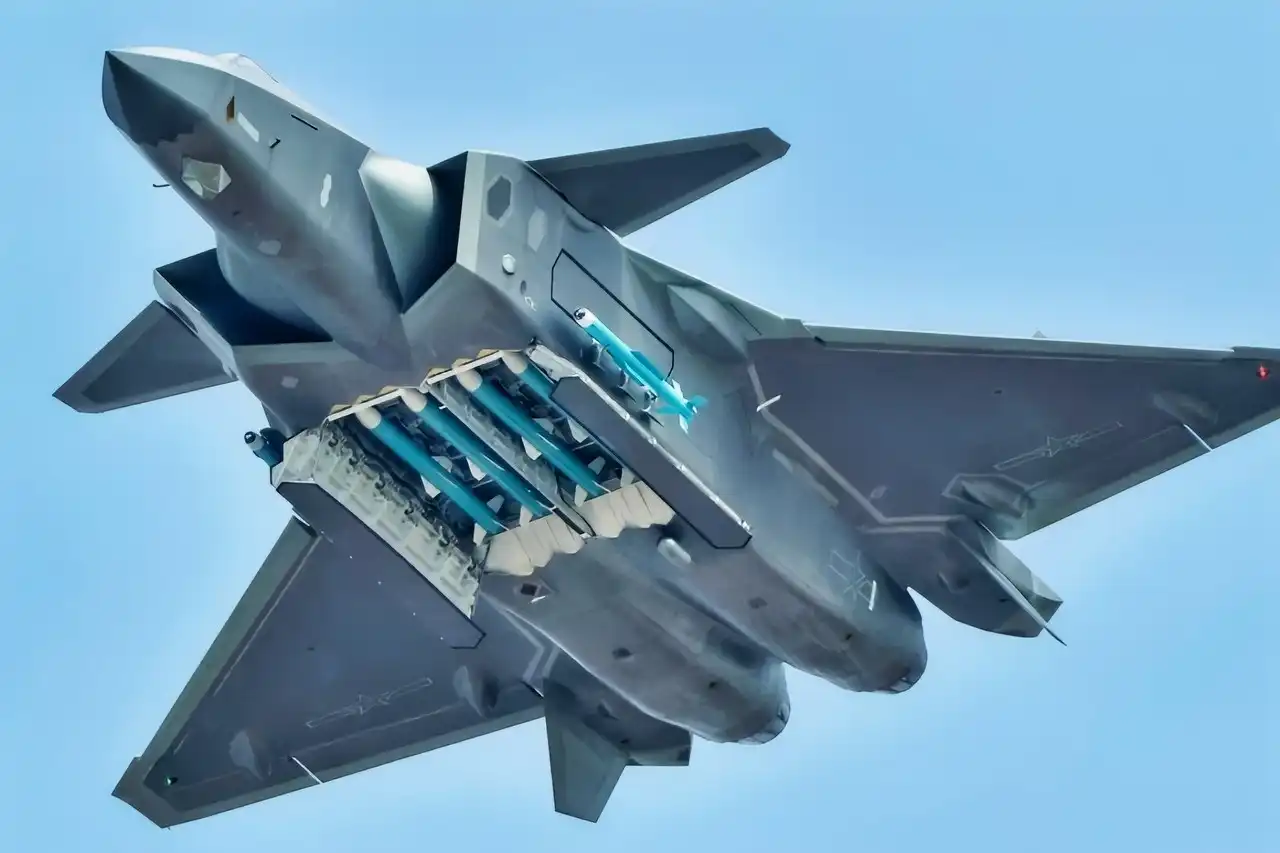
J-20 Mighty Dragon: Inside China’s Fifth-Generation Stealth Fighter
China’s J-20 Mighty Dragon, also known by its Chinese name Weilong, is the country’s first operational fifth-generation stealth fighter. Built by Chengdu Aircraft Corporation for the People’s Liberation Army Air Force (PLAAF), it was designed around one core mission: winning control of the sky at long range. Over time, engineers layered in precision strike, long-range interception and networked warfare capabilities, turning it into a far more flexible platform than its original air-superiority brief suggested.
The jet first flew on January 11, 2011, and formally entered service in March 2017. That milestone made China only the second country in the world, after the United States, to field an operational fifth-generation stealth fighter.
Where the J-20 Came From
The program traces back to the J-XX initiative, launched in the late 1990s as China searched for a way to match increasingly advanced American fighters. Designers settled on a large airframe, delta wings, forward canards and diverterless supersonic inlets (DSI) — a combination meant to deliver long range, high speed and a reduced radar profile all at once.
Since then, the aircraft has gone through repeated rounds of prototype refinement, with upgrades to aerodynamics, stealth shaping, sensors and, above all, engines. Public evidence from 2023 and 2024 pointed to real progress on the domestically built WS-15 engine, widely seen as the propulsion upgrade the program had been waiting for.
Design, Stealth and Avionics
Aerodynamic Layout
One of the J-20’s most recognizable traits is its size, paired with an unusual delta-wing-and-canard configuration that departs from the layout used on Western jets like the F-22. This setup helps the aircraft retain control authority at high angles of attack and supports strong supersonic and transonic performance.
Stealth: Strengths and Open Questions
Stealth remains one of the most debated aspects of the J-20. The design combines a shaped fuselage, a canopy with a conductive coating, specialized air intakes, internal weapons bays and radar-absorbent materials to cut its radar signature. Even so, defense analysts continue to question whether the canards work against side and rear stealth, since those surfaces can reflect radar energy from certain angles. The broader consensus is that the J-20 was optimized primarily for a low frontal radar cross-section — a sensible trade-off for a jet built around interception and deep-penetration missions rather than close-in dogfighting.
Sensors and Cockpit
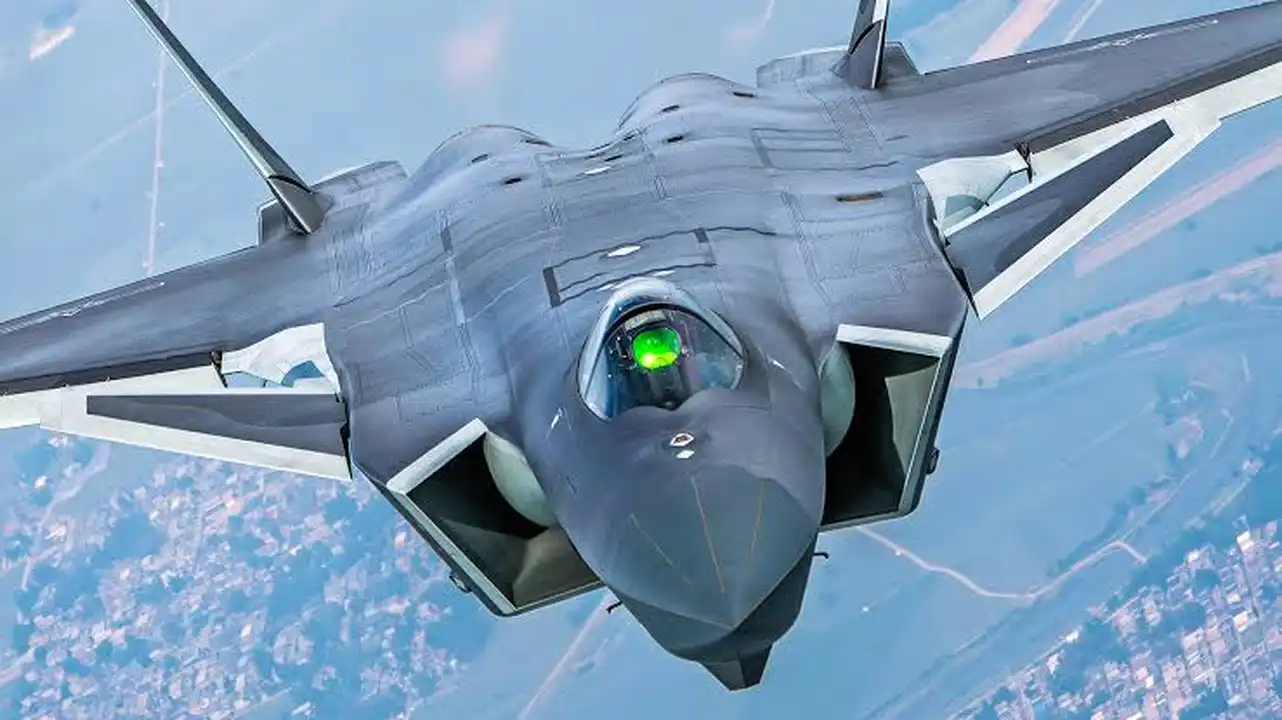
Electronics sit at the heart of the J-20’s design philosophy. The jet pairs an AESA radar with electro-optical sensors, infrared search-and-track, and multiple distributed sensor apertures across the fuselage, giving pilots near-360-degree situational awareness. Inside the cockpit, pilots get a large primary display, secondary screens, a wide-angle holographic head-up display and a helmet-mounted sight that projects flight data directly into the pilot’s field of view. Reports from 2024 even suggested the aircraft could take on early-warning-style functions, hinting at how far Chinese engineers want to push the platform’s sensor fusion.
Weapons and Strike Capability
To protect its stealth profile, the J-20 carries most of its ordnance internally. The main weapons bay holds medium- and long-range air-to-air missiles along with precision-guided munitions, while two smaller side bays are built specifically for short-range missiles such as the PL-10.
The PL-15 is the missile most closely tied to the J-20 today, and it’s already in operational use. Future-generation missiles — the PL-16, PL-17 and PL-21 — are reportedly in various stages of development for the platform. Open-source reporting also points to studies aimed at fitting up to six PL-15 missiles internally in a lower-observable loadout.
Engines and Performance
The J-20’s engine history tells the story of a program working its way toward self-sufficiency. Early airframes flew on Russian-supplied AL-31 engines, then transitioned to China’s domestic WS-10 family, and the program is now shifting toward the WS-15 as the standard powerplant for its newest variants. The WS-10C reportedly already allows supercruise — sustained supersonic flight without afterburner — under certain conditions, but it’s the WS-15 that’s expected to deliver the real performance leap, with more thrust and more margin for future onboard systems. China announced in April 2023 that the WS-15 was ready for serial production, and clear footage of prototypes flying with the engine surfaced in 2024.
Top speed is widely cited in open sources as around Mach 2, though that figure hasn’t been confirmed through official, detailed specifications.
Quick Specs
| Item | Detail |
|---|---|
| Manufacturer | Chengdu Aircraft Corporation |
| First flight | January 11, 2011 |
| Entered service | March 2017 |
| Operator | PLAAF (China) |
| Layout | Twin-engine, delta wing with canards |
| Top speed | Roughly Mach 2 (estimated) |
| Engines | AL-31, WS-10C, WS-15 |
| Variants | J-20, J-20A, J-20S |
From a Single Jet to a Full Family: The Variants
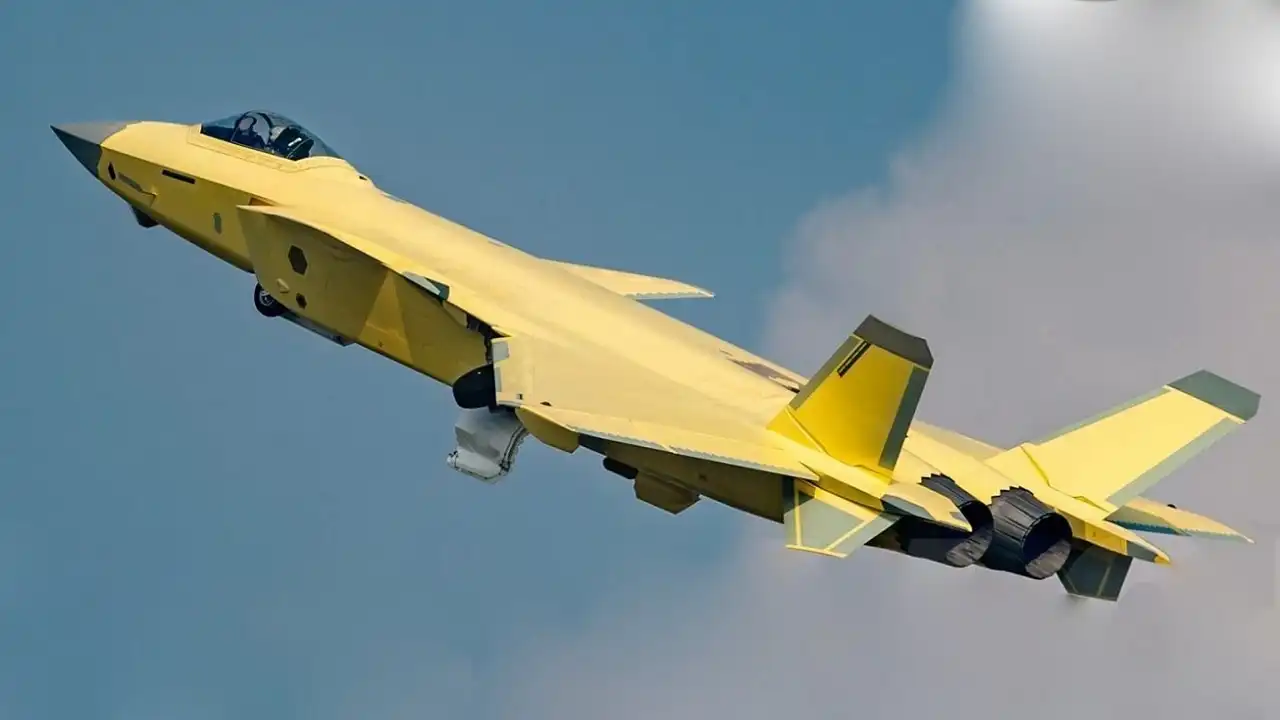
What started as one airframe has grown into a full family of aircraft. In November 2024, Chinese state-owned aerospace group AVIC officially confirmed the J-20S, a two-seat variant. Then, in September 2025, Chinese state media unveiled an upgraded J-20A alongside the J-20S as part of the PLAAF’s active fleet.
The J-20S matters because it’s the first twin-seat stealth fighter in the program’s history. That second crew member frees up capacity for drone coordination, tactical battle management, electronic warfare and more complex long-range missions. Analysis published in 2026 points to growing Chinese interest in pairing the J-20 with “loyal wingman” drones — unmanned aircraft that fly alongside the manned fighter, guided in part by onboard artificial intelligence.
Production Numbers and Real-World Use
Estimates of how many J-20s China has built vary by source, but they all point in the same direction: rapid, sustained growth. Figures cited publicly include more than 200 aircraft by the end of 2023, around 250 by mid-2024, over 300 by September 2025, and estimates approaching 500 by mid-2026 in some assessments. Because these numbers aren’t backed by full official audits, they’re best treated as evolving estimates — but the overall trend clearly points to large-scale production.
Since 2018, the J-20 has been rolled out to frontline combat units and has flown in beyond-visual-range exercises, night operations and patrols over sensitive maritime zones, including the East China Sea, the South China Sea and the airspace around the Taiwan Strait. There have also been confirmed encounters between U.S. F-35s and Chinese J-20s over the East China Sea — a clear sign the jet has moved well past the demonstrator stage and is now a working part of day-to-day operations across the Indo-Pacific.
J-20 vs. the Competition
The most frequently cited rival is the U.S. F-22 Raptor, with the F-35 often mentioned as well, given its multirole strike focus. The core difference comes down to design philosophy: the F-22 was built around agility and close-in combat performance, while the J-20 was designed for range, long-distance interception and strikes against high-value targets such as aerial tankers and airborne early-warning aircraft.
| Category | J-20 |
|---|---|
| Primary focus | Range and interception |
| Stealth | Strongest from the front |
| Close-range combat | Not the design priority |
Strengths and Weaknesses
Strengths: long range and strong endurance, a design built around beyond-visual-range combat, advanced sensor fusion, fast-growing production, and a clear upgrade path through the WS-15 engine, the J-20A, the J-20S and future drone teaming.
Weaknesses: ongoing debate over side and rear stealth performance because of the canard layout; fleet numbers that rely heavily on outside estimates rather than confirmed official data; and a long stretch of the program’s history spent relying on transitional engines before the WS-15 matured. There’s also no confirmed real-world combat data comparing the J-20 directly against the F-22 or F-35.
Frequently Asked Questions
Is the J-20 actually stealthy? Yes, primarily from the front. Analysts continue to debate whether its canards reduce stealth performance from the sides and rear.
How fast can the J-20 fly? Widely cited estimates put its top speed at around Mach 2, though official detailed figures haven’t been confirmed.
Has the J-20 ever faced Western fighters in combat? Not in combat, but there are confirmed encounters with U.S. F-35s during patrols over the East China Sea.
What is the J-20S? It’s the two-seat version of the J-20, officially confirmed in November 2024, designed for complex missions and drone coordination.
How many J-20s has China built? Estimates range from roughly 250 to 500 aircraft depending on the source and timeframe, with no fully audited official total available.
Bottom Line
The J-20 Mighty Dragon has firmly established China as a serious player in stealth fighter development, combining long range, advanced sensors and a steady pipeline of engine and variant upgrades. Questions remain about its rear-aspect stealth and exact production numbers, but the jet is already flying real missions across the Indo-Pacific and stands as a central piece of China’s air power strategy for decades to come.

Joseli Lourenço
07/17/2026