
Russian 5th-Generation Air Power: The Sukhoi Su-57 Analysis
Russia’s Su-57 Felon is Moscow’s premier 5th-generation fighter jet. Blending extreme thrust-vectoring agility with lethal internal payloads, discover the hard engineering facts behind the East’s most debated stealth aircraft.
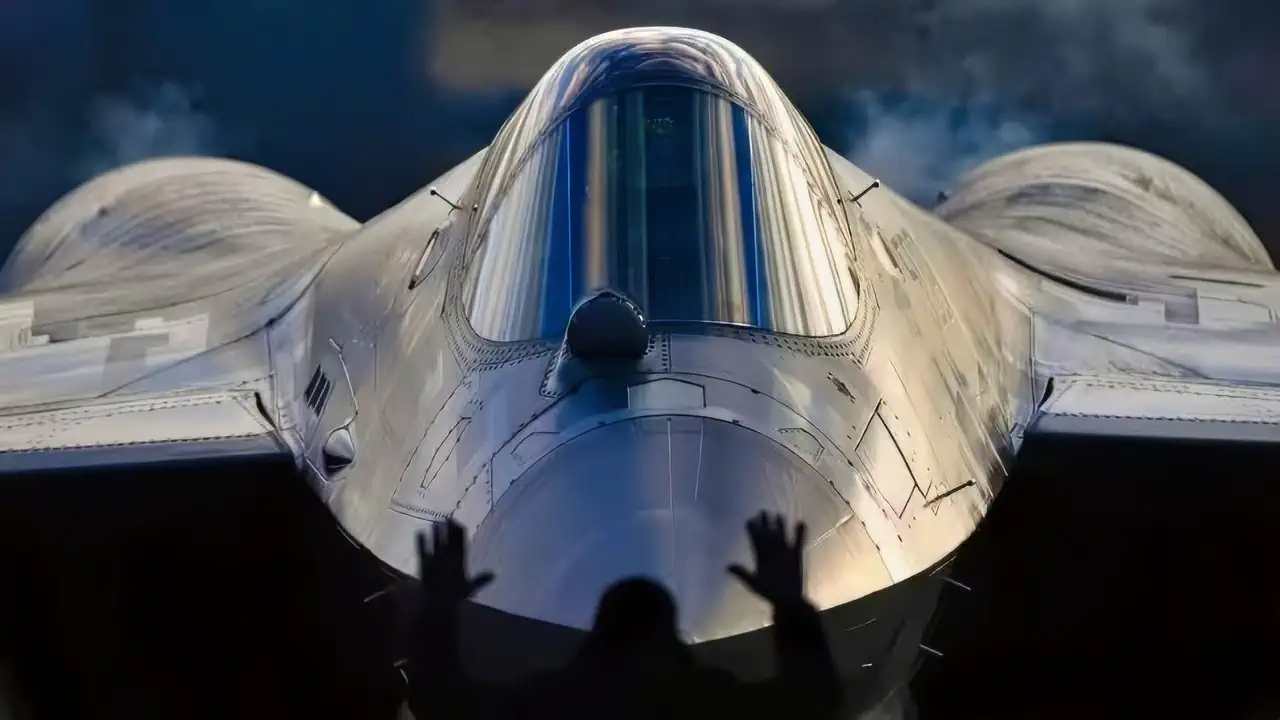
What Is the Su-57 Felon and How Was It Born?
Picture an air superiority fighter engineered to treat the laws of aerodynamic physics as mere suggestions, capable of cruising past the speed of sound without hitting afterburners, while carrying heavy-duty ordnance hidden deep inside its own airframe. This is the Sukhoi Su-57, assigned the NATO reporting name “Felon”.
It stands as Russia’s very first fifth-generation combat aircraft. In modern military doctrine, qualifying for this elite tier requires mastering four non-negotiable pillars: very low observable (VLO) stealth, supercruise capability, super-maneuverability, and advanced sensor fusion.
Moscow’s Answer to Western Dominance
Following the collapse of the Soviet Union, the Russian aerospace sector relied heavily on upgrading legacy cold-war workhorses like the Su-27 Flanker and MiG-29. However, the moment the United States rolled out the F-22 Raptor, Russian defense planners recognized an urgent generational gap.
The initiative took shape in the early 2000s under the state program PAK FA (Prospective Aeronautical Complex of Front-Line Forces). Aerospace giant Sukhoi secured the contract, and the demonstrator prototype (designated T-50) successfully completed its maiden flight in January 2010.
Despite the initial fanfare, bridging the gap between prototype and serial production proved brutal. International sanctions, shifting defense budgets, and complex engine development delays pushed the formal induction of the first operational unit back to late 2020.
The Philosophy Behind the Blended Wing Body
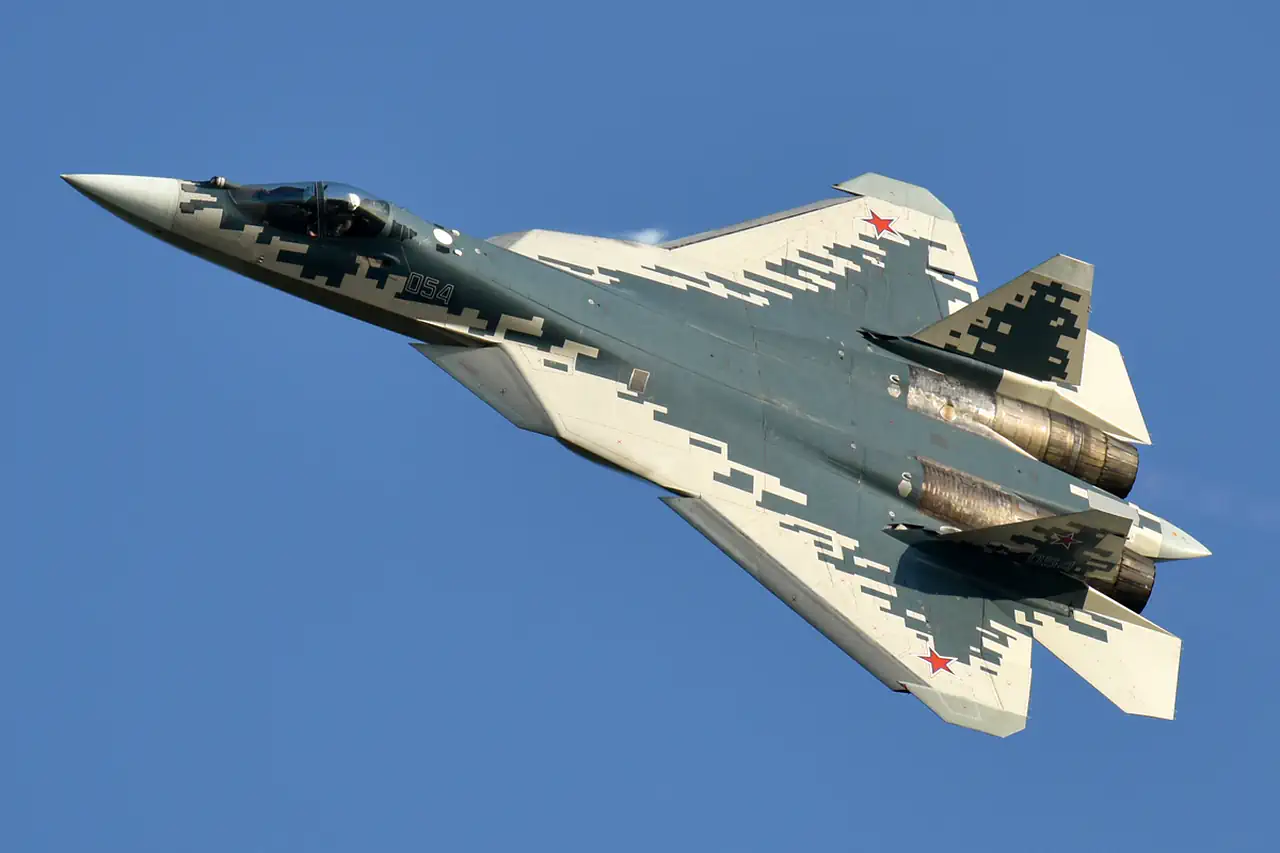
Visually, the Felon is an intimidating piece of hardware built around a blended wing body layout, allowing the flattened fuselage itself to generate lift.
Where American defense contractors prioritize all-aspect radar invisibility above all else, Russian engineers chose a calculated compromise. The Su-57 boasts an exceptionally small frontal radar cross-section, but intentionally trades away some rear and side stealth geometry. This trade-off allowed Sukhoi to fit larger, high-thrust engines and preserve unmatched within-visual-range (WVR) dogfighting agility.
Avionics Suite, Payload Capacity, and Technical Specs
A 5th-gen fighter’s true lethality lies under the skin. The Su-57 was conceptualized not just as a dogfighter, but as an airborne data-processing hub moving at Mach 2.
A 360-Degree Electronic Shield
Conventional fighter jets generally rely on a single radar dome pointed straight ahead. The Felon utilizes the N036 Byelka system—a network of Active Electronically Scanned Array (AESA) antennas distributed across the nose and the side cheeks of the forward fuselage. This layout allows the pilot to track hostile bogeys flying at sharp angles to the left or right without banking the aircraft.
Mounted right before the cockpit sits the OLS-50M Infared Search and Track (IRST) sensor. This passive optical camera searches for the heat plumes generated by enemy jet engines, allowing the Su-57 to stalk targets silently without emitting active radar waves that alert enemy warning receivers.
What Is Stashed in the Internal Bays?
To remain hidden from enemy surface-to-air missile (SAM) batteries, stealth jets cannot fly with weapons hanging off their wings. Consequently, the Felon houses its main firepower inside two large tandem centerline bays, supplemented by two smaller quick-launch side bays for close-range combat.
Air-to-Air Engagement: Long-range R-37M hypersonic-capable missiles (boasting an engagement envelope of roughly 185 miles / 300 km) alongside short-range R-73 heat-seekers slaved to the pilot’s helmet display.
Air-to-Ground Strike: KAB-series satellite-guided smart bombs and the low-observable Kh-69 tactical cruise missile.
Core Technical Specifications
| Parameter | Operational Figure |
| Maximum Speed | Mach 2.0 (~1,320 mph / 2,135 km/h) |
| Combat Range | 2,175 miles (3,500 km unrefueled) |
| Service Ceiling | 65,600 feet (20,000 meters) |
Head-to-Head: Su-57 Felon vs. F-22 Raptor
The benchmark comparison for the Russian jet remains the American F-22 Raptor. Placing both platforms side-by-side highlights two fundamentally conflicting combat philosophies:
| Assessment Metric | Su-57 Felon vs. F-22 Raptor |
| Design Priority | Super-maneuverability vs. Extreme all-aspect stealth |
| Estimated Unit Cost | ~$40 million vs. ~$143 million |
| Fleet Maturity | Under 35 active airframes vs. 180+ established airframes |
(Transparency note: Russian domestic procurement costs are not publicly audited; these figures represent widely accepted estimates from independent defense think tanks).
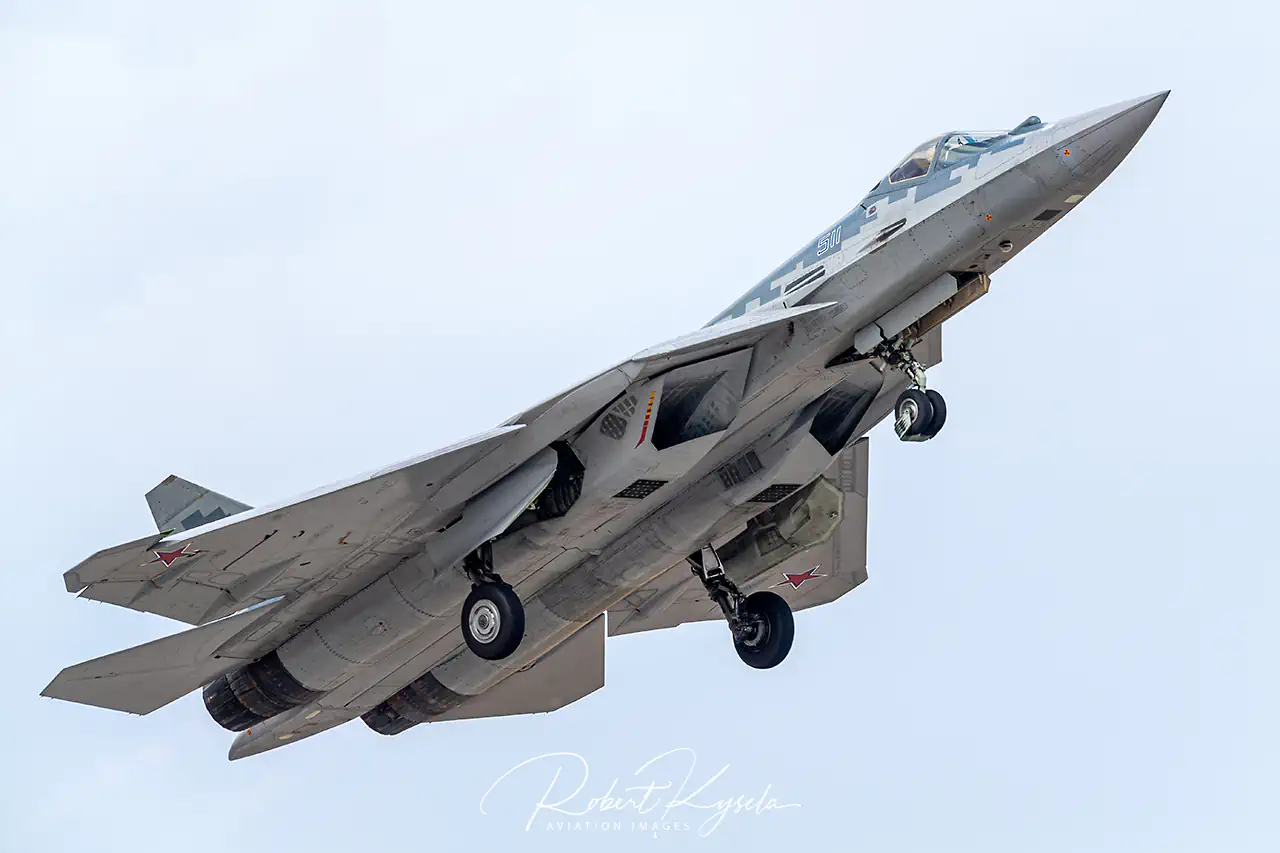
Combat History, Fleet Upgrades, and Fast Facts
Western aviation enthusiasts frequently question whether the Su-57 is a genuine frontline asset or an expensive parade showpiece.
Trial by Fire in Syria and Ukraine
The airframe underwent early operational assessments over the skies of Syria in 2018, primarily conducting standoff reconnaissance missions. More recently, Western intelligence confirmed the deployment of Felons during the war in Ukraine.
However, Russian tactical doctrine regarding the jet remains deeply risk-averse. Su-57s operate almost exclusively from the safety of Russian airspace, launching long-range munitions into contested Ukrainian skies to guarantee that a high-value stealth asset is never shot down by Western-supplied air defense networks.
Strategic Strengths and Industrial Bottlenecks
The Upside: The platform possesses staggering kinematics, costs a fraction of Western counterparts to assemble, and features native datalink integration with heavy unmanned combat aerial vehicles (like the S-70 Okhotnik drone).
The Achilles’ Heel: Russia simply cannot build them fast enough. Furthermore, the historic reliance on imported Western microelectronics turned scaling the fleet into a severe industrial headache following the export embargos enacted in 2022.
Fleet Evolution: Enter the Su-57M
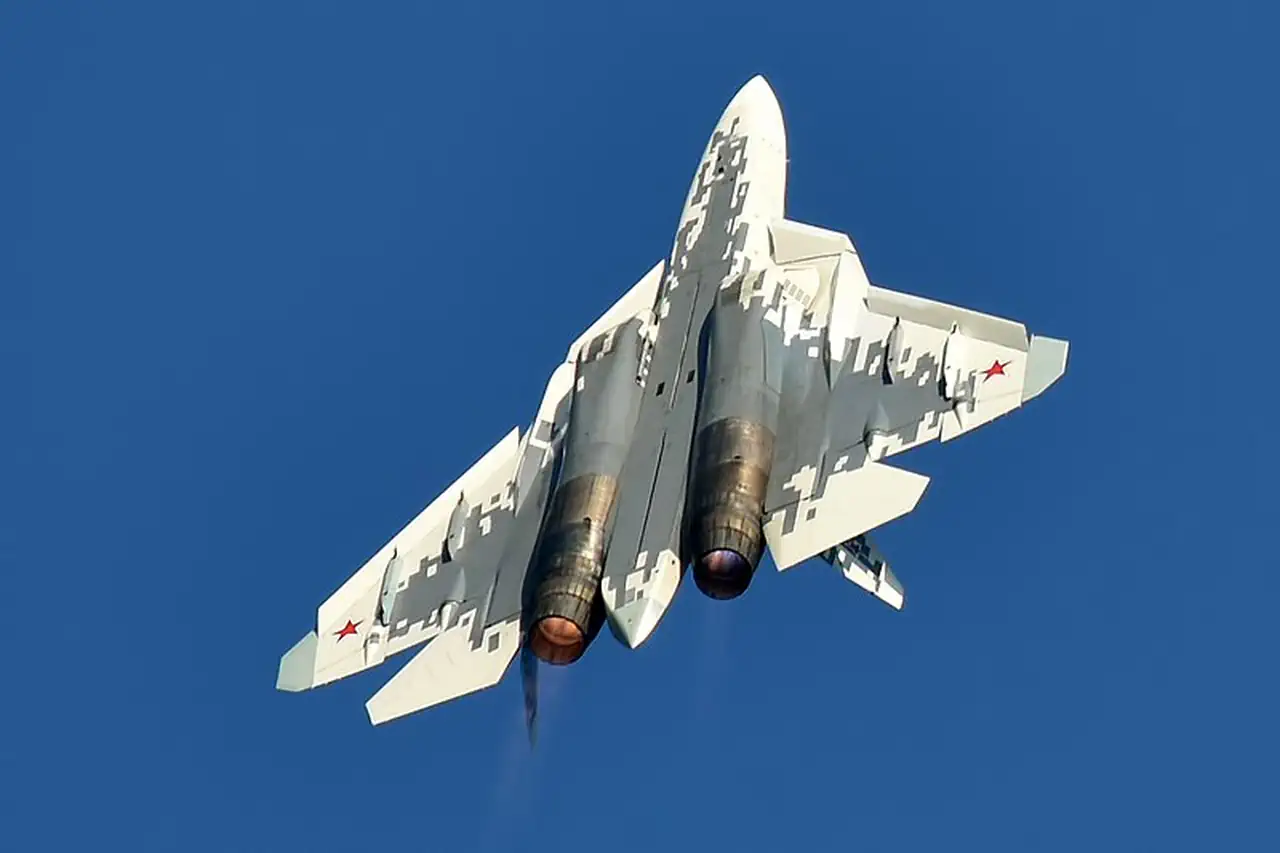
The newest iteration currently undergoing testing is the Su-57M. This variant solves the jet’s most criticized early flaw by swapping the interim engines for the definitive AL-51F1 powerplants (formerly known as Izdeliye 30), unlocking genuine supercruise capabilities alongside a noticeably cooler thermal signature.
3 Quick Aviation Facts
Zero-Zero Escape: The onboard K-36D-5 ejection seat is engineered to save the pilot’s life even if activated while the jet is sitting completely stationary on the runway at zero speed and zero altitude.
Anti-Satellite Camouflage: The jagged, digital “pixelated” paint schemes are designed to distort the aircraft’s physical geometry when viewed from top-down reconnaissance satellites orbiting in Low Earth Orbit.
Automated G-Force Override: The fly-by-wire flight computer will actively override the control stick during extreme dogfight maneuvers to level the jet out if it calculates the pilot has succumbed to G-force induced loss of consciousness (G-LOC).
Frequently Asked Questions
1. How many Su-57s are operational today?
Independent defense monitors estimate the active Russian inventory sits between 22 and 32 production-standard airframes as of early 2026.
2. Is the Su-57 superior to the American F-35?
In raw top speed and visual dogfighting, the Su-57 holds the edge. In stealth profile, sensor fusion, and electronic warfare, the F-35 is widely considered superior.
3. Why did India back out of the Su-57 program?
In 2018, New Delhi withdrew from the joint venture, citing dissatisfaction with the aircraft’s radar cross-section and repeated engine development delays.
4. Can the Felon deliver nuclear ordnance?
Yes. Its internal weapon bays are dimensioned to carry tactical standoff cruise missiles capable of being fitted with compact nuclear warheads.
5. Can the Su-57 operate from an aircraft carrier?
No. The existing airframe architecture was built strictly for conventional land-based runways.
Masterpiece or Paper Tiger?
The Su-57 Felon is an aerodynamic triumph, proving Russian engineers master the physics of super-maneuverability. It is a lethal, heavily armed platform backed by clever sensor integration. However, its true historical weight suffers from scale: a revolutionary jet built in micro-batches cannot win wars. Until Moscow overcomes its deep industrial bottlenecks, the Felon will continue to serve far more as a brilliant piece of psychological deterrence than the actual ruler of the skies.

Joseli Lourenço
06/26/2026