
Meet the F-15 Eagle: History’s Deadliest Fighter Jet!
Discover the legendary F-15 Eagle, the undefeated air superiority fighter. Learn how its advanced technology, aerodynamics, and firepower revolutionized military aviation and secured global airspace dominance to this day.
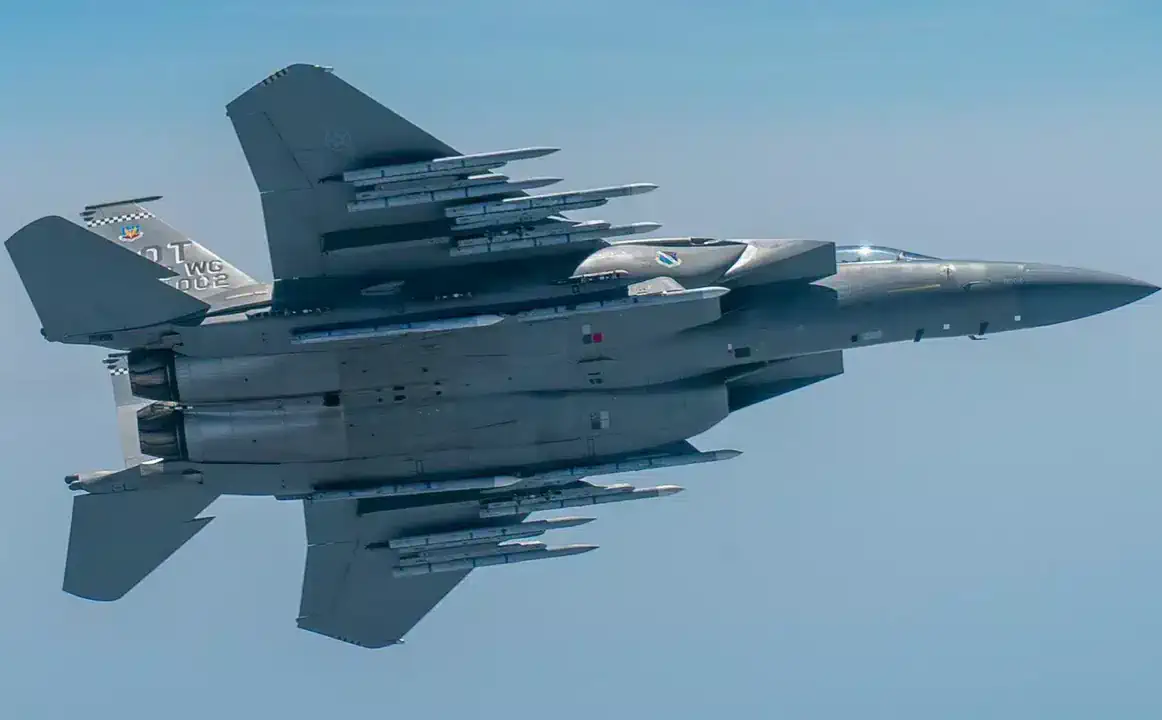
The F-15 Eagle is far more than a standard military aircraft; it is the ultimate symbol of undisputed air superiority. Engineered to ensure that the United States Air Force (USAF) and its allies maintain total dominance over any battlefield airspace, the F-15 has achieved a legendary reputation. It holds a staggering combat record of over 100 air-to-air victories with zero losses to enemy aircraft.
Its military importance lies in its ability to detect, engage, and neutralize enemy jets long before they enter visual range, leveraging powerful radar systems and advanced long-range missiles. The historical impact of the F-15 fundamentally shifted modern aerial combat doctrines, forcing rival nations to completely rethink their aerospace engineering and defense strategies.
General Overview of the F-15 Eagle
The F-15 Eagle is a twin-engine, high-performance tactical fighter jet explicitly designed for the air-to-air combat arena.
Category: Air Superiority Fighter.
Country of Origin: United States of America.
Manufacturer: Originally McDonnell Douglas (now Boeing).
Main Role: Gaining and maintaining absolute control of the skies.
Historical Context: Born at the height of the Cold War as a direct countermeasure to rapidly advancing Soviet aviation technology.
History and Development
The Catalyst and the Threat
During the Vietnam War, the U.S. military realized its heavy fighter-bombers were struggling in close-quarters combat against agile Soviet MiGs. Simultaneously, the revelation of the Soviet MiG-25 “Foxbat”—an interceptor capable of Mach 3 speeds—alarmed Western defense agencies. The Pentagon urgently needed a dedicated fighter that combined raw thrust, extreme maneuverability, and cutting-edge avionics.
From Blueprint to Active Service
The F-X program was launched with a strict unofficial motto: “Not a pound for air-to-ground.” This ensured the aircraft remained 100% focused on aerial combat. McDonnell Douglas won the contract in 1969. Following its successful maiden flight in July 1972, the F-15 officially entered USAF service in 1976. Over the decades, the airframe has proven incredibly adaptable, seamlessly integrating digital upgrades to remain a top-tier asset.
Design and Technology
To become the undisputed king of the skies, the F-15’s design incorporated groundbreaking aeronautical engineering.
Structure and Materials: Built with a high percentage of titanium (roughly 25%) and lightweight aluminum. This provided a durable airframe capable of withstanding massive G-forces and the immense heat generated at supersonic speeds. It lacks heavy conventional armor, relying instead on its speed and agility for survivability.
Aerodynamics: Its large, swept wings create a low wing-loading ratio (the aircraft’s weight compared to its wing area), allowing for remarkably tight turns and high lift generation.
Radars and Sensors: Originally equipped with the Hughes APG-63 radar (later upgraded to APG-70 and highly advanced AESA radars). It introduced true look-down/shoot-down capabilities, meaning it could track and target low-flying enemies without ground clutter interference.
Electronics and Protection: Featuring a state-of-the-art Head-Up Display (HUD) and comprehensive electronic warfare suites, the F-15 can deploy chaff, flares, and electronic jammers to blind enemy radar and decoy incoming missiles.
Armament and Firepower
The lethal nature of the F-15 is rooted in its formidable payload capabilities.
Main Weapons (Missiles): The jet carries a deadly mix of air-to-air missiles. It utilizes the AIM-120 AMRAAM for Beyond Visual Range (BVR) engagements, the older AIM-7 Sparrow, and the heat-seeking AIM-9 Sidewinder for close-range dogfights.
Secondary Weapons (Cannon): An internally mounted M61 Vulcan 20mm rotary cannon in the right wing root, packed with 940 rounds, serving as a lethal backup for extremely close combat.
Offensive Capabilities: The jet’s powerful radar can guide missiles with pinpoint accuracy over dozens of miles, neutralizing targets before the enemy pilot ever makes visual contact.
Flight Performance
The F-15’s thrust-to-weight ratio—meaning its engines produce more thrust than the aircraft actually weighs—grants it unparalleled performance metrics:
Speed: Capable of exceeding Mach 2.5 (over 1,650 mph or 2,650 km/h) at high altitudes.
Power: Powered by two Pratt & Whitney F100 afterburning turbofan engines, enabling straight vertical acceleration.
Operational Range and Autonomy: With conformal and external drop tanks, it boasts a ferry range of over 3,450 miles (5,500 km), allowing for extended combat patrols and deep penetration into hostile territory.
Technical Specifications (F-15C)
| Feature | Specification |
| Country of Origin | United States |
| Manufacturer | Boeing (formerly McDonnell Douglas) |
| Entry into Service | 1976 |
| Crew | 1 (Pilot) |
| Empty Weight / Max Takeoff | Approx. 28,000 lbs (12,700 kg) / 68,000 lbs (30,845 kg) |
| Length | 63.8 ft (19.43 m) |
| Wingspan | 42.8 ft (13.05 m) |
| Height | 18.5 ft (5.63 m) |
| Maximum Speed | Mach 2.5 (High altitude) |
| Service Ceiling | 65,000 ft (19,800 m) |
| Primary Armament | AIM-120, AIM-9, AIM-7 Missiles |
| Secondary Armament | M61 Vulcan 20mm Gatling gun |
| Engines | 2x Pratt & Whitney F100-PW-220 |
| Thrust | 23,770 lbf per engine (with afterburner) |
| Operational Status | Active service |
Participation in Combats and Wars
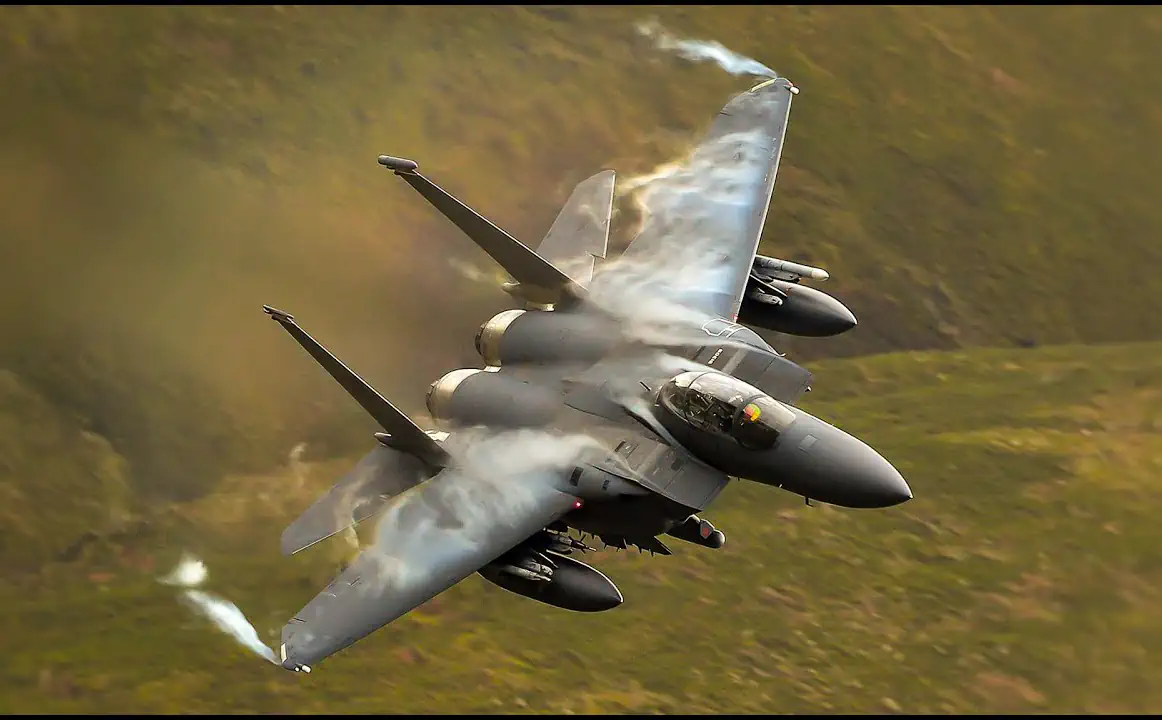
The flawless reputation of the F-15 was forged in the skies of major modern conflicts. It holds an unprecedented combat record of 104 kills to 0 losses against enemy aircraft.
Bekaa Valley (1982): Operated by the Israeli Air Force (IAF), the F-15 decimated Syrian MiG-21s and MiG-23s, entirely dominating Lebanese airspace during Operation Mole Cricket 19.
Operation Desert Storm (1991): USAF F-15s accounted for 34 of the 37 confirmed air-to-air kills by Coalition forces, effectively wiping out the Iraqi Air Force’s MiGs and Mirages.
The Balkans (1999): During Operation Allied Force, F-15Cs successfully intercepted and shot down Serbian MiG-29s that attempted to disrupt NATO bombing missions.
Key Advantages
BVR Dominance: Superior radar technology allows it to spot and destroy threats well beyond visual range.
Engine Power: Incredible climb rates, acceleration, and sustained energy during dogfights.
Robust Electronics: Highly resilient targeting systems capable of fighting through intense electronic jamming.
Payload Capacity: Can carry immense amounts of fuel and ordnance without fatally compromising maneuverability.
Disadvantages and Limitations
High Operating Costs: Maintenance and flight-hour costs for this heavy, twin-engine fighter are substantial.
Radar Cross-Section (RCS): Designed in the 1970s, it is a large aircraft with no inherent stealth features, making it highly visible to modern air defense radars.
Logistical Footprint: Requires extensive ground support equipment and pristine runways to operate effectively.
Comparison with Competitors
During the Cold War, the F-15’s primary rival was the Soviet Su-27 Flanker.
Differences and Advantages: The Su-27 was engineered with a heavy emphasis on super-maneuverability and dogfighting. The F-15, while incredibly agile, prioritized superior situational awareness, data processing, and long-range BVR engagements.
Performance: The Su-27 holds a slight edge in extreme, low-speed aerobatic maneuvers (like the Pugachev’s Cobra), but the F-15 has historically proven vastly superior in integrating active-radar missiles and sensor-fused combat tactics.
Costs: Russian-built airframes typically have a lower initial procurement cost, though long-term lifecycle and maintenance costs tend to bridge that gap.
Variants and Modernizations
The adaptable nature of the F-15 led to several distinct variants:
F-15A / F-15B: The initial single-seat and twin-seat (training) versions.
F-15C / F-15D: Introduced in 1979, bringing upgraded avionics, improved radar, and expanded internal fuel capacity.
F-15E Strike Eagle: A radical multirole shift. This variant added a Weapons Systems Officer (WSO) in the back seat and heavy air-to-ground strike capabilities, acting as a deep-interdiction bomber.
F-15EX Eagle II: The latest modernization. It features a fully digital glass cockpit, next-generation AESA radar, hyper-fast mission computers, and the ability to carry hypersonic weapons, ensuring the airframe remains viable past 2040.
10 Relevant Curiosities
Undefeated: It is the only modern fighter jet with over 100 confirmed air-to-air kills and zero combat losses to enemy planes.
Satellite Killer: In 1985, a heavily modified F-15 fired an ASM-135 missile in a steep climb, successfully destroying a defunct satellite in low Earth orbit.
The One-Wing Landing: In 1983, an Israeli F-15 collided mid-air with an A-4 Skyhawk, losing its entire right wing. Using extreme engine thrust and the lift generated by the wide fuselage, the pilot managed to land the jet safely.
Vertical Acceleration: The engines generate so much thrust that the F-15 can accelerate past the speed of sound while flying straight up.
Massive Radome: The nose of the F-15 is exceptionally large to house an oversized radar antenna, providing unmatched detection ranges compared to smaller fighters.
Rapid Production: McDonnell Douglas created an incredibly efficient assembly line, churning out hundreds of jets in a tight timeframe during the Reagan-era defense buildup.
Global Operators: Beyond the US, allied nations like Israel, Japan, Saudi Arabia, and South Korea operate heavily customized versions of the F-15.
Streak Eagle Records: In 1975, a stripped-down F-15 known as the “Streak Eagle” shattered multiple time-to-climb records, reaching 98,425 feet (30,000 meters) in just over three minutes.
Analog Origins: Unlike the F-16 which pioneered fly-by-wire, the early F-15s utilized traditional hydromechanical flight controls to give the pilot a more direct “feel” of the aircraft.
Century Fighter: With the procurement of the F-15EX, the basic F-15 airframe design is on track to serve in the US military for nearly a century since its inception.
Impact on the Military World
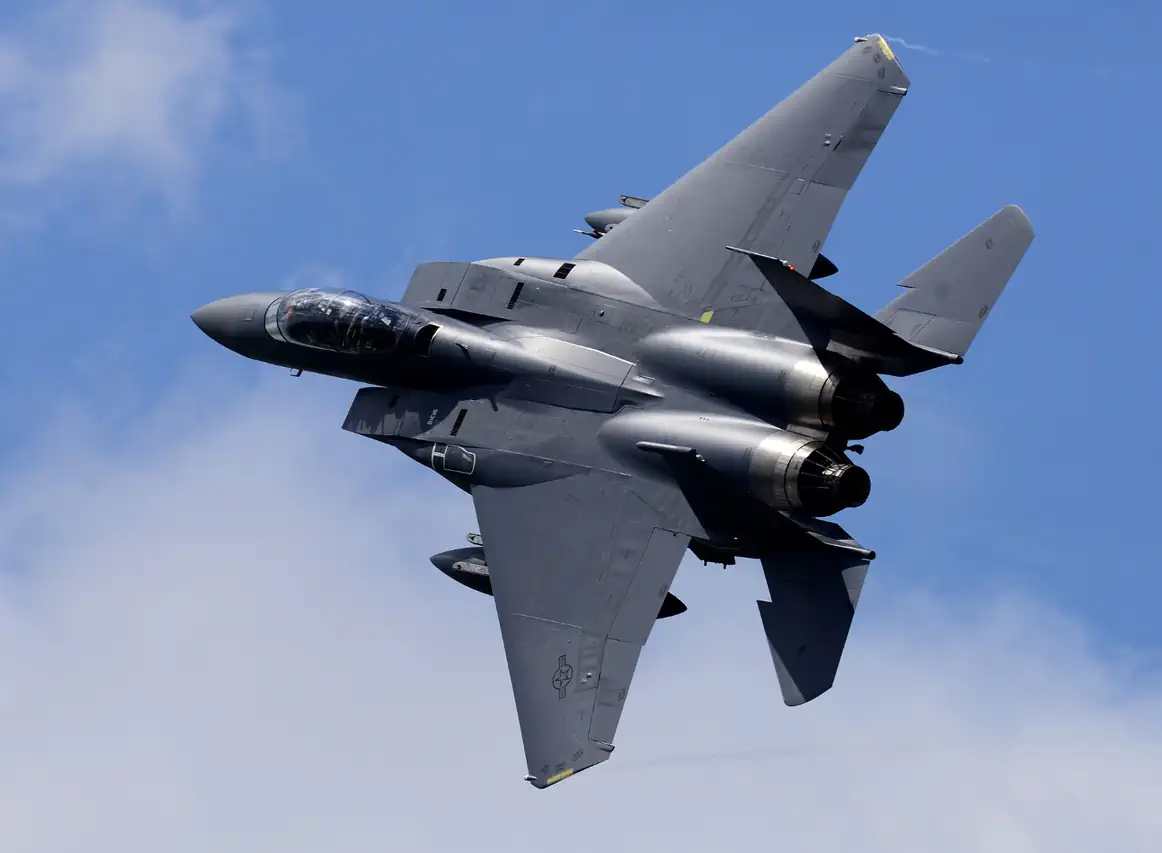
The introduction of the F-15 sent shockwaves through the Soviet aerospace industry, directly accelerating the development of the Su-27 and MiG-29. Strategically, the Eagle validated the concept of Beyond Visual Range (BVR) combat, permanently shifting the focus of fighter design from close-in turning fights to radar superiority and long-range lethality. Its philosophy of absolute air dominance heavily influenced its stealthy successor, the F-22 Raptor, which adopted the Eagle’s mission while adding a low-observable profile.
Frequently Asked Questions
1. What is the top speed of the F-15 Eagle? It can reach speeds in excess of Mach 2.5 (over 1,650 mph) at high altitudes, depending on its external payload.
2. Has an F-15 ever been shot down? No F-15 has ever been shot down by enemy aircraft in air-to-air combat. The few combat losses on record were strictly the result of surface-to-air missiles (SAMs) or anti-aircraft artillery.
3. What is the difference between the F-15 and the F-16? The F-15 is a large, twin-engine heavy fighter built specifically for long-range air dominance. The F-16 Fighting Falcon is a smaller, single-engine, lightweight multirole fighter designed for cost-efficiency and versatility.
4. Is the F-15 a stealth fighter? No. The F-15’s design predates modern stealth technology. Its large size and angular geometry make it highly visible on radar compared to 5th-generation jets like the F-35.
5. Who makes the F-15? It was originally designed and manufactured by McDonnell Douglas, which merged with Boeing in 1997. Boeing manufactures all current models, including the F-15EX.
6. How many missiles can the F-15 carry? Standard C/D models carry up to 8 air-to-air missiles. The newest F-15EX Eagle II utilizes advanced weapons racks allowing it to carry up to 12 missiles.
7. Can the F-15 attack ground targets? The original A/B/C/D models were strictly air-to-air. However, the F-15E Strike Eagle variant was engineered with conformal fuel tanks and advanced targeting pods specifically for heavy ground attack missions.
8. How much does an F-15 cost? Costs vary wildly by variant and export package. The latest F-15EX Eagle II is estimated to cost roughly $90 million to $95 million per airframe.
9. Which countries operate the F-15? Alongside the United States, the F-15 is operated by the air forces of Israel, Japan, Saudi Arabia, South Korea, Singapore, and Qatar.
10. How long will the F-15 stay in service? Thanks to the introduction of the heavily upgraded F-15EX, the United States Air Force expects the Eagle platform to remain in active, front-line service well into the 2040s and potentially beyond.
The Unmatched Legacy of the F-15 in Modern Warfare
The historical importance of the F-15 lies in the undeniable fact that it is the most successful modern fighter jet to ever see combat. By seamlessly blending raw, overpowered engines with increasingly sophisticated sensor suites, the Eagle carved out a legacy of invincibility that is unlikely to ever be replicated. Its current relevance remains absolute; the deployment of the F-15EX proves that a brilliantly executed aerodynamic design can transcend decades of technological shifts.
If you have a passion for military aviation and enjoyed exploring the sheer force and engineering behind this formidable fighter, continue reading our defense technology articles to dive deeper into the machines that dominate the modern battlespace.

Joseli Lourenço
06/11/2026