
F-16 Fighting Falcon: A Lenda de Combate que Mudou a Guerra para Sempre
The F-16 Fighting Falcon is the definitive multirole fighter of the modern era. Renowned for its agility and combat versatility, it remains the backbone of air forces worldwide. Discover the engineering mastery behind this legendary machine.
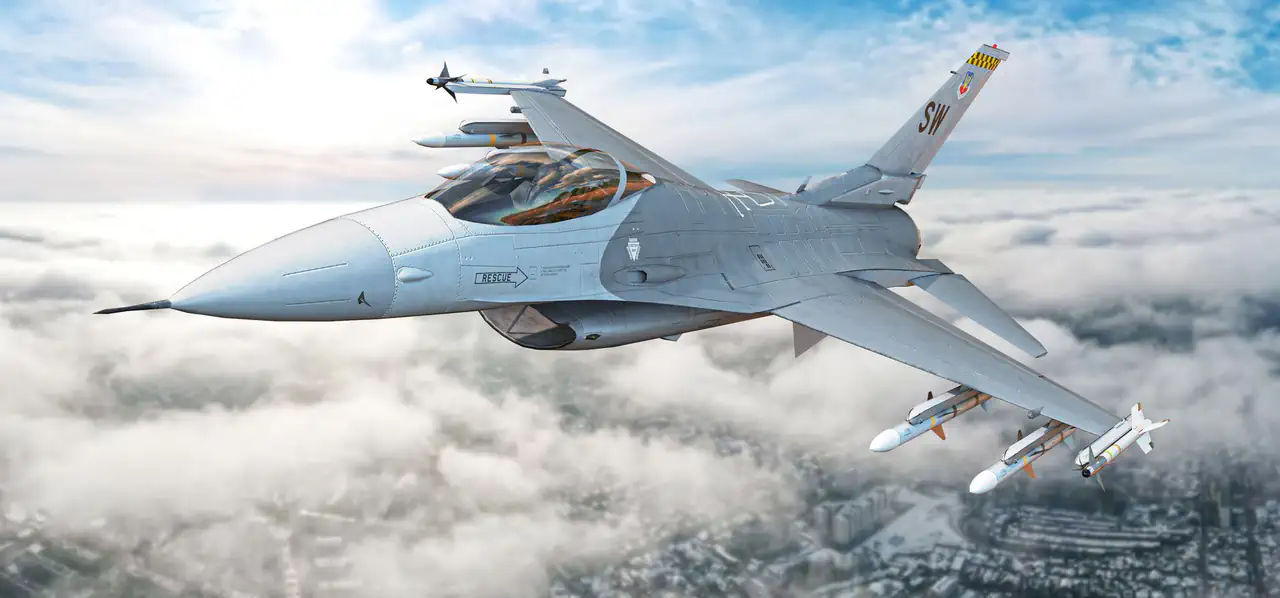
The F-16 Fighting Falcon: A Legacy of Aerial Supremacy
Few military platforms have shaped modern aviation as decisively as the F-16 Fighting Falcon. Since its inception, this aircraft has evolved from a lightweight daytime interceptor into a sophisticated, all-weather combat powerhouse. Its enduring presence in the world’s most powerful air forces is a testament to its agility, reliability, and continuous technological advancement.
Overview: The World’s Most Iconic Multirole Fighter
The F-16 Fighting Falcon is a fourth-generation supersonic fighter that serves as the cornerstone of air superiority for the United States and its allies. It is a highly versatile, single-engine aircraft designed to handle a vast array of missions, from high-stakes dogfights to precision ground attacks and electronic warfare.
Primary Manufacturer: General Dynamics (now Lockheed Martin)
Country of Origin: United States
Role: Multirole Fighter
Operational Status: Active
History and Development: From “Fighter Mafia” to Global Dominance
The F-16 was the result of a paradigm shift in the U.S. military. Disillusioned by the performance of heavy, complex aircraft during the Vietnam War, a group of visionary officers and analysts—the “Fighter Mafia”—advocated for the Lightweight Fighter (LWF) program. They argued for an aircraft that prioritized energy-maneuverability theory above all else. When the YF-16 prototype took to the skies in 1974, it proved that a compact, nimble design could outperform larger, more expensive jets, leading to its full-scale production in 1978.
Design and Technology: Engineering the Impossible
The F-16 introduced revolutionary concepts that redefined fighter design.
Fly-by-Wire Technology: To handle its intentionally unstable aerodynamic profile, the F-16 was the first production fighter to use a digital fly-by-wire flight control system.
Cockpit Ergonomics: With its signature frameless “bubble” canopy, the pilot enjoys 360-degree visibility. The 30-degree reclined seat was specifically engineered to help pilots mitigate the physical stress of high-G maneuvers.
Advanced Avionics: Modern variants are equipped with AESA radar systems, allowing for unprecedented situational awareness and the ability to engage multiple targets simultaneously.
Armament: The Viper’s Sting
The F-16 is defined by its massive payload capacity distributed across nine hardpoints.
Internal Arsenal: A 20mm M61A1 Vulcan rotary cannon, a staple for close-range engagements.
Air-to-Air: Equipped with the AIM-9 Sidewinder for short-range heat-seeking combat and the AIM-120 AMRAAM for long-range, radar-guided dominance.
Air-to-Surface: The platform carries a wide array of precision-guided munitions, including JDAMs, laser-guided bombs, and AGM-88 HARM missiles for destroying integrated air defense systems.
Performance Profile
The F-16’s thrust-to-weight ratio is its greatest asset, allowing for sustained high-G turns and rapid acceleration in vertical climbs.
| Feature | Specification (F-16C Block 50/52) |
| Max Speed | Mach 2.0+ (approx. 1,500 mph) |
| Thrust-to-Weight Ratio | > 1:1 |
| Max Operational G-Load | 9G |
| Engine | Pratt & Whitney F100 or General Electric F110 |
| Combat Radius | ~340 miles (depending on configuration) |
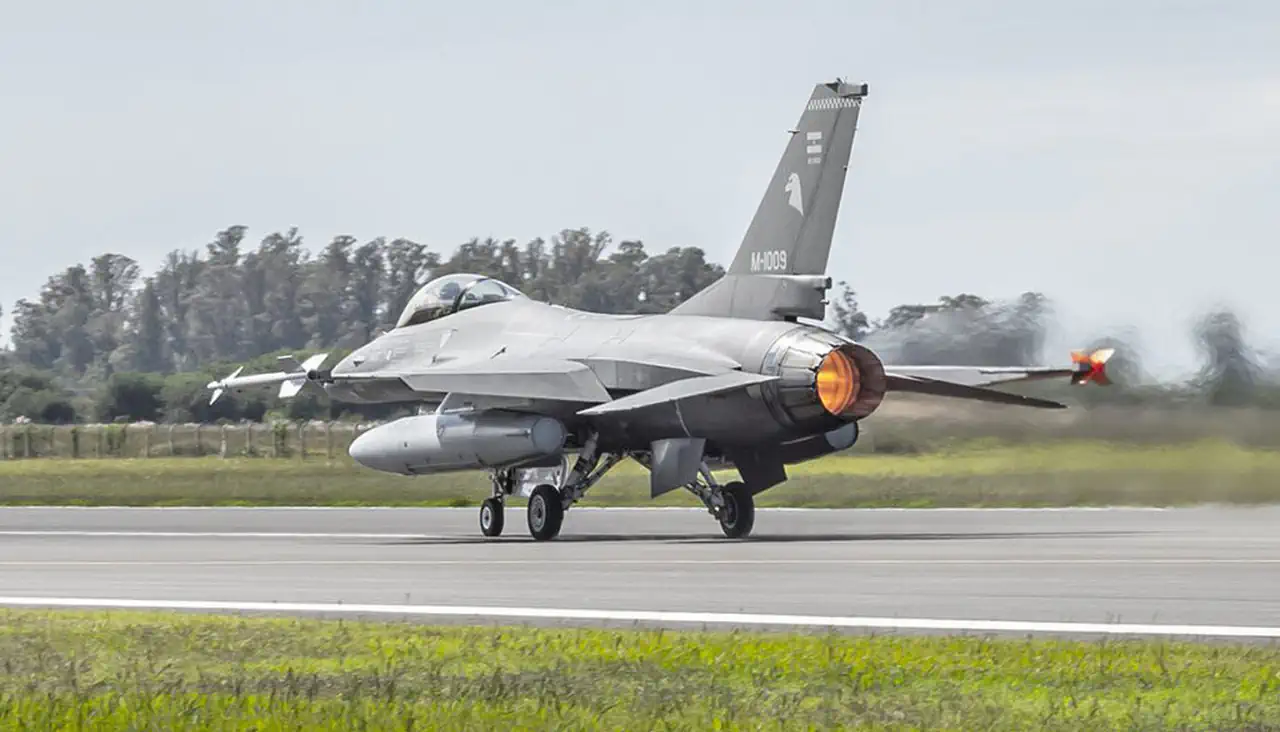
Combat Record: A Proven Warrior
The F-16’s combat history is legendary. From the 1981 Operation Opera strike against the Osirak reactor to its pivotal role in Desert Storm and the Balkans, the platform has consistently proven itself. Its ability to adapt to changing battlefield environments has made it a preferred choice for coalition operations worldwide.
Advantages and Limitations
Advantages:
High Performance: Exceptional maneuverability and power-to-weight ratio.
Flexibility: Easily adaptable for air-to-air, air-to-ground, and reconnaissance roles.
Cost-Efficiency: Maintains lower operational costs compared to fifth-generation alternatives.
Limitations:
Single Engine: While highly reliable, the aircraft lacks the redundancy provided by twin-engine designs.
Stealth Constraints: Lacks the low-observable (stealth) characteristics of newer jets like the F-35, making it more detectable by modern long-range radars.
Comparison: The F-16 Against Modern Peers
While the F-35 provides stealth, the F-16 remains superior in pure kinetic dogfighting maneuverability. Compared to legacy Soviet-era designs like the MiG-29, the F-16 consistently wins due to superior sensor fusion, longer-range missile engagement, and a more robust global sustainment infrastructure.
Variants and Modernizations: The “Viper” Evolution
The F-16 has been constantly updated through its “Block” system. The latest iteration, the F-16V (Block 70/72), represents the pinnacle of fourth-generation technology, featuring integrated AESA radars, updated digital cockpits, and sophisticated data-link connectivity.
10 Fascinating Facts About the F-16
“Viper” Name: Pilots nicknamed it the “Viper” due to its resemblance to a snake and a starfighter from Battlestar Galactica.
G-Force Endurance: The reclined seat is a critical life-support feature for 9G turns.
Demonstration King: It is the official aircraft of the U.S. Air Force Thunderbirds.
Massive Production: Over 4,600 aircraft produced since the 1970s.
Side-Stick Control: It replaced the traditional center stick for better pilot ergonomics.
Global Operator: Serves over 25 different national air forces.
All-Weather Capability: Evolved from a fair-weather fighter to an all-weather workhorse.
Digital Pioneer: One of the first successful applications of fly-by-wire controls.
Combat Tested: Boasts an incredibly high survival rate in combat.
Constant Evolution: The Block 70 upgrade ensures relevance until at least 2040.
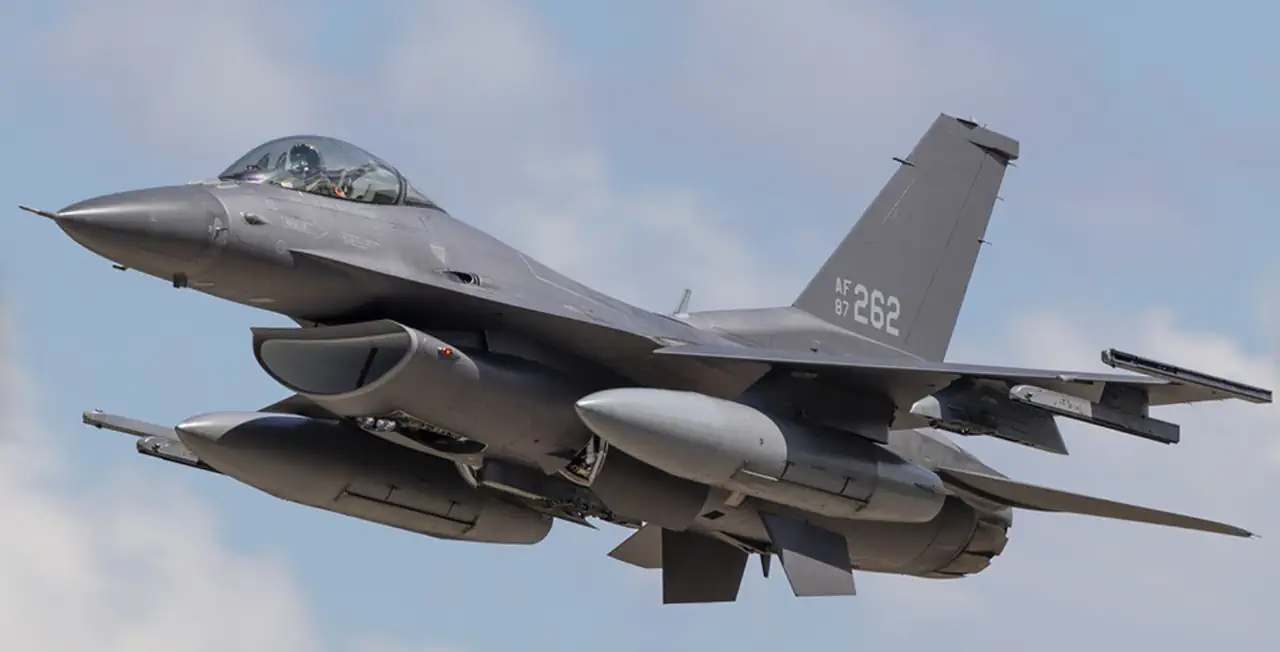
Global Military Impact
The F-16 has served as a bridge between cold-war era tactics and the network-centric warfare of the 21st century. Its influence on international defense policies and military cooperation between NATO allies is profound, setting the standard for what a multirole fighter should represent.
Frequently Asked Questions (FAQ)
Is the F-16 still in production? Yes, the F-16V is currently manufactured for international partners.
What is the F-16’s top speed? It reaches speeds exceeding Mach 2.0.
How many pilots operate the F-16? Most versions are single-seaters, with two-seat versions for training.
Can the F-16 perform stealth missions? No, it is not a stealth aircraft, though it utilizes electronic warfare to reduce detectability.
Why do pilots call it the “Viper”? The name originated from the Battlestar Galactica series and stuck among flight crews.
What is an AESA radar? It is a high-tech radar that provides better tracking and targeting than traditional mechanical radars.
Is the F-16 considered a fourth-generation fighter? Yes, it is the quintessential fourth-gen fighter.
Has the F-16 ever been replaced? It is being supplemented by the F-35, but it remains a primary asset.
What is the “Fighting Falcon” name for? It was chosen by the USAF as the official title during its introduction.
Where is it primarily used? It is used globally, from the Middle East to Eastern Europe and the Indo-Pacific.
Conclusion
The F-16 Fighting Falcon stands as a masterpiece of aerospace engineering. Its blend of raw performance, adaptability, and technological longevity makes it one of the most successful weapons systems ever built. As air forces around the world continue to rely on the “Viper,” its place in the history of aerial warfare is firmly cemented, proving that a well-designed machine can remain effective for nearly half a century.

Joseli Lourenço
06/10/2026